
Why We Should Care
The biggest trap in modern subscription and direct-to-consumer (DTC) growth models isn’t rising customer acquisition costs (CAC). It’s the drop in customer interest before people feel the real value of what they bought. When you sell an “Invisible Benefit” (something deferred, long-term, preventive, or hard to measure like longevity, preventive healthcare, custom supplements, or wealth management), standard retention playbooks don’t work.
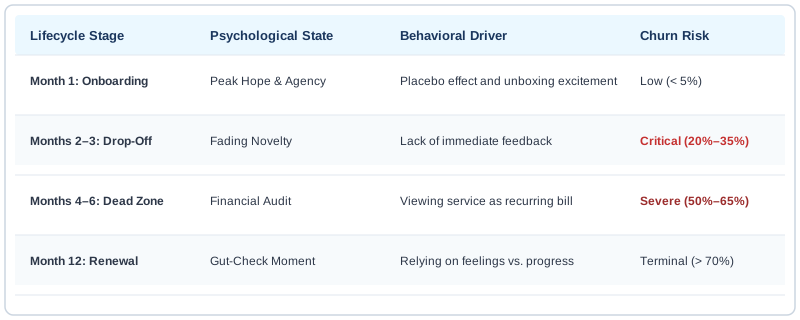
When customers can’t feel results in the first 30 to 90 days, traditional subscription funnels fall off a cliff. In categories like non-diabetic GLP-1 treatments, two-thirds of customers drop out within a year, and 20% quit by month three. Most operators blame this on product quality or bad customer service, but it’s actually an acquisition positioning problem. This paper shows how turning a product pitch from a basic transaction into a core identity choice boosts LTV, gives you massive room to spend on CAC, and protects gross margins when competitors drop prices.
Chapter I: The Behavior Behind Deferred Value
With everyday consumer goods, retention relies on quick physical feedback. You buy paper towels, software, or gym clothes, and you get immediate use out of them. The math is simple: the value felt needs to be equal to or greater than the price paid.
When you sell invisible benefits, time works against you. The buyer pays today for a promise that takes months or years to pay off. That gap creates a huge churn risk between Month 1 and Month 6, which we call The Dead Zone of Perceived Value.
Chapter II: The Four-Quadrant Retention Matrix
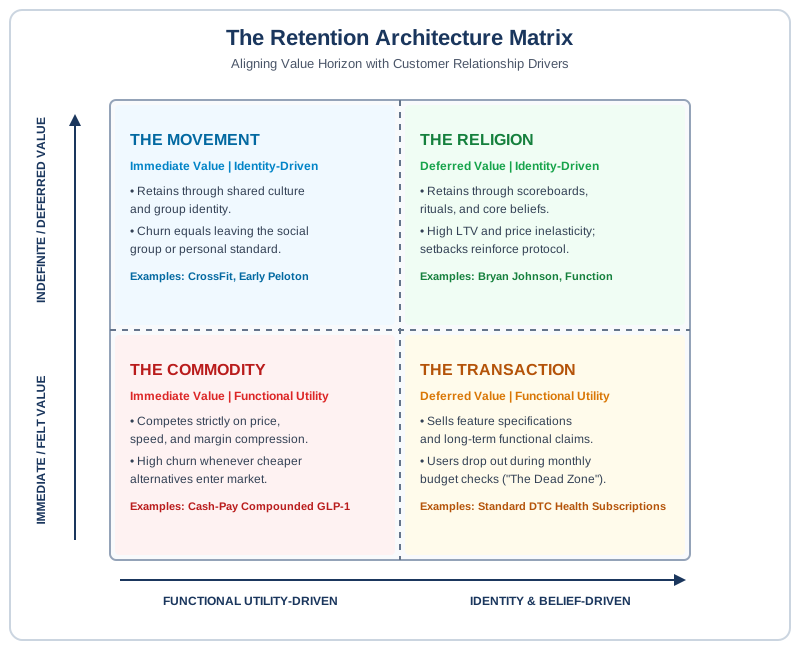
To navigate the Dead Zone, growth teams need to look at positioning across two main factors: Timing of Value (Immediate vs. Deferred) and Customer Relationship Driver (Functional vs. Identity-Based).
Breaking Down the Four Quadrants
- The Commodity (Immediate / Functional): Competes strictly on price and convenience. Customers don’t feel loyal. As soon as a cheaper option hits the market (like cash-pay GLP-1 options undercutting brand-name drugs from $1,000 to $300 a month), retention tanks.
- The Transaction (Deferred / Functional): Promises future results but sells on feature lists. When results take a long time or stay invisible, users drop out during their monthly budget checks.
- The Movement (Immediate / Identity): Retains users by linking the product to a community and shared lifestyle. Canceling hurts because it feels like stepping away from your group (think CrossFit or early Peloton).
- The Religion (Deferred / Identity): The peak of lifecycle economics. Turns invisible outcomes into daily habits backed by scoreboards, expert guidance, and strong personal conviction. Standard churn rules don’t apply here.