
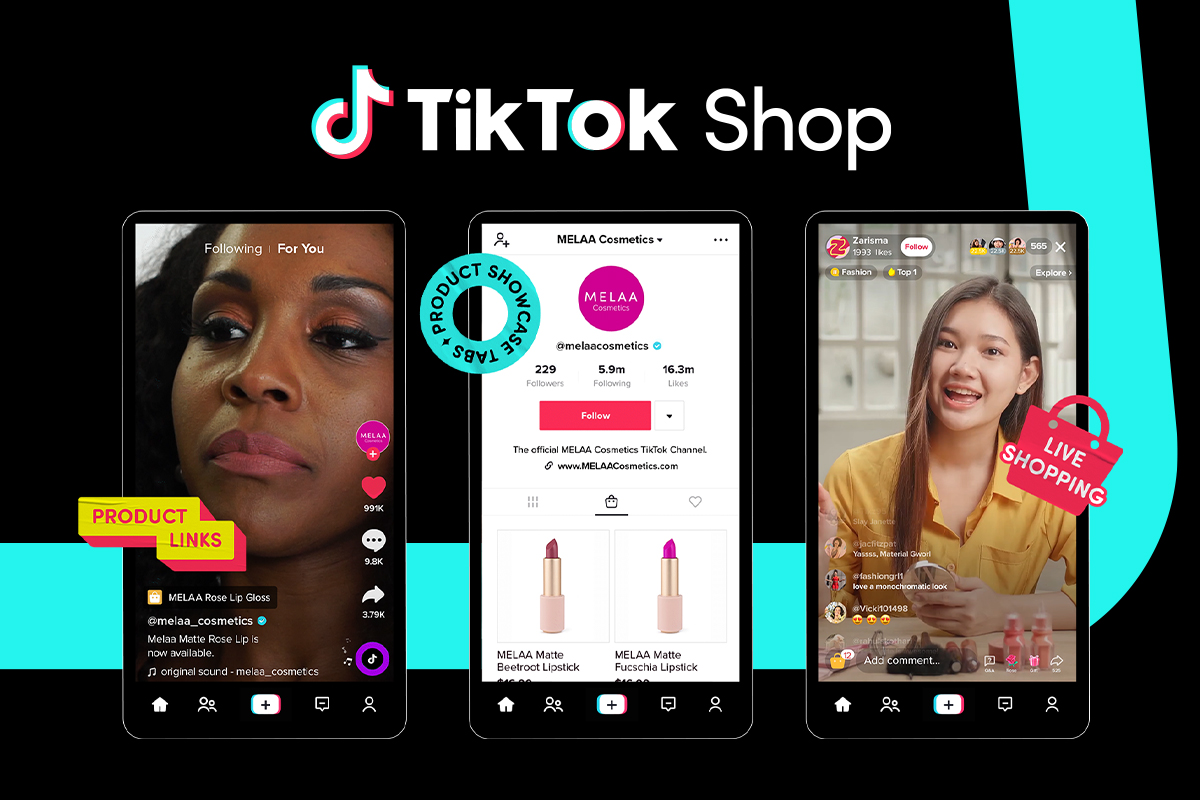
I’ve been working with TikTok Shop in one form or another for the last couple of years, and I think the easiest way to understand it is to stop comparing it to Meta and start comparing it to Amazon and e-tail.
Honestly, the scale is getting difficult to ignore. TikTok Shop generated an estimated $11.8B in US GMV in the first half of 2026, up 103% YoY, and EMARKETER expects US sales to reach more than $23B this year. Perhaps more interestingly, 35% of US adults had used TikTok Shop by March, up from 23% a year earlier. This isn’t some small experimental commerce channel anymore.
I also love learning by actually doing. I’ve always thought everyone must have their hands on the initial testing and rollout phases of any new channel. You learn things by being inside the account, looking at the creative, watching what happens to CAC, talking to creators, understanding the margin implications, and seeing where the platform numbers don’t quite reconcile with your own. You simply don’t get the same understanding from a dashboard or an agency readout.
That doesn’t mean every business should immediately jump into TikTok Shop. Some businesses don’t have the time, resources, or frankly the organizational bandwidth to properly test another channel. If that’s the case, I think the first question should be whether this is actually the right move at this time. Are there more critical priorities in Search, Meta, Amazon, lifecycle, conversion, retention or somewhere else in the business that will produce a better return on the same resources? New and growing doesn’t automatically mean next. If you do decide the opportunity makes sense, here’s how I think about it.
WHY
Amazon is primarily a demand capture environment. Someone searches for a product or category, Amazon serves up the shelf, and brands compete for visibility through search rank, reviews, merchandising, price, promotions and paid placement. Traditional e-tail works much the same way. The retailer has aggregated the customer and the demand, and your job is to earn enough visibility and conversion to capture some of it.
TikTok Shop can work almost in reverse. The customer doesn’t necessarily arrive looking for your category. Content creates the interest, creators provide demonstration and social proof, the transaction happens inside the same environment, and that transaction becomes another signal TikTok can use to determine what gets distributed next.
Content isn’t simply driving traffic to the shelf. In many ways, the content is becoming the shelf.
That obviously makes Shop interesting for physical products and e-commerce, particularly products that lend themselves to demonstration, discovery or storytelling. I think it can also be really interesting for subscription businesses built around a physical or replenishable product because that initial Shop transaction can become an acquisition event into a much longer customer relationship.
WHO AND WHAT
On Amazon, I care about the product detail page, search rank, ratings, reviews, Buy Box, pricing, promotions, retail media and fulfillment. On TikTok Shop, I still care about most of those retail fundamentals, but creators become a pretty significant part of both the merchandising and distribution system.
A creator can effectively be part salesperson, part media placement, part product demonstration and part affiliate. Then you have your own organic content, affiliate creators, LIVE, paid amplification, promotions, product listings, inventory and the Shop itself all working together.
The product economics matter from the beginning. A $50 product at a 30% gross margin gives me a very different operating envelope from the same $50 product at a 70% margin once I start layering in creator commissions, promotions, platform costs, fulfillment and paid media.
Subscription economics make it even more interesting. If I know a particular cohort retains well and generates attractive contribution over six or twelve months, I may rationally tolerate a higher first-order CAC or even an initial contribution loss. But I need actual retention and LTV data to make that decision. Relying on recurring revenue to offset poor acquisition economics is a risky way to grow.
HOW
Let’s say I have that $50 product. On Amazon, I might optimize the PDP, generate reviews, adjust price and promotions, bid on retail media and work to improve organic ranking. On TikTok Shop, I might put the same product in front of twenty or fifty creators and see which combinations of creator, message, audience and format actually produce transactions.
Most of the content probably won’t do much. That’s fine. I’m looking for the handful of combinations that create a real economic signal. Maybe a creator finds a use case I hadn’t considered. Maybe one demonstration works dramatically better than the product benefit I thought was important. Maybe one hook changes conversion enough that I need to reconsider how we’re positioning the product everywhere else.
Once I find something that’s working, I can recruit additional creators around the same idea, create variations, adjust commissions where the economics warrant it and use paid media to amplify winning content. GMV Max can increasingly bring those pieces together by optimizing across paid, organic and affiliate activity.
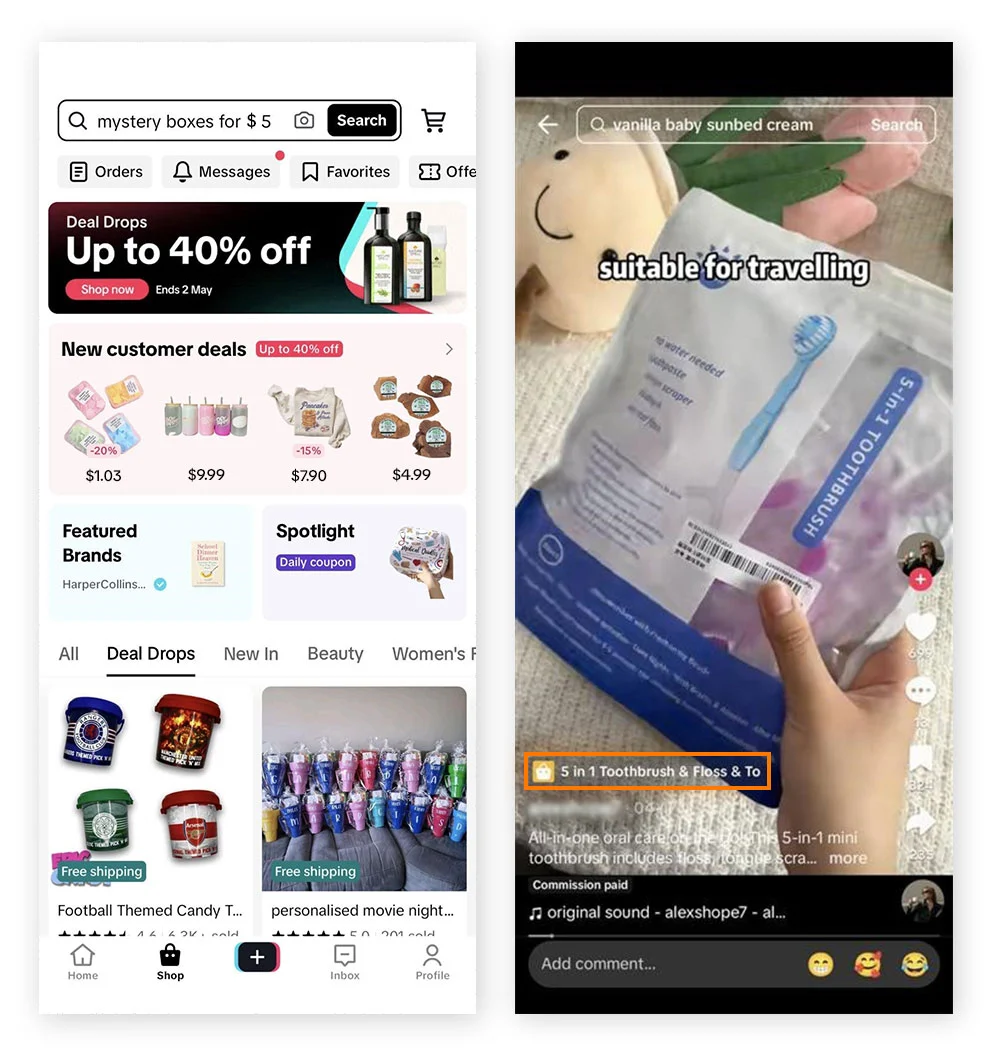
That’s one of the more interesting differences from Amazon. On Amazon, merchandising largely helps me capture and convert existing demand. On TikTok Shop, the combination of merchandising, creators and media can actually manufacture demand.
OPTIMIZE
This is where I think brands can get themselves into trouble because it is very easy to start optimizing TikTok Shop toward GMV or a platform-reported ROAS.
I wouldn’t optimize either in isolation. I would optimize the commercial system.
I want to know which products can absorb creator commissions and media while maintaining acceptable contribution margin. Does moving the affiliate commission from 10% to 15% generate enough incremental creator participation and sales to justify giving away another five points of revenue? Which creators actually generate new customers rather than views? Which messages convert? Which discounts increase conversion enough to pay for themselves? Which products have unusually high return or refund rates?
And I definitely want to know CAC. Not simply cost per order, but actual customer acquisition cost.
A customer who places three orders is different from three customers placing one order each. A subscription customer who stays for nine months is very different from someone who takes an introductory offer and cancels immediately. For a subscription business I would look at TikTok cohorts the same way I would evaluate any other acquisition source: activation, second order, cancellation, retention, LTV and contribution by cohort.
Returns and cancellations have to flow back into the optimization system as well. A creator can produce tremendous front-end GMV and still be economically terrible if those customers generate unusually high refunds, returns or subscription cancellations. The revenue looked great when it hit the dashboard. The margin didn’t.
MEASURE
This is probably the area where I would be most careful, particularly as TikTok increasingly optimizes the entire Shop ecosystem rather than a neatly isolated advertising campaign.
Product GMV Max can include paid, organic and affiliate orders in its attributed performance for the products it’s promoting. That’s incredibly useful for the algorithm because it sees a much broader picture of what is happening around the product. But that doesn’t mean I would take the reported return and call it incremental ROAS or use its cost per order as my CAC.
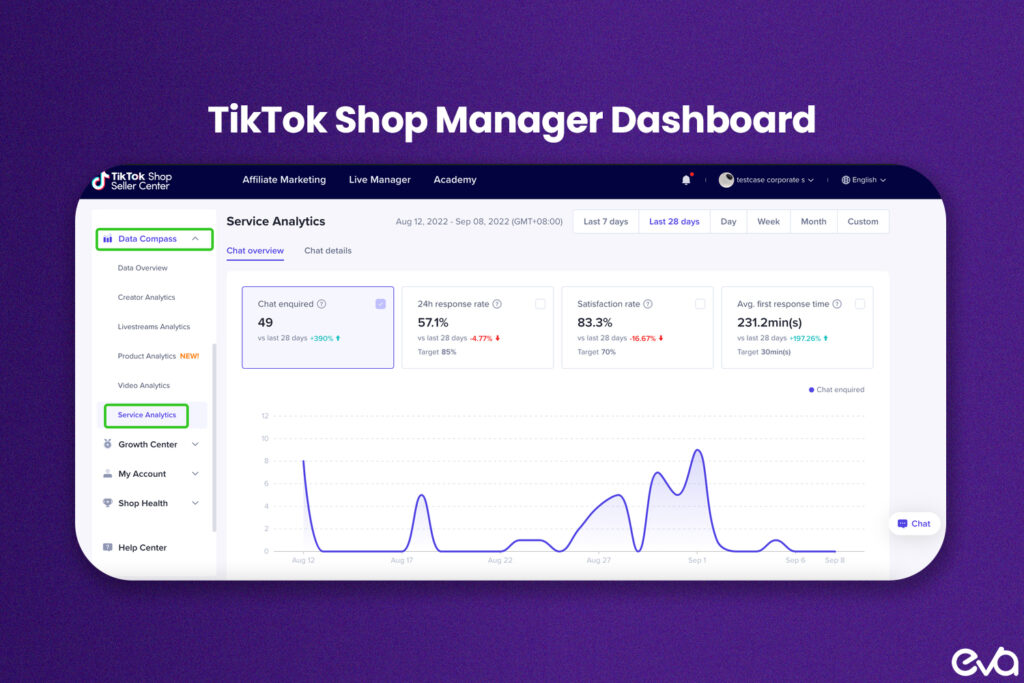
I want my own view of total GMV, unique new customers, paid spend, creator commissions, discounts, platform costs, fulfillment, COGS, refunds, returns and ultimately contribution margin. For a subscription business I’m adding cancellations, retention curves and cohort LTV. Then I want to understand what happened because I spent the next dollar versus what TikTok Shop would have generated organically or through affiliates anyway.
Those are two very different questions. It’s actually not that different from the measurement discipline sophisticated Amazon and e-tail operators eventually had to develop. Amazon ROAS never told the entire story either. You eventually needed to understand TACOS, organic lift, incrementality, margin and the relationship between retail media and the underlying retail business.
TikTok Shop is getting to a similar place through a very different demand engine.
Amazon built an enormous advertising business on top of a marketplace where people were already shopping. TikTok started with an enormous media and creator ecosystem and is building the marketplace directly into it.
The mechanics around products, CAC, margins, merchandising, returns and LTV will feel pretty familiar to anyone who has operated e-commerce, Amazon or e-tail. What is very different is that the creator, the media, the shelf and the transaction are increasingly becoming part of the same system.
And if you’re going to test it, get your hands dirty. I think that’s still the fastest way to figure out whether a new channel deserves a much bigger part of your growth system or shouldn’t be a priority at all.
Get the next one by email
Occasional notes on growth, brand and performance. No spam, one click to leave.