The History of the Stage-Gating Process
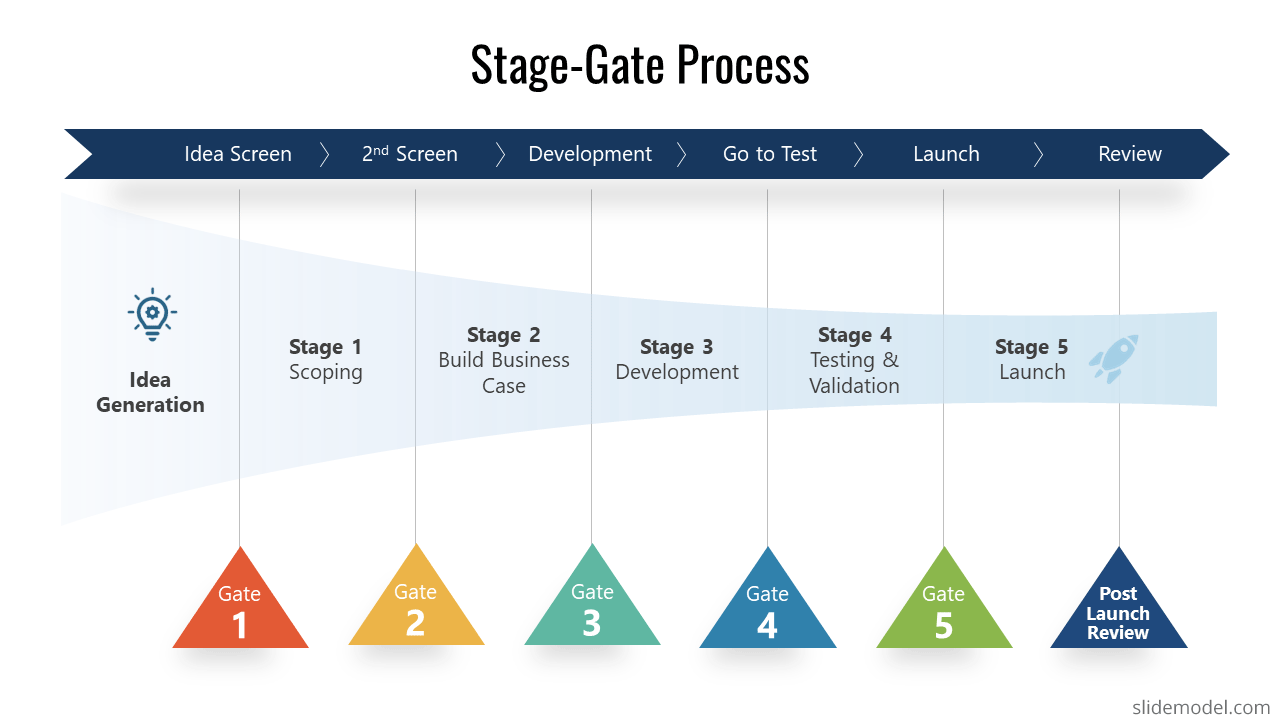
The stage-gating process is a systematic framework for managing innovation, designed to break large projects into phases separated by decision points (“gates”). This methodology was pioneered by Dr. Robert G. Cooper in the 1980s. Cooper, a Canadian academic, introduced the concept in his book Winning at New Products: Accelerating the Process from Idea to Launch, aiming to minimize risk, improve resource allocation, and increase success rates in product development.
Benefits and Risks of Stage-Gating
Benefits
- Risk Mitigation: Ensures that only well-vetted projects proceed, reducing costly failures.
- Resource Optimization: By filtering out weaker projects early, resources are concentrated on higher-potential initiatives.
- Cross-Functional Alignment: Structured gates encourage collaboration and clarity across departments.
- Regulatory Compliance: Industries with strict requirements benefit from detailed documentation and milestone reviews.
Risks
- Slower Time-to-Market: Sequential decision-making can delay progress in fast-moving markets.
- Over-Bureaucratization: Excessive documentation and rigid gates can stifle creativity and innovation.
- Inflexibility: Stage-gating assumes a linear progression, which may not suit projects with high uncertainty or evolving requirements.
Startups Rebel Against Stage-Gating
Startups, particularly those in hypergrowth or tech, often view stage-gating as incompatible with their need for speed and flexibility. Instead, they favor agile methodologies emphasizing sprints and iterative progress, as well as Lean Startup principles of rapid experimentation and pivoting based on feedback.
Emerging Alternatives to Stage-Gating
- Agile-Stage Gate Hybrids: Combine iterative development with gate reviews for projects requiring flexibility and oversight.
- Lean Stage-Gating: Streamlines gates with minimal documentation and faster decision-making.
- Digital Twins and Simulations: Use virtual models to simulate outcomes and validate designs before advancing stages.
- Real-Time Data Integration: Leverage AI and machine learning for predictive analytics, enabling dynamic gate criteria and faster decisions.
Improving Stage-Gating in Your Organization
- Adopt a Risk-Based Approach
- Integrate Real-Time Analytics
- Foster Cross-Functional Collaboration
- Streamline Documentation
- Embrace a Continuous Learning Culture
- Pilot Agile-Stage Gate Hybrids
- Incorporate Customer Feedback
The stage-gating process, while rooted in traditional innovation management, continues to evolve. By tailoring the approach to organizational needs and industry demands, companies can strike the right balance between control and adaptability, ensuring long-term success.
Get the next one by email
Occasional notes on growth, brand and performance. No spam, one click to leave.



 The newsletter