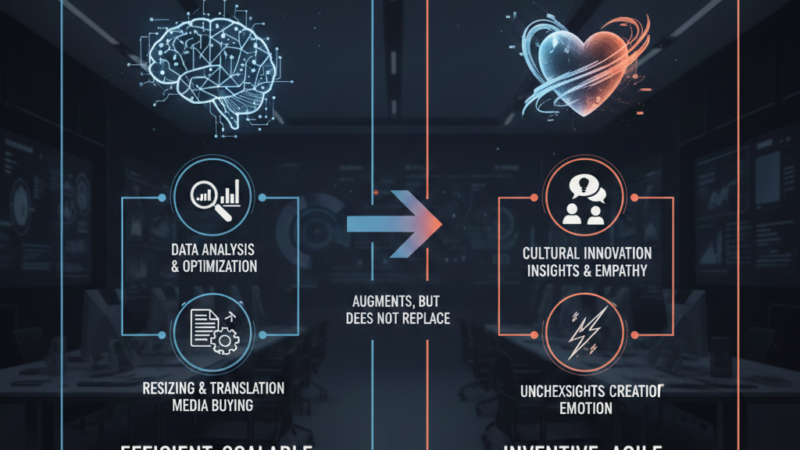
CAPI, privacy, consolidation and agentic AI are making advertising better. The bigger question is whether brands are getting better at understanding their own customers.
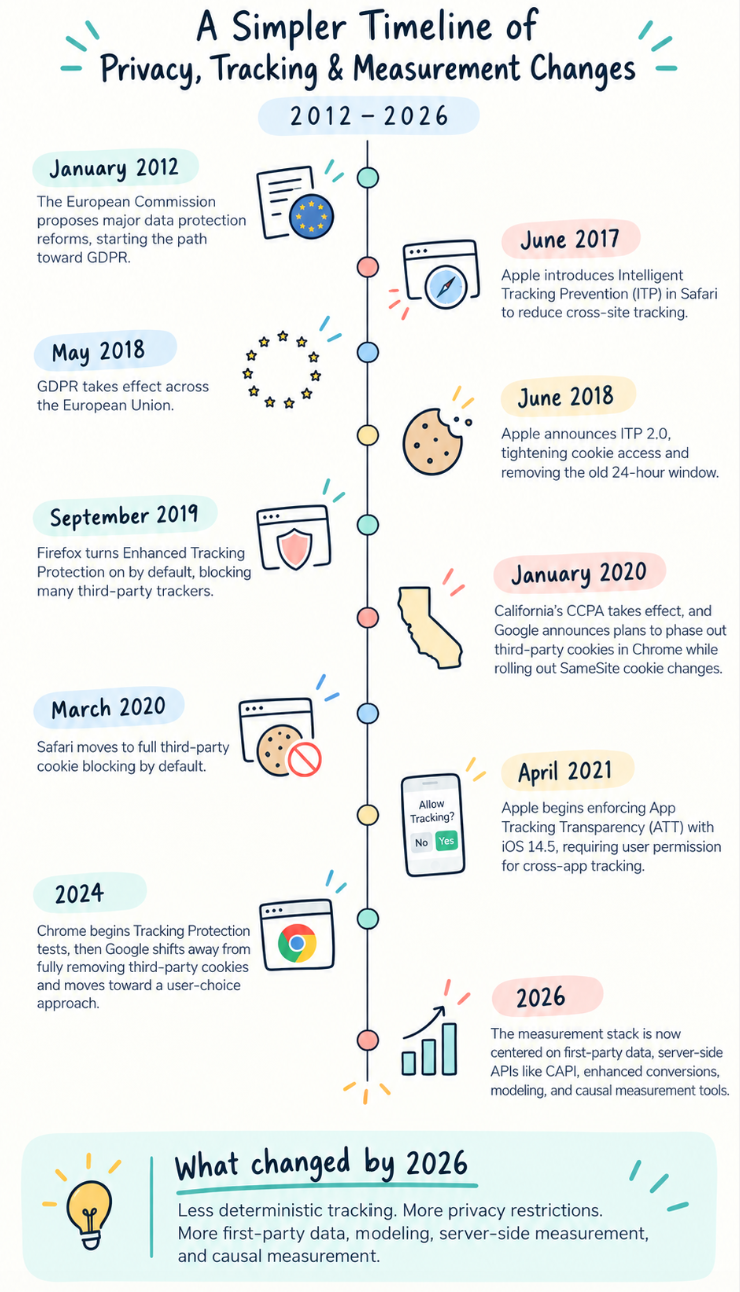
I first wrote about Apple’s Intelligent Tracking Prevention in February 2018. At the time, most of us were trying to understand whether ITP would be a major disruption, another ad tech problem we’d work around, or some combination of the two. I wrote that Google was already leaning into modeled conversion data, Facebook was moving toward people-based measurement, and I expected the large platforms to keep changing their attribution models to navigate the restrictions. I also thought the immediate impact would probably be relatively modest. The direction was right, but I clearly underestimated how far the underlying changes would go.
I revisited ITP earlier this year because what started as a browser privacy issue had become something much bigger. The industry didn’t stop advertising. It rebuilt the plumbing as cookies became less dependable, identifiers became harder to connect, user-level attribution became noisier, deterministic measurement was supplemented by much more probabilistic modeling, and the largest platforms got very good at filling in the gaps.
Most of that was inevitable. Privacy was going to get tighter, consumers deserved more control, and platforms had to figure out how to keep operating in that environment. What I keep coming back to now is the next problem. We’ve spent years talking about whether Meta or Google can still find the right customer, measure the conversion, and optimize the campaign, when the bigger question may be whether, in making them better at doing all of that for us, we’re allowing them to become better at understanding our prospects than we are.
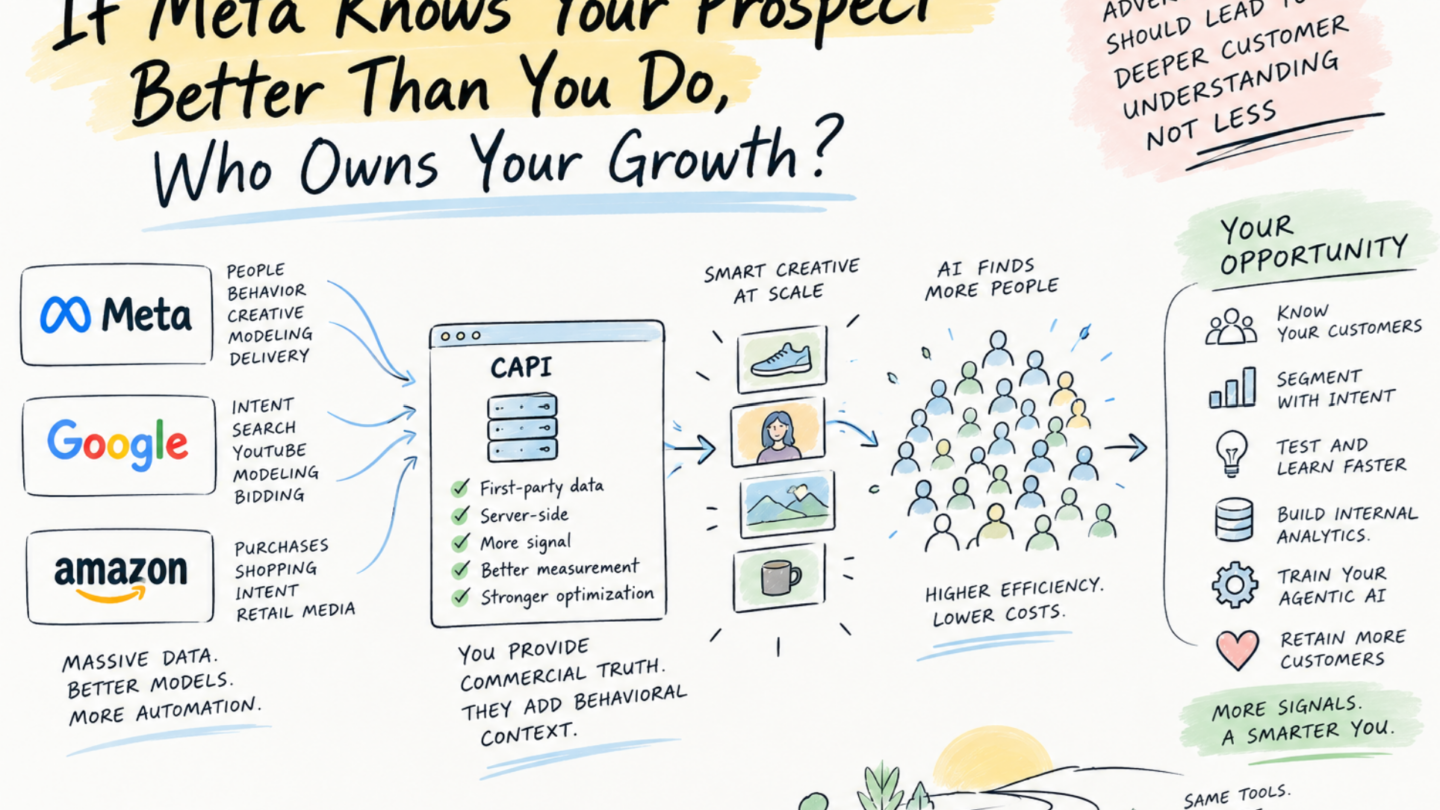
My thesis is pretty simple. You can’t sustainably grow a business if you don’t understand how your prospects’ needs, motivations, behaviors, and expectations are changing. You can outsource media execution, let an algorithm decide which impression to buy, what to bid, and where to allocate the next dollar, and in many cases that’s probably the right decision. What you can’t outsource is understanding your market, because if that increasingly happens inside Meta, Google, Amazon or another scaled platform while the advertiser gets back an optimized campaign and a performance report, we may be improving media efficiency while slowly giving up something much more important.
ITP changed more than tracking
Apple introduced ITP in 2017 because cross-site tracking had become pervasive and largely invisible to consumers. Safari progressively restricted cookies and other tracking techniques, while App Tracking Transparency later constrained the ability to connect behavior across companies’ apps and websites without permission. Consumers should have much more control over how their information is used, so I don’t think the answer is that privacy was somehow a mistake.
The consequence for marketers, though, wasn’t simply that tracking got worse. The balance of information changed. Advertisers lost a meaningful amount of independent visibility across websites, apps, and devices, while Meta didn’t stop knowing what people were doing on Facebook and Instagram, Google didn’t stop having logged-in relationships across Search, YouTube and its broader ecosystem, and Amazon didn’t stop knowing what people searched for and purchased on Amazon.
That distinction matters because we didn’t all move from deterministic to probabilistic information equally. The advertiser lost some deterministic observability across the open web while the largest platforms retained huge amounts of first-party behavioral information inside their own environments, and they became increasingly sophisticated at modeling what they could no longer observe directly.
Google describes conversion modeling pretty openly. When a conversion can’t be directly connected to an advertising interaction because of browser restrictions, consent choices or missing identifiers, Google can use observed behavior to estimate what happened in the unobserved portion of the journey, and those modeled conversions can then flow into reporting and automated bidding. That makes sense, but operationally it also means the same system can increasingly buy the media, observe part of the customer journey, model another part, attribute the conversion, and then use that result to decide how to buy the next impression.
That’s a very powerful loop, and it’s exactly why independent customer understanding becomes more important rather than less. The more capable the platform becomes at reconstructing what happened, the more important it is that the advertiser maintain an independent view of the customer and the business rather than simply accepting the platform’s interpretation.
CAPI changed the architecture
Eric Seufert’s recent piece, The CAPI Revolution, got me thinking about this again because he frames Conversions APIs as much more than an attribution fix. I think that’s the right way to look at them, because pixels were fundamentally dependent on somebody else’s operating environment. A browser loaded the code, the browser managed storage, and the browser or operating system could change the rules.
Apple demonstrated repeatedly that it could make that infrastructure less useful by changing Safari, cookie persistence, identifiers, and other pieces of the stack. CAPI moves a meaningful part of that feedback loop somewhere else because my server can record a transaction and send information about that transaction directly to Meta’s server without the browser sitting between those systems in the same way.
That’s a big architectural change, and it’s why I don’t see CAPI as a temporary workaround for ATT. Server-side conversion infrastructure is becoming a core part of modern advertising, and Meta says advertisers configured with its Conversions API for web events experience, on average, a 17.8% lower cost per result compared with advertisers that aren’t. Meta has also made CAPI considerably easier to deploy because getting more advertisers connected to better first-party signals obviously improves the system.
Google is doing something similar with Enhanced Conversions. First-party customer information improves conversion measurement, and that in turn improves modeling and bidding. Google has reported an average 11% increase in Search conversions for advertisers using Enhanced Conversions compared with standard conversion imports, while advertisers connecting offline and app data through Data Manager saw an average 26% increase in incremental ROAS in Google’s own analysis.
Those are meaningful improvements, and I’m not arguing against any of this. I want CAPI, I want Enhanced Conversions, and I want better first-party signals flowing into optimization. The question I’m interested in is what happens to everything the platforms learn once we give them those signals, and whether the advertiser is building its own intelligence at the same rate.
We’re giving the platforms a training set about our customers
This is the part of Eric’s analysis that I think deserves more attention from marketers. A conversion feed doesn’t necessarily contain only customers a particular platform created, because depending on how the advertiser implements it, the platform can receive information about customers who ultimately converted through many different parts of the business.
Someone discovers the brand through a podcast, searches organically three weeks later, sees an email, talks to a friend, and eventually purchases directly. The transaction enters the advertiser’s backend, and that transaction can still become another piece of commercial feedback available to a major advertising platform.
Think about what each party knows at that point. The advertiser knows the transaction occurred and may know the product, order value, geography, prior purchase history, acquisition source, and whatever else sits in the CRM or warehouse. Meta may be able to combine that outcome with behavioral information inside its own ecosystem, while Google can combine commercial outcomes with search and intent signals the advertiser can’t independently reconstruct.
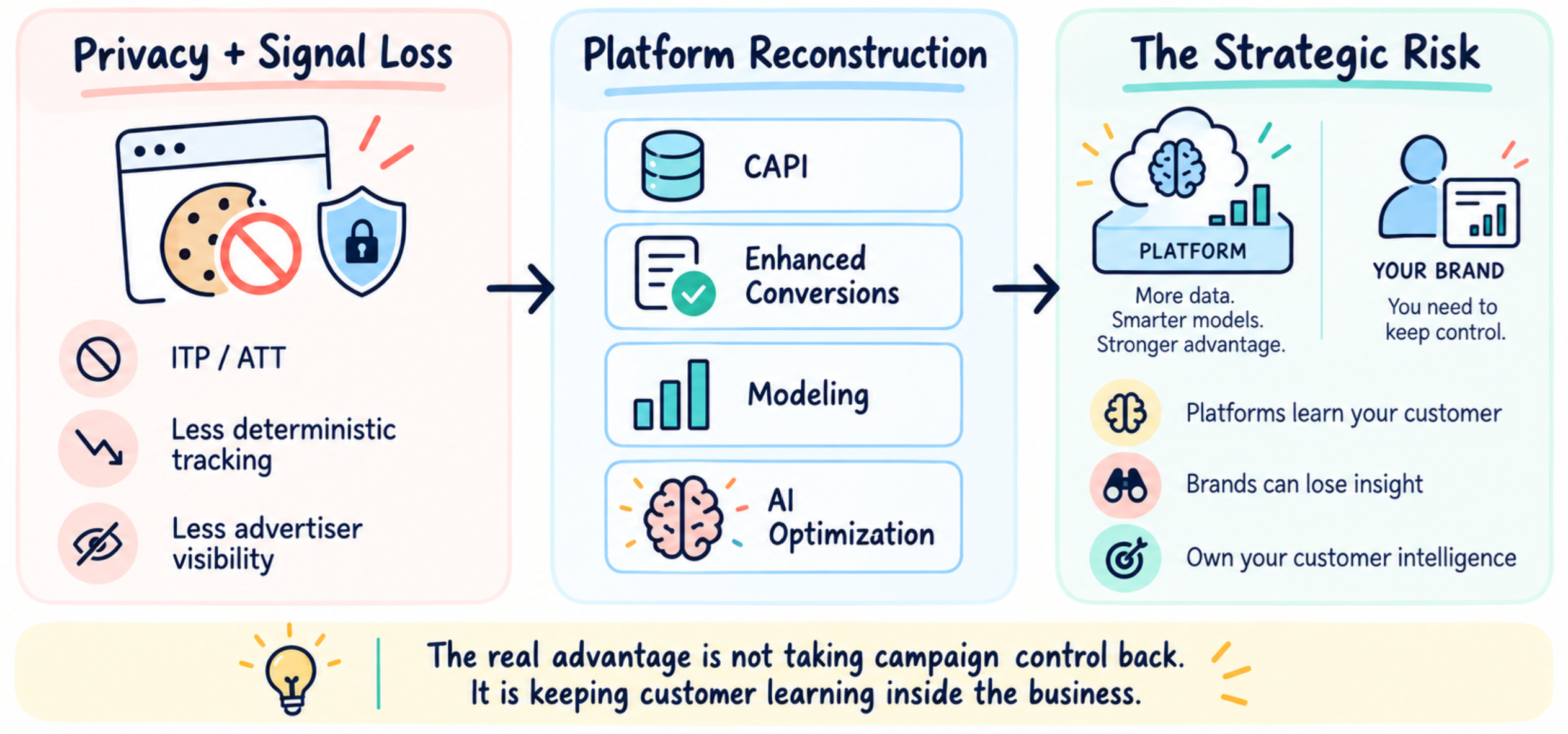
The brand supplies commercial truth, and the platform adds behavioral context. The model learns from the combination and then comes back with more customers. From an acquisition standpoint, that’s fantastic, because if I’m running growth and Meta can find another 10,000 customers at an acceptable CAC, I’m going to take them.
The issue is what the company learned in the process. Did we learn that the reason people buy is shifting from convenience toward quality, that price sensitivity is changing, that a new use case is emerging, or that a product attribute we thought was secondary has suddenly become much more important? Did we learn that customers acquired against one proposition behave very differently after conversion than customers acquired against another, or did the platform simply find the correlation and turn it into delivery?
Maybe we learned all of that, but platform optimization doesn’t guarantee that we did. The model can learn relationships across thousands of signals and turn them directly into media decisions without ever translating those relationships into knowledge the company understands. That’s the gap I’m worried about, because getting better at finding buyers isn’t the same thing as getting better at understanding them.
We’ve seen a version of this before
Consumer brands have dealt with a version of this tradeoff for decades. Walmart can give a brand tremendous distribution, but Walmart also knows an enormous amount about the shopper. Amazon can provide incredible scale while also seeing search behavior, comparison behavior, price sensitivity, category movement and the transaction itself.
For years, DTC companies talked about escaping that relationship. Owning the customer became one of the core arguments for going direct, yet the irony is that we’re now recreating a different version of the same structure.
Meta and Google aren’t retailers in the traditional sense, but look at the functions that are moving into these platforms. They increasingly handle audience discovery, demand capture, creative generation, creative selection, bidding, budget allocation, attribution, analytics, and more agentic decision-making. Meta’s end-to-end Advantage+ products passed a $75B annual revenue run rate in Q2 2026, while Google has said Performance Max is used by more than one million advertisers and continues to move more automation into Search, Shopping and other parts of its ecosystem.
This isn’t a niche change around the edges of media buying. It’s becoming the operating model, and McKinsey’s recent survey of 182 U.S. agency and marketing leaders found that 42% cited reliance on black box optimization systems as a key AI-related media investment risk. Their broader point is more interesting than the percentage itself because when data, measurement, decision-making, and transactions become more concentrated, more economic value can accumulate inside the platforms that control those functions.
Retailers historically owned the shelf, the traffic, the transaction, and the shopper intelligence. What we’re building now looks increasingly like a digital version where the shelf is algorithmic. That’s not necessarily bad, but it absolutely changes where knowledge and leverage sit.
Consolidation isn’t the enemy
I don’t want this to turn into another manual versus automated media debate because that misses the point. I’ve managed enough large media programs to know how ridiculous account complexity can become, with hundreds of ad sets, overlapping audiences, arbitrary campaign boundaries and endless lookalike variations that didn’t necessarily represent sophisticated marketing.
A lot of that was operational theater. Meta’s Andromeda system is designed to search across an enormous number of potential ad candidates and identify relationships between people and creative that a human media team could never process at the same scale, while its newer sequence learning systems go further by learning from sequences of views, clicks, engagement, and conversion behavior rather than relying only on hand built features.hand-built
A media buyer isn’t going to beat that by creating another interest audience, and I don’t think we should try. Let the machine do what the machine is good at, but don’t confuse that with a universal answer to every growth problem.
Haus’ work on Meta incrementality is useful here because it shows why. Haus looked at 640 Meta incrementality experiments across brands spending an average of about $14MM annually on Meta. Advantage+ was widely adopted, with 93% of the brands in the sample using it and approximately 39% of Meta spend flowing through it.
Advantage+ was very good at identifying intent quickly. At the midpoint of experiments, it outperformed Manual campaigns by about 9%, yet after the full experiment and post treatment period, Advantage+ averaged 12% lower DTC incremental ROAS, and Manual campaigns produced higher iROAS in 58% of the head-to-head tests.
That doesn’t mean Manual is better because Advantage+ won for the other 42%, which is exactly why trying to turn this into a universal recommendation would be wrong. The more interesting point is that an algorithm can become incredibly good at finding people who are likely to buy without necessarily being equally good at creating new demand, and platform-reported efficiency isn’t the same thing as incremental business value.
Haus’ more recent work suggests Meta’s Incremental Attribution is improving materially as well, which is encouraging. I expect these systems to keep improving, but my concern isn’t whether the machines get better. It’s what the advertiser learns while all of that improvement is happening.
Finding a prospect isn’t the same as understanding a prospect
This is really the center of the argument for me. If Meta can find my prospect better than I can, I’m fine with that and frankly hope it can because there are billions of interactions happening across these platforms and no human marketing organization can process them at the same speed.
If Meta increasingly understands how my prospect’s needs are changing better than my company does, I have a very different problem. A platform’s job is to predict an outcome, while my job as a growth leader is broader because I need to understand why demand exists, whether that demand is durable, which customers create value, how behavior is changing, what creates preference, where product-market fit is strengthening or weakening, and what the business should do next.
That’s where I think marketers can inadvertently give up control. We’ve removed executional complexity from organizations, which is probably a good thing, but in some cases we’ve also removed structures that forced us to think carefully about audiences, propositions, customer quality, and causal behavior.
I don’t want the old campaign structures back. I want the learning they sometimes forced us to do, without all of the unnecessary operational complexity that came with them.
This becomes much more important with agentic AI
I wrote about agentic AI in 2024 because I thought the obvious next step after generative AI was moving from software that helps people do work toward systems that actually perform parts of the work. At the time, I was thinking about campaign trafficking, QA, media allocation, creative variation, and eventually virtual team members that could adapt and make decisions based on live information.
We’re already there in many cases and moving past it in others. AI can generate creative, traffic campaigns, shift budgets, diagnose performance, recommend changes, and increasingly execute against those recommendations. That’s useful, but it brings us back to the same issue because the quality of an agent depends on the data, rules, feedback, and judgment we give it.
If our future growth agent is trained primarily on clicks, CAC, platform conversions, CTR, and ROAS, we’re going to build a very fast media optimizer. If we want an agent that can actually help run growth, it needs to understand much more, including what a good customer looks like, why that customer bought, what happens after conversion, what the product promise was, what creates retention, what creates churn, and what the business considers valuable.
That’s a much richer training problem, and I think it’s where the next generation of competitive advantage starts to separate from simple access to AI. Everyone is going to have models and agents. The real question is what they’re learning from and whether the company has enough proprietary customer understanding to make those systems any better than somebody else’s.
The answer isn’t less CAPI
I don’t think the response is to hold data back from the platforms just because we’re worried they’ll learn too much. If supplying a signal materially improves business performance, can be done responsibly, and fits the company’s privacy and governance model, there’s no reason to pretend the signal doesn’t exist.
The better answer is to make sure the same intelligence exists inside the organization first. If one customer generates $700 in contribution margin and another generates $45, your own systems should know the difference. If full-price customers retain twice as long as discount-acquired customers, know that. If one geography produces better LTV, or a customer acquired on one proposition behaves differently from someone acquired on another proposition, know that too.
The same goes for referral propensity, return behavior, service cost, category expansion, subscription durability, and whatever else drives the economics of your business. Once the company understands those differences, it can decide which value signals should flow back into Meta, Google or another platform to improve optimization.
That changes the relationship because the business defines value and the platform optimizes against it. The platform shouldn’t be allowed to define value simply because its optimization system is good at finding conversions.
Creative can give us some of the granularity back
Campaign consolidation doesn’t mean we should stop segmenting how we think. I actually think creative becomes one of the more interesting ways to get granularity back without rebuilding the campaign monstrosities we spent years dismantling.
Meta wants more creative diversity because its retrieval models become more useful as the candidate pool grows. Andromeda was designed, in part, to handle massive increases in available creative while learning increasingly complex interactions between ads and people, which is another reason creative volume is becoming much more important to the platform.
That doesn’t mean we should make 500 random pieces of AI-generated content and call it a strategy. Every meaningful creative build should start with a hypothesis about the prospect. What need are we addressing? What tension are we resolving? What proposition are we testing? Which product attribute matters? What objection are we trying to overcome? Is the benefit functional, emotional, or social?
That structure needs to live inside the company even if the platform decides where the creative goes. If the brand still knows what the creative means, the organization can stop asking only which ad won and start asking which need state is growing, which message is losing resonance, which proof point matters more than it did six months ago, which customer group is reacting differently, and whether those differences continue after conversion.
Now creative testing becomes part of the customer intelligence system rather than simply a content production system. The machine gets more creative to work with, while the company gets more structured learning back from the creative it puts into market.
Segmentation didn’t disappear either
There’s another idea floating around performance marketing that I think has gone too far. Because detailed audience targeting has become less necessary in some platforms, segmentation itself somehow became outdated. I don’t buy that because media segmentation and customer segmentation are different things.
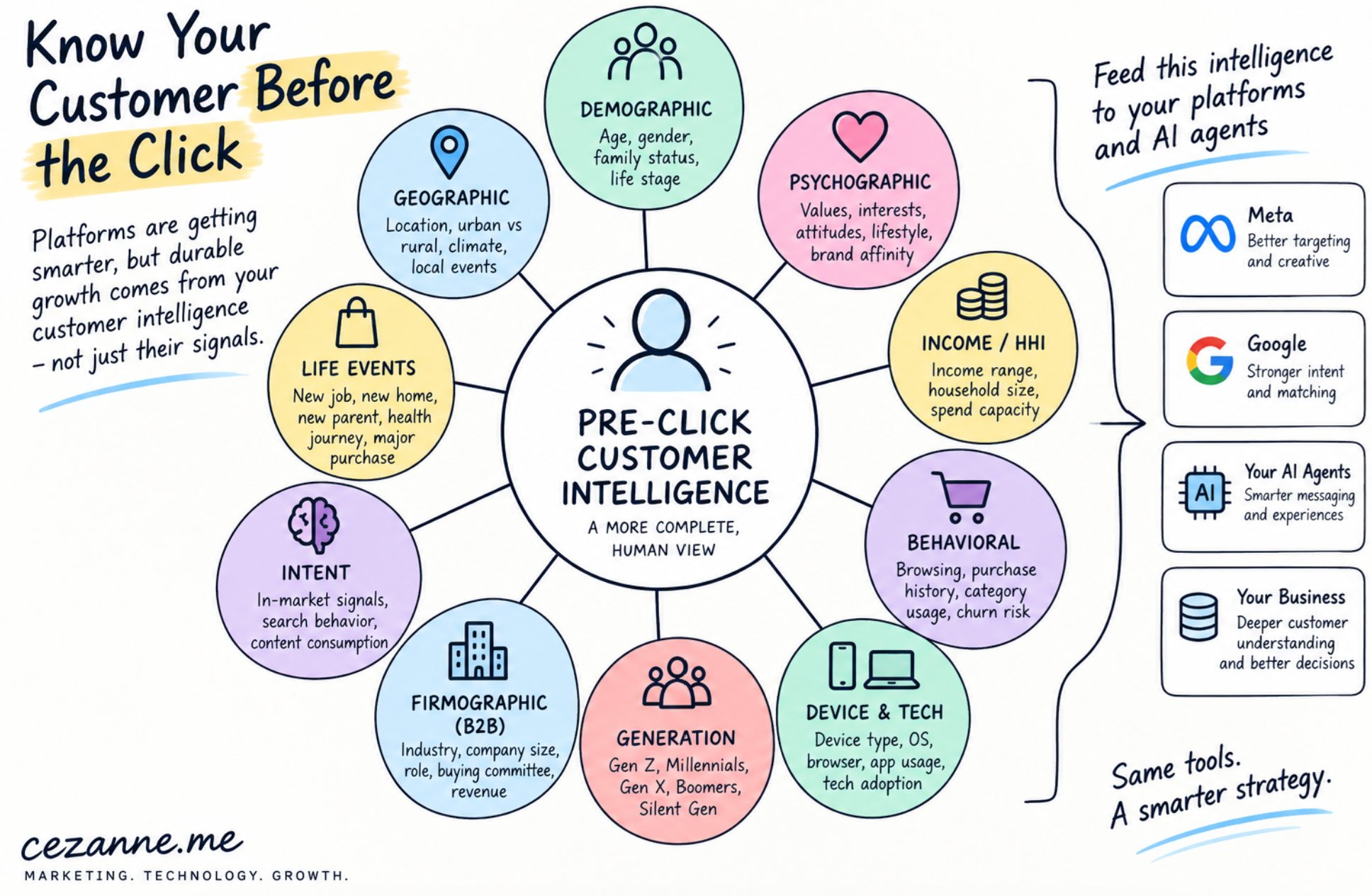
You may not need 25 separate Meta audiences, but your business should absolutely understand its high- and low LTV customers, full-price versus promotion-dependent buyers, short versus long retention cohorts, single-category versus multi-category customers, referral propensity, usage intensity, service cost, and churn behavior.
It can’t all be transactional either. A CDP with 900 attributes doesn’t mean you understand the customer, which is why qualitative work still matters. Talk to people, run interviews, read support conversations, look at reviews, understand cancellation reasons, watch search behavior, listen to sales objections, track changes in category language, and figure out why something that worked a year ago suddenly stopped working.
First-party data and first-party intelligence aren’t the same thing. That’s a distinction I think we’re going to care about a lot more as companies start building their own AI systems on top of these data sets.
Internal analytics has to get stronger, not weaker
The better Meta and Google get, the less comfortable I am using their reporting as the primary definition of whether the business is working. That doesn’t mean ignoring platform analytics because platform data is incredibly useful for managing the platform, but it shouldn’t be allowed to grade its own homework without an outside reference.
I’ve spent years using MMM, MTA, holdouts, incrementality testing, predicted LTV, and cohort analysis because no single measurement framework tells the whole story. The environment is too messy, and it’s becoming messier as more modeled data and automated decision-making enter the system.
Haus’ Meta work is a good example because platform reporting suggested one thing while incrementality testing sometimes showed something materially different. Google’s own 2026 measurement roadmap talks explicitly about stronger first-party data, multiple measurement signals, and causal proof, while the company is expanding geo experimentation and Meridian; at the same time, it’s expanding AI-driven campaign automation e.g. AI Max.
Those things aren’t in conflict because better optimization doesn’t eliminate the need for independent validation. My internal measurement hierarchy is pretty straightforward: platform analytics tells me what the platform thinks happened, the warehouse tells me what the customer actually did, cohort analysis tells me what kind of customer I acquired, LTV and margin tell me whether that customer was economically valuable, experiments help tell me whether my spend changed behavior, and MMM helps tell me whether the broader pattern makes sense over time.
None of those systems is perfect on its own. Together they produce a much better operating picture and, just as importantly, keep the knowledge inside the company rather than allowing the platform’s interpretation to become the only version of reality.
That’s what I want our own agents learning from
I don’t want my future growth agent trained primarily on Meta and Google performance exports. I want those data sets included, obviously, but I also want the agent to understand customer interviews, CRM history, sales calls, search behavior, cancellation reasons, support tickets, reviews, win-loss analysis, product usage, competitive intelligence, pricing tests, experiment results, creative taxonomy, contribution margin, predicted LTV and retention curves.
I want the agent to know the difference between somebody who converted and somebody I actually want more of. It should understand why we rejected a creative concept even though the CTR looked fantastic, remember that an acquisition tactic produced cheap customers who churned three months later, and understand when a seemingly expensive cohort became one of our most valuable customer populations after 18 months.
I also want it to understand when a discount strategy lifted conversion but trained the market to wait for another promotion. That’s the difference between an agent that merely has access to data and one that starts to develop useful judgment about the business.
I’ve written before that AI doesn’t fix a bad operating model. It amplifies it, and the same applies here. Giving an agent unlimited optimization capability without institutional customer knowledge doesn’t automatically create better marketing. It creates faster decision-making, and that’s only useful when the underlying judgment is good.
The competitive advantage won’t be the agent itself because everyone is going to have agents. The advantage will be the proprietary learning system the agent sits on top of, the quality of the inputs going into it, and the taste and judgment the organization teaches it over time.
The growth operating model needs to change
I don’t want to go back to 2018. I don’t want armies of media buyers making manual bid adjustments, hundreds of audiences simply because complicated account structures make people feel like they’re doing sophisticated work, or teams spending weeks making variations an agent can produce in minutes.
I want a much tighter relationship between customer understanding, data, creative, media, experimentation, product, and retention. The growth loop should start with a prospect need, not a campaign, and we should understand that need well enough to define a customer hypothesis before we ever ask the platform to find people.
Creative should express that hypothesis and the platform should use its technology to find where that idea resonates. Conversion data should tell us what happened, internal analytics should tell us who we acquired and whether they were valuable, retention should tell us whether the promise actually matched the product, and incrementality should tell us whether the spend changed behavior.
Then all of that needs to come back into our understanding of the prospect and influence what we do next. That learning loop belongs to the company even though Meta, Google, agencies, and eventually our own agents can operate different pieces of it, because no outside platform should become the only entity capable of understanding the whole thing.
That’s the control I care about
I don’t think Meta is doing anything wrong by getting better at advertising. I don’t think Google should intentionally make its models worse so marketers can feel more involved; I don’t think Apple was wrong to push privacy controls, and I don’t think CAPI is something we should be afraid of. Those conclusions are too simple because the problem is really on our side.
We’ve spent years optimizing away friction, complexity, and manual decision-making, and in a lot of cases that was absolutely the right thing to do. Somewhere along the way, though, some companies also started outsourcing more of the learning process.
A company can have fantastic platform performance and still lose touch with its market. It can hit its CAC target while customer quality deteriorates, improve ROAS while competitors create the next demand curve, and accumulate more data than it has ever had while actually understanding less.
Agentic AI makes that much more consequential because we’re moving from algorithms that recommend decisions toward systems that can increasingly execute those decisions. If the intelligence underneath those agents largely comes from Meta, Google, Amazon, or another outside platform, then your agent isn’t really learning your market as much as it’s learning to operate somebody else’s interpretation of your market.
The part I keep coming back to is that advertising could get materially better while marketing itself gets worse. Meta can find more customers, Google can identify more demand, CAPI can recover signal, Enhanced Conversions can improve measurement, Advantage+ can optimize delivery, Performance Max can allocate spend, generative AI can produce more creative, and agents can manage increasingly large parts of execution. All of those things can work at the same time that the company becomes less capable of answering a very basic question: why is this person buying from us now, and how is that changing?
That’s a bad trade if we don’t even realize we’re making it. I want Meta’s models finding relationships my team would never find and Google discovering demand we didn’t know existed. I want CAPI feeding better signals into those systems, Enhanced Conversions recovering information that would otherwise disappear, and AI doing work people are objectively bad at or shouldn’t be spending their time doing.
I also want us to understand the customer better than we ever have, because when machines can execute almost anything, knowing what they should execute and why becomes much more important. Growth teams need to stop defining control as whether we can change a bid, select an audience, or force a platform into another campaign structure and start defining it as knowing the prospect better than anyone else, feeding that understanding into every system we use and making sure every customer interaction teaches the organization something that compounds.
If Meta knows my prospect better than I do today, that can be useful. If Meta still knows my prospect better than I do two years from now, that’s my failure, because I don’t think you can control the direction of a business if somebody else’s system understands how your market is changing before you do.
Research method and what I’m not claiming
I approached this by following how the advertising architecture has changed rather than trying to prove that automation is good or bad. I started with my original February 2018 ITP analysis, where I was already looking at Apple’s restrictions, Google’s use of modeled conversion data, and Facebook’s move toward people-based measurement, and then connected that to my more recent ITP update on how privacy frameworks changed analytics and platform measurement along with my earlier work on agentic AI and more autonomous marketing systems.
From there I reviewed Apple’s WebKit and privacy documentation, Meta’s engineering work on Andromeda and sequence learning, Meta’s 2026 earnings disclosures around Advantage+, Google’s documentation and 2026 releases around Enhanced Conversions, Data Manager, Performance Max and measurement, Eric Seufert’s September 2026 The CAPI Revolution, Haus’ 640 Meta incrementality experiments and subsequent work on Incremental Attribution, and McKinsey’s research into the emerging agentic advertising economy.
The distinction between source data and my argument matters. Meta’s 17.8% CAPI result is Meta’s analysis; Google’s 11% Enhanced Conversions result and 26% incremental ROAS figure come from Google; Haus provides independent experimental evidence, but its sample consists of sophisticated advertisers spending an average of roughly $14MM annually on Meta; and McKinsey’s black box finding comes from a February 2026 survey of 182 U.S. advertising and marketing leaders.
I’m also not claiming that CAPI, Advantage+, Performance Max, or campaign consolidation causes companies to lose customer understanding because I haven’t seen evidence that would support that causal statement. My argument is organizational. The advertising architecture increasingly gives platforms better commercial feedback, more behavioral context, more optimization authority, and eventually more autonomous execution, so if brands don’t deliberately build customer intelligence, segmentation, creative learning, independent measurement, and their own AI knowledge systems alongside that architecture, the platforms can keep getting smarter about the brand’s prospects without the brand getting smarter at the same rate.
That’s the trade-off growth leaders need to pay attention to now.
Sources and further reading
- Cézanne Huq, The Basics of the New Apple Intelligent Tracking Prevention (ITP), February 2018.
- Cézanne Huq, Apple Intelligent Tracking Prevention (ITP) Evolved: How Privacy Frameworks Warped Google, Meta & Analytics, 2026.
- Cézanne Huq, Agentic AI: Autonomous AI, The Future of Marketing, 2024.
- Eric Benjamin Seufert, The CAPI Revolution, Mobile Dev Memo, September 9, 2026.
- Apple WebKit documentation on Intelligent Tracking Prevention and subsequent ITP updates.
- Meta documentation and engineering materials on Conversions API, Andromeda, sequence learning, Value Rules and Advantage+.
- Meta Q2 2026 earnings materials, including the reported Advantage+ annual revenue run rate.
- Google documentation on conversion modeling, Enhanced Conversions, Data Manager, Performance Max, Meridian and geo experimentation.
- Haus, The Meta Report: Lessons From 640 Haus Incrementality Experiments, plus its later work on Meta Incremental Attribution.
- McKinsey & Company, The Agentic Advertising Economy: From Attention to Action, June 2026.
Get the next one by email
Occasional notes on growth, brand and performance. No spam, one click to leave.