I got to wade into the Publicis Groupe acquisition of LiveRamp this weekend and figured I’d share a perspective. My opinions are my own.
Everyone is asking whether this was a smart acquisition, but I think the more important question is whether it was actually necessary.
Because if you read between the lines, this is not really an advertising story. It’s an infrastructure story disguised as an M&A deal.
Publicis is continuing its transformation from a holding company into a platform business powered by agency services. Frankly, they may be the furthest along among the large holdcos in understanding where the market is heading. The traditional agency model was built around media buying leverage, creative services, procurement scale, and client relationships, but the next era looks very different.
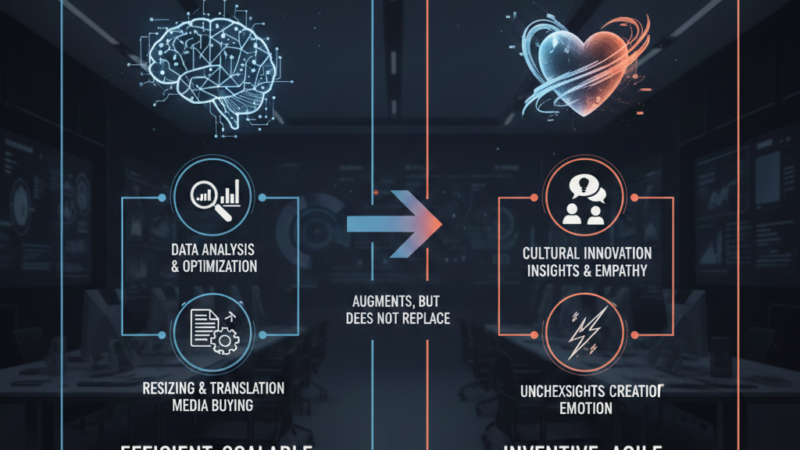
AI is compressing execution rapidly. Creative production is accelerating, optimization is becoming automated, segmentation is becoming commoditized, and media buying itself is increasingly system-driven. As that happens, the differentiator shifts lower into the stack. Identity infrastructure, privacy-safe collaboration, closed-loop measurement, proprietary data orchestration, and AI-enabled intelligence systems are becoming the real battleground.
That’s what this deal is actually about.
On paper, the acquisition looks rational
Publicis is paying roughly $2.2B for a company approaching approximately $850MM in ARR, putting the transaction around a 2.6x revenue multiple depending on how you frame it. In an environment where scaled SaaS businesses historically traded much richer, that multiple stands out.
And the infrastructure itself is meaningful. LiveRamp connects more than 25,000 publisher domains and over 500 technology and data partners across 14 markets. Rebuilding that organically would likely take years, even for a company with Publicis’ scale and distribution.
But I think most people are still underestimating what Publicis is really buying here.
They are not simply buying identity resolution or adtech middleware. They are buying positioning for the agentic AI era.
Identity is the qualifier for AI
That’s the part that clicked for me after reading deeper into the deal commentary. Publicis keeps using language around “data co-creation,” “agentic transformation,” and “smarter AI agents.” Digiday framed it even more bluntly: “Identity is the qualifier for AI.”
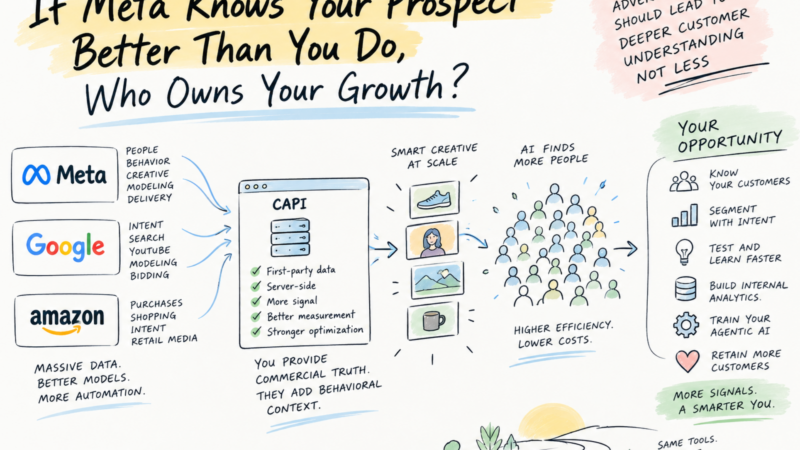
That’s an extremely important signal. Because if AI agents become operational layers for marketing, commerce, servicing, and personalization, then competitive advantage no longer comes from simply having access to AI models. The models themselves will increasingly commoditize. The advantage comes from differentiated data, identity continuity, behavioral context, and the ability to safely orchestrate actions across fragmented ecosystems.
Arthur Sadoun basically said this directly: “There is no way you can win with agents if you don’t have the right and differentiated data.” That statement tells you this acquisition is about far more than media. It’s about owning part of the infrastructure layer underneath AI-enabled business systems.
The uncomfortable question: why sell now?
If LiveRamp was truly bulletproof as an independent company, why sell now? The low multiple itself may actually tell the story. If the market genuinely believed LiveRamp was becoming the dominant independent operating system for the AI era, the valuation probably looks very different. Instead, LiveRamp sat in an awkward middle position for public markets. It wasn’t quite a hyperscaler, wasn’t enterprise SaaS at Salesforce scale, wasn’t a pure AI company, and wasn’t purely infrastructure either.
At the same time, the identity market itself may eventually become less valuable than people think. Not because identity disappears, but because the economics shift. The strongest businesses are increasingly building direct first-party ecosystems, proprietary behavioral feedback loops, and AI-enabled decisioning systems internally rather than relying on external stitching layers across the open web.
Simultaneously smart and defensive
Which is why this acquisition feels simultaneously smart and defensive. Smart because Publicis clearly understands infrastructure matters in the AI era. Defensive because they also understand the current stack is being rewritten in real time. And frankly, LiveRamp may have understood that too.
There’s a very plausible scenario where remaining independent became the riskier path. Competing in the next era likely requires enormous scale, distribution, enterprise relationships, AI investment, regulatory maturity, and integration depth. Publicis already has Epsilon, Sapient, Lotame, massive enterprise penetration, consulting layers, and media scale. Together, that creates a much stronger ecosystem than LiveRamp operating independently.
This acquisition buys mature infrastructure, enterprise adoption, privacy frameworks, regulatory maturity, distribution, and perhaps most importantly, time. When incumbents sense platform risk approaching, they tend to buy certainty before the market fully reprices the threat. That’s why this deal feels simultaneously smart and anxious. Smart because infrastructure absolutely matters in the AI era, and anxious because everyone can feel the stack being rewritten in real time.
Get the next one by email
Occasional notes on growth, brand and performance. No spam, one click to leave.