In the past decade or two, I’ve had the opportunity to truly explore and learn more about the “supply chain” of digital marketing through the lens of an agency and from the view of an in-house digital marketing executive. I’ve also had the opportunity to work within the top most important verticals such as Financial Services, Travel & Hospitality and Retail and learn about the opportunities and challenges each have faced to deliver high-fidelity digital strategy to drive business growth.
What I’ve learned is that in every experience I couldn’t help seeing a tale of two cities: on one hand organizations stumbling into adopting agile software development methodologies while on the other hand, marketing organizations working to adopt waterfall methods.
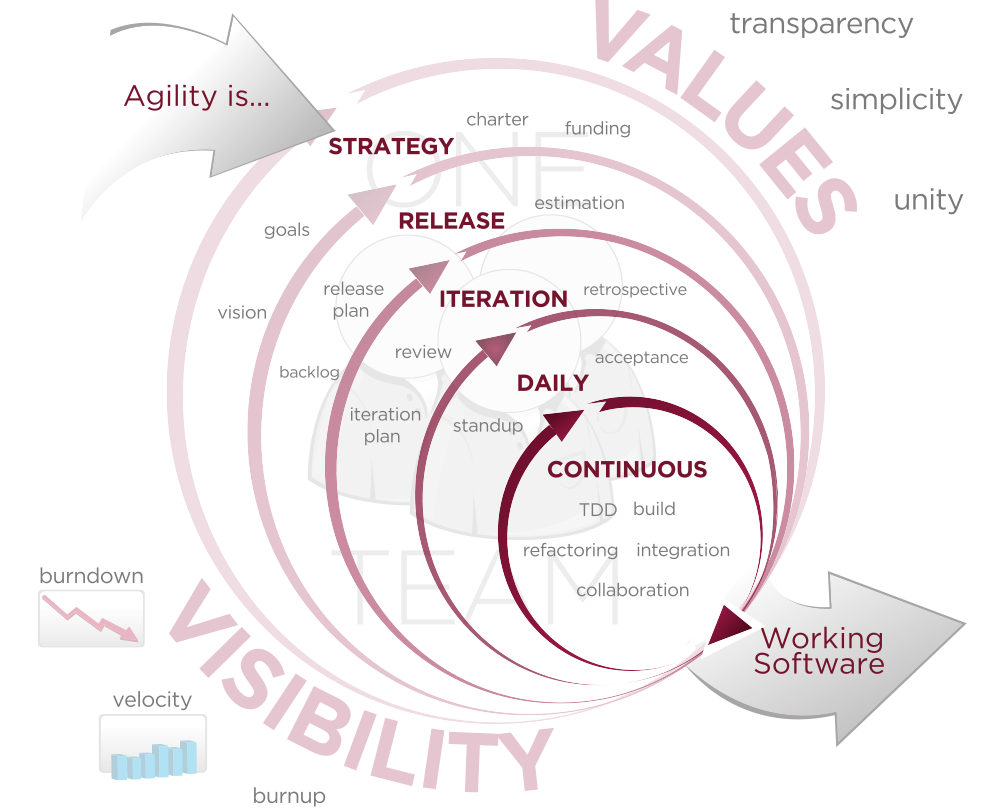
Ironically, real-time digital marketing is the very essence of what agile is all about. How else could you possibly deliver on its promise, operationally and to scale up? We just don’t think to apply the very ingredients that have made agile a success in software and product development to marketing and in particular to digital transformation.
“Agile software development is a group of software development methods based on iterative and incremental development, where requirements and solutions evolve through collaboration between self-organizing, cross-functional teams. It promotes adaptive planning, evolutionary development and delivery, a time-boxed iterative approach, and encourages rapid and flexible response to change.” Source: Wikipedia
Principles for Digital Marketing In An Agile World
- Our highest priority is to satisfy the customer through rapid and continuous delivery of valuable services and deliverables
- Welcome changing requirements, even late in development. Agile processes harness change for the customer’s competitive advantage.
- Deliver high quality working services and deliverables frequently, from a couple of weeks to a couple of months, with a preference to the shorter timescale and rhythm.
- Business people, technology, analysts and developers must work together daily throughout a project.
- Build projects around motivated team members. Provide them the environment and support they need, and trust them to get the work done.
- Make face-to-face conversations mandatory as it’s the most efficient and effective method of conveying information to and within a team.
- Functional services and regular deliverables are the primary measure of progress.
- Agile processes promote sustainable development. Sponsors, developers, and users should be able to maintain a constant pace indefinitely.
- Continuous attention to technical excellence and good design enhances agility.
- Simplicity — the art of maximizing the amount of work not done — is essential.
- The best architectures, requirements, and designs emerge from self-organizing teams.
- At regular intervals, the team should reflect on how to become more effective, then tune and adjust its process and behavior accordingly.
- Communicate what’s worked and what has not, including how the team will adjust its process and behavior.
Get the next one by email
Occasional notes on growth, brand and performance. No spam, one click to leave.