
In the world of data-driven decision-making, experimentation is the backbone of many c Read more...
Read more
In the world of data-driven decision-making, experimentation is the backbone of many companies’ scale up strategies. Whether it’s testing new product features, channels, marketing campaigns, or experimenting with operational improvements, the ability to experiment and learn quickly is seen as a competitive advantage. More crucially, establishing a plan to measure, validate and collect on the success metrics that helps reduce experimentation debt is an Achilles heel.
However, a critical, often-overlooked issue undermines the effectiveness of these efforts: experimentation debt.
This phenomenon, similar to technical debt in software development, arises when companies neglect the rigor and discipline required to validate and maintain their experimentation frameworks. In fact, studies suggest that nearly 60% of companies fail to validate or backtest their winning experiments, assuming that initial results are bulletproof. The consequences? Overconfidence in flawed conclusions, wasted resources, and eroded trust in experimentation as a tool for growth.
What Is Experimentation Debt?
Experimentation debt refers to the cumulative issues and inefficiencies that arise when experimentation processes are mismanaged, leading to suboptimal outcomes and flawed decision-making. Just like financial debt, it accrues interest over time, with its effects compounding as unchecked assumptions proliferate across the organization.
How Experimentation Debt Builds Up
Failure to Backtest and Validate Results Companies often rush to implement “winning” experiments without replication or backtesting in different conditions. What works in one segment, geography, or time period may fail spectacularly when scaled.
Flawed Experiment Design Poorly designed experiments—such as those with insufficient sample sizes, inadequate control groups, or confounding variables—can lead to misleading results, creating false confidence in the outcomes.
Short-Term Focus Many experiments prioritize short-term metrics like clicks or immediate revenue, ignoring long-term impacts on retention, brand equity, or customer lifetime value.
Inadequate Documentation Experiments are often poorly documented, leaving teams without clear learnings or a repository of what worked and why. This leads to repeated mistakes and a lack of institutional knowledge.
Ignoring Negative or Neutral Results There’s a bias toward celebrating wins and sidelining experiments with negative or neutral outcomes. Yet, these “non-wins” often contain valuable insights that could guide future efforts.
Lack of Iterative Refinement Winning experiments are frequently treated as “one-and-done” solutions. Without further refinement, what was once a great idea can stagnate, leaving value untapped.
The Cost of Experimentation Debt
The consequences of experimentation debt are far-reaching:
Wasted Resources: Time, money, and effort are often funneled into scaling initiatives that don’t hold up under broader scrutiny.
Eroded Trust: Stakeholders lose confidence in the experimentation framework, viewing it as unreliable or inconsistent.
Missed Opportunities: By failing to iterate or learn from mistakes, companies leave growth opportunities on the table.
Stagnation: Experimentation frameworks that don’t evolve over time lead to diminishing returns, hindering innovation and progress.
How to Avoid Experimentation Debt
While the risks of experimentation debt are significant, they can be mitigated with the right strategies and mindset:
Validate and Backtest Winning Results Before scaling, ensure that initial results can be replicated in different conditions. Backtest experiments to verify their validity over time and across segments.
Enforce Rigorous Experiment Design Invest in proper experiment design, with clear hypotheses, appropriate sample sizes, and robust control groups. Engage statistical experts to avoid common pitfalls like false positives.
Track Long-Term Impact Extend the tracking period for experiments to understand their effects on long-term KPIs such as retention, lifetime value, and customer satisfaction.
Document and Share Learnings Create a centralized repository for experiments. Document methodologies, results, and key learnings to build institutional knowledge and avoid redundant efforts.
Normalize Learning from Neutral or Negative Outcomes Treat experiments as learning opportunities, even when the results aren’t positive. Insights from neutral or negative tests can often lead to breakthroughs in future experiments.
Embrace Continuous Improvement Revisit and refine winning experiments as conditions evolve. Continuous iteration ensures that initial wins remain relevant and impactful over time.
Monitor the Experimentation Framework Regularly audit the experimentation process to identify inefficiencies and gaps. Use dashboards or scorecards to track the health of the framework and hold teams accountable.
The Road to Better Experimentation
Experimentation is one of the most powerful tools in a company’s arsenal, but it’s only as good as the framework supporting it. Experimentation debt can erode trust, waste resources, and hinder growth, yet it often flies under the radar. By recognizing its impact and taking proactive steps to address it, companies can build a stronger, more resilient experimentation culture—one that drives sustainable growth and fosters innovation.
A. The History of the Stage-Gating Process
The stage-gating process is a systematic Read more...
Read more
A. The History of the Stage-Gating Process
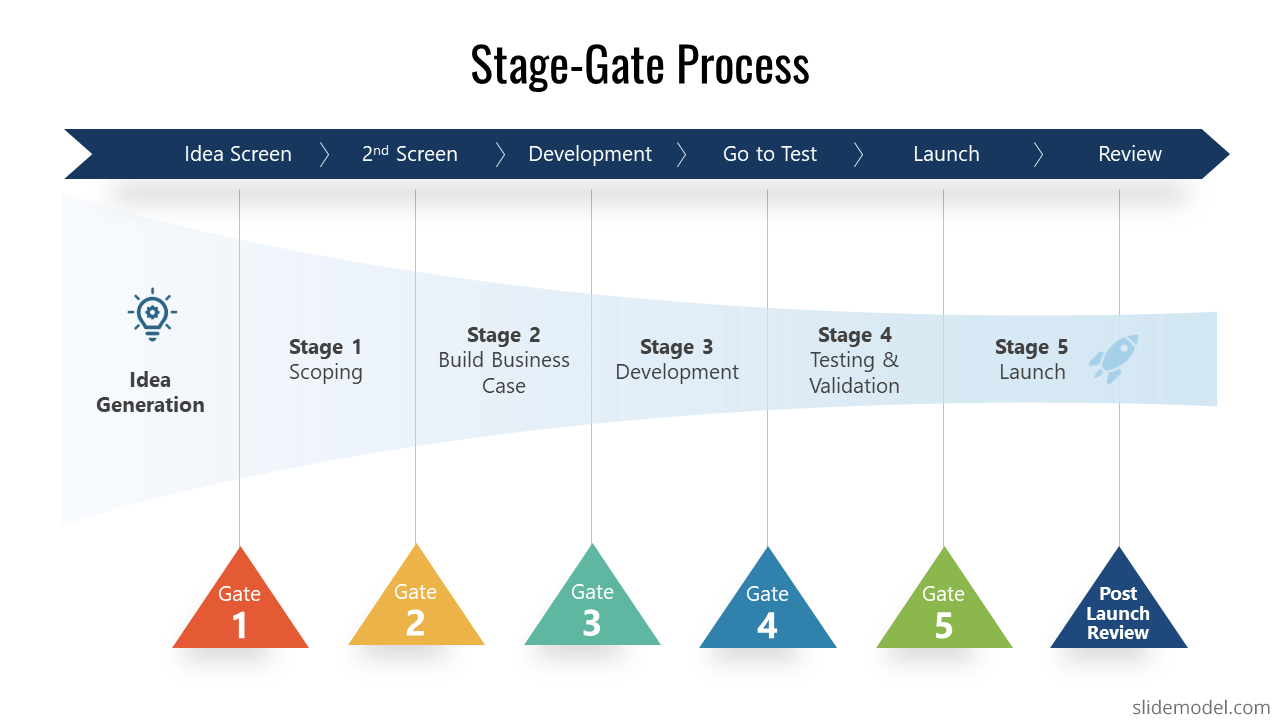
The stage-gating process is a systematic framework for managing innovation, designed to break large projects into phases separated by decision points (“gates”). This methodology was pioneered by Dr. Robert G. Cooper in the 1980s. Cooper, a Canadian academic, introduced the concept in his book Winning at New Products: Accelerating the Process from Idea to Launch, aiming to minimize risk, improve resource allocation, and increase success rates in product development.
Adoption of Stage-Gating
Dr. Cooper’s stage-gating model quickly gained traction among large organizations looking to manage the complexity of product development in an increasingly competitive global market. Companies such as Procter & Gamble, 3M, and DuPont were early adopters, integrating the methodology to ensure that resources were focused on projects with the highest potential for success.
Initially embraced in industries with long product development cycles, such as pharmaceuticals and aerospace, stage-gating was seen as a way to impose discipline on innovation processes. Its success in managing risk and improving cross-functional collaboration led to its adoption across other sectors, including automotive, consumer packaged goods, and technology hardware. By the early 1990s, stage-gating had become a standard best practice for managing high-stakes projects in Fortune 500 companies.
Industries Where Stage-Gating Thrives
Stage-gating has gained prominence in industries where high-risk, high-investment projects are the norm, including:
Pharmaceuticals: Drug development cycles spanning 10–15 years require rigorous regulatory compliance.
Aerospace and Defense: Safety-critical innovations demand extensive testing and validation.
Consumer Packaged Goods (CPG): Companies like Procter & Gamble use stage-gating to maintain a steady pipeline of new products.
Automotive: From concept to production, stage-gating ensures thorough evaluation of new vehicle models.
Technology Hardware: Innovations like semiconductors and smartphones rely on staged development to manage technical complexity.
B. Benefits and Risks of Stage-Gating
Benefits of the Stage-Gating Process
Risk Mitigation: Stage-gating ensures that only well-vetted projects proceed, reducing the likelihood of costly failures.
Resource Optimization: By filtering out weaker projects early, resources are concentrated on initiatives with higher potential.
Cross-Functional Alignment: Structured gates encourage collaboration and clarity across departments.
Regulatory Compliance: Industries with strict regulatory requirements benefit from detailed documentation and milestone reviews.
Risks of the Stage-Gating Process
Slower Time-to-Market: Sequential decision-making can delay progress, especially in fast-moving markets.
Over-Bureaucratization: Excessive documentation and rigid gates can stifle creativity and innovation.
Inflexibility: Stage-gating assumes a linear progression, which may not suit projects with high levels of uncertainty or evolving requirements.
When to Use and When Not to Use Stage-Gating
Use Stage-Gating When:
The project involves high risk or regulatory scrutiny (e.g., medical devices, aerospace).
The industry demands long-term planning (e.g., automotive, defense).
Cross-functional coordination is essential to success.
Avoid Stage-Gating When:
The market or technology evolves rapidly, as in software development or consumer tech startups.
The project benefits from iterative, customer-driven development (e.g., agile workflows).
C. Startups Rebel Against Stage-Gating
Why Startups Reject Stage-Gating
Startups, particularly those in hypergrowth or tech, often view stage-gating as incompatible with their need for speed and flexibility. Instead, they favor:
Agile methodologies: Emphasizing sprints and iterative progress.
Lean Startup principles: Rapid experimentation and pivoting based on feedback.
Companies That Embrace Stage-Gating in Hypergrowth
Some hypergrowth companies successfully adapt stage-gating to balance growth and control:
Tesla: Uses a stage-gated process for hardware innovation while incorporating agile elements.
SpaceX: Adapts stage-gating to ensure safety and performance in aerospace development.
Johnson & Johnson: Combines stage-gating with agile practices for faster innovation cycles in pharmaceuticals and consumer products.
D. Emerging Alternatives to Stage-Gating
New Methods Gaining Traction
Agile-Stage Gate Hybrids:
Combine iterative development with gate reviews for projects requiring flexibility and oversight.
Example: Iterative prototyping in hardware while adhering to regulatory milestones.
Lean Stage-Gating:
Streamlines gates with minimal documentation and faster decision-making.
Example: Consumer electronics companies shortening product cycles to align with market trends.
Digital Twins and Simulations:
Use virtual models to simulate outcomes and validate designs before advancing stages.
Real-Time Data Integration:
Leverage AI and machine learning for predictive analytics, enabling dynamic gate criteria and faster decisions.
Continuous Delivery Models:
Focus on incremental delivery of product components, blending agile principles with traditional milestones.
E. Improving Stage-Gating in Your Organization
If your organization relies on stage-gating, here are strategies to enhance the process:
1. Adopt a Risk-Based Approach
Implement risk-weighted gates to focus scrutiny where it’s most needed, allowing low-risk projects to progress faster.
2. Integrate Real-Time Analytics
Use AI-driven insights to make data-informed decisions at gates and identify potential risks earlier.
3. Foster Cross-Functional Collaboration
Invest in tools that enable seamless communication and data sharing across teams, such as integrated project management platforms.
4. Streamline Documentation
Create leaner templates for gate reviews, focusing on the most critical information needed for decisions.
5. Embrace a Continuous Learning Culture
Conduct post-mortems at each gate to capture lessons learned and refine future stages.
6. Pilot Agile-Stage Gate Hybrids
Test combining iterative workflows with milestone-based reviews for faster yet controlled innovation.
7. Incorporate Customer Feedback
Include customer insights in gate decisions to align development with market needs.
Conclusion
The stage-gating process, while rooted in traditional innovation management, continues to evolve. For high-risk industries, it remains a cornerstone of structured decision-making. However, emerging methodologies like agile hybrids, real-time analytics, and lean documentation offer opportunities to modernize and enhance its effectiveness. By tailoring the approach to organizational needs and industry demands, companies can strike the right balance between control and adaptability, ensuring long-term success.
Our fast-evolving marketing landscape requires us to stay ahead by leveraging the late Read more...
Read more
Our fast-evolving marketing landscape requires us to stay ahead by leveraging the latest innovations, and agentic AI is one of the most exciting developments to me.
But what exactly is agentic AI, and why should we care? Agentic AI refers to systems that can autonomously take actions based on data, improving decision-making across various processes. Unlike traditional AI that assists with specific tasks, agentic AI dynamically adapts and optimizes on its own. In practice, it allows marketers to scale efforts programmatically with precision and intelligence.
💡 Why is this important? Imagine automating the constant decision-making required to manage campaigns. With agentic AI, we can move beyond manual adjustments, trusting AI to handle tasks such as creative variation, campaign trafficking, and media spend management. This not only saves time but also drastically improves the accuracy and efficiency of campaigns, driving business outcomes at scale.
📊 Business Impact:
Increased ROI: Agentic AI identifies the best-performing creatives and scales them, improving engagement and conversions.
Better Budget Allocation: AI models optimize media spend, ensuring every dollar is invested in the most impactful channels.
Improved Efficiency: Automated QA and trafficking eliminate errors, speeding up go-to-market strategies.
✨ My Experience: I’ve personally tested agentic AI for:
Campaign Trafficking & QA: We’ve seen a 10% improvement in campaign functionality and reporting accuracy by reducing human error.
Media Spend Planning & Management: AI dynamically adjusts media spend based on real-time performance data, leading to faster iterations, reduced CPA, and higher overall engagement.
✨ Future Areas I’m Exploring:
Creative Variation: Automatically generating and testing creative variants to find the top performers.
Virtual teams: Looking into using smart agents as virtual team members who can handle specific, repetitive, or even strategic tasks autonomously. Idea is that these agents can adapt, learn, and evolve based on real-time data and decision-making processes, allowing human team members to focus on higher-level, creative, and strategic work.
How are you incorporating AI in your strategy? Are you using smart agents? What successes or learnings have you experienced? As we move into 2025, marketers need to embrace agentic AI as a present-day opportunity to drive exponential growth. 🌱
Many businesses fall into the trap of focusing primarily on running their operations r Read more...
Read more
Many businesses fall into the trap of focusing primarily on running their operations rather than consistently innovating, leading to stagnation and eventual failure. This flaw has claimed numerous companies over time, including Kodak, Sega, AOL, and Woolworths, all of which struggled to adapt to new market realities or technological advancements.
The Cost of Complacency: Lessons from Failed Giants
Kodak’s failure to embrace digital photography, despite pioneering it, is a textbook example of clinging to established business models rather than innovating. Similarly, Sega, once dominant in gaming, lagged behind competitors by failing to innovate in hardware, leaving it unable to compete with Sony and Microsoft. AOL held onto its outdated dial-up model too long, while Woolworths was slow to adapt to the rise of e-commerce, eventually leading to its collapse.
These failures demonstrate the dangers of focusing solely on maintaining the status quo, highlighting the need for continual innovation.
The Risks Faced by Today’s Giants: Amazon, Google, and Meta
Even today’s tech giants, Amazon, Google, and Meta, face their own vulnerabilities:
Amazon risks being spread too thin, as it expands into various sectors, from e-commerce and cloud computing to groceries and healthcare. Overextension could dilute its focus and slow down its innovation efforts. Additionally, antitrust scrutiny continues to mount, which could curtail its competitive edge (source: markets.businessinsider.com)(DW).
Google is overly dependent on search advertising for revenue, and the rise of generative AI could disrupt its core search model. Additionally, its cloud computing arm, Google Cloud, has struggled to outperform strong competitors like Amazon’s AWS and Microsoft’s Azure, raising concerns about the sustainability of its long-term growth(source: markets.businessinsider.com)(DW).
Meta faces challenges with its ambitious foray into the metaverse, which has yet to yield significant returns. At the same time, Meta remains highly reliant on Facebook and Instagram for advertising revenue, a risky dependence if user engagement falters. Regulatory and privacy issues have also constrained its ability to innovate freely(source: DW).
Companies Avoiding These Pitfalls
In contrast, some companies are successfully avoiding these pitfalls by constantly reinventing themselves.
Apple remains a prime example of a company that innovates across hardware (iPhones, Macs) and services (App Store, Apple Music, and Apple TV+). By focusing on ecosystem integration, Apple has been able to maintain its competitive edge(markets.businessinsider.com).
Microsoft has transitioned from a focus on Windows and Office to becoming a leader in cloud computing with Azure. Its strategic partnerships in AI and cloud services have solidified Microsoft as a future-proof innovator(DW).
Intuit, a leader in financial software, exemplifies innovation in the fintech space. By integrating AI-driven tools into its platforms like QuickBooks and TurboTax, Intuit has enabled small businesses and consumers to automate complex financial tasks. The company’s shift to subscription-based services and cloud computing further showcases its ability to evolve. Intuit’s acquisitions, such as Credit Karma and Mailchimp, have expanded its capabilities, enabling it to innovate in personal finance and marketing solutions(DW).
The Stakes for the Future
If Amazon, Google, and Meta don’t address their respective flaws, they risk falling into the same traps that once claimed Kodak, AOL, and others. Today’s business landscape demands not only operational excellence but also relentless innovation. Studying the failures of the past, as well as the success stories of Apple, Microsoft, and Intuit, demonstrates the importance of staying ahead through bold, forward-thinking strategies.
The key takeaway? Running a business is not enough—continuous innovation is the only way to thrive in an ever-changing market.
Its been awhile since I've posted folks, sorry! While on a new journey and as I look b Read more...
Read more
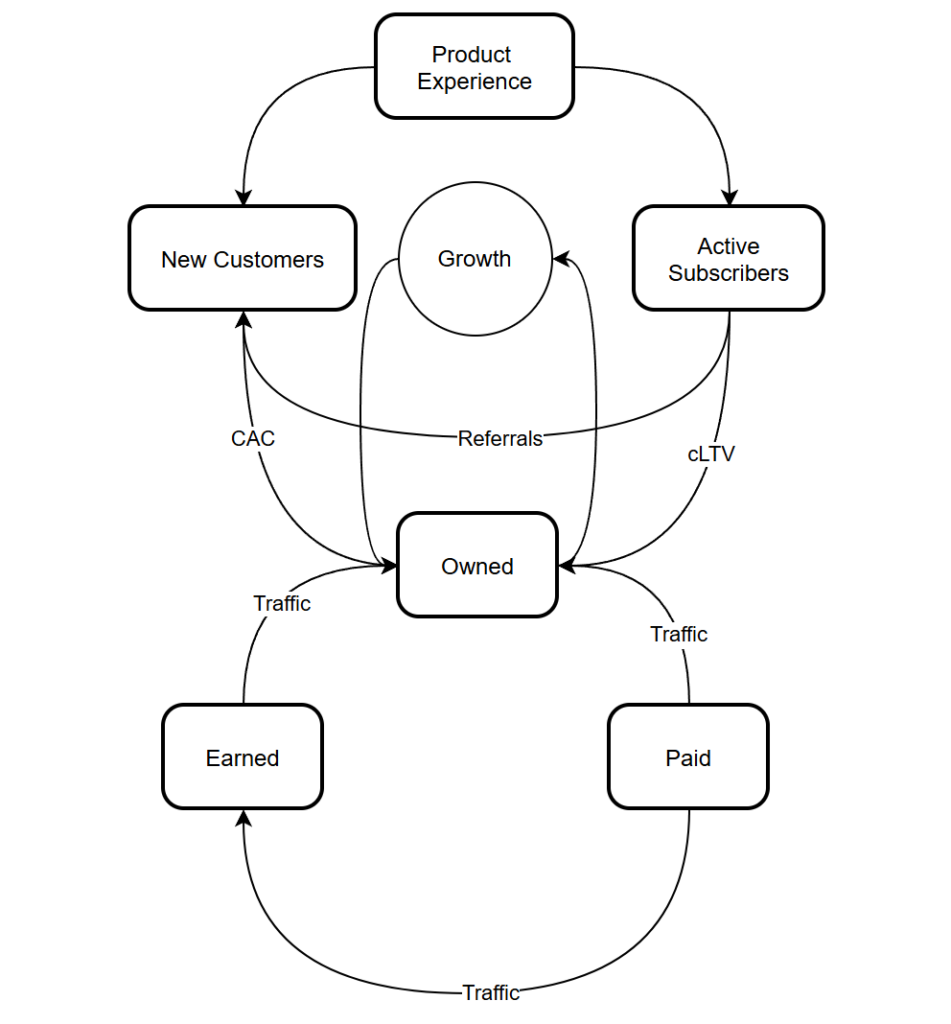
Its been awhile since I’ve posted folks, sorry! While on a new journey and as I look back you know, I had this realization. It’s easy to get wrapped up in the shiny, new stuff like OKRs (Objectives and Key Results), but sometimes, we might end up spending so much time on them that we forget the basics—like keeping the trains running on time, or making sure the team has what they need to grow the business and build the brand.
Why OKRs Are Good, But…
Focus and Direction: OKRs are like that map on a road trip except for businesses. They help you know where you’re headed and make sure everyone’s car is pointed in the right direction. Without them, you might just end up driving in circles.
Accountability: They make it easy to see who’s doing what. Everyone knows their part, and you can quickly spot if something’s off track.
The Flip Side—When You’re Stuck in the OKR Weeds
Too Much Process, Not Enough Doing: If you spend all your time planning and tracking, there’s a chance you’re not doing enough actual work. It’s like planning the perfect garden but never getting around to planting the seeds.
Forgetting the Basics: Core business processes—like making sure the Growth and Brand Marketing teams are firing on all cylinders—might take a backseat. You still need to keep an eye on the day-to-day, like keeping operations smooth, ensuring customer service is top-notch, and steering the marketing ship in the right direction.
Steering the Growth and Brand Marketing Teams
Growth Management: Growth teams need a good bit of attention to keep the momentum going. It’s not just about setting ambitious though achievable goals—it’s about making sure they’ve got the tools, resources, and support to hit those targets.
Brand Marketing: Brand marketing is all about storytelling and building trust. While OKRs might tell you what needs to be done, it’s the brand folks who figure out how to say it in a way that resonates. They need to be closely guided and supported to ensure that the brand’s message stays consistent and strong.
Getting the Balance Right
Integrate OKRs with Business Processes: OKRs should work hand-in-hand with the day-to-day management. They’re not there to replace the basics but to enhance them. When done right, they should be pushing the business forward without pulling you away from essential tasks.
Keep It Simple: Don’t overcomplicate things. Focus on a few key objectives that really matter, and make sure the team isn’t drowning in process. Sometimes less is more.
Wrapping Up
OKRs are a great tool, no doubt. But like any tool, they’re only useful if you use them right. It’s important to keep things in balance—make sure the business processes, like steering the Growth and Brand Marketing teams, are getting the attention they need. After all, you can have the best goals in the world, but if the basics aren’t in place, those goals won’t mean much in the end.
Whatever happened to #brand response #marketing? Or the idea that brand Read more...
Read more
Whatever happened to #brand response #marketing? Or the idea that brand marketing actually does drive down funnel productivity, cost efficiencies and conversions? How about the taboo idea that performance marketing can actually create aided recall and awareness? The digitization of all things whether fully or minimally, I would say nowadays, everything is a brand experience, and everything is about performance.
The reality is the funnel hasn’t really changed right? At the very top, you’ve got the consumers that are “out of market” they just don’t know they need you yet for various reasons, this is where 95% of your TAM resides and where brand marketing focuses on.
What about the folks who are ready to buy? Here performance marketing is the active tactic, it’s easy to measure, aligned with sales goals and key business metrics.
Then you have your customers, the fickle to the loyal. These are the folks who are nurtured, hopefully appreciated and intertwined with our product development efforts.
Most of the time, these three tactics are not integrated, mostly siloed or indelibly operating somewhat independently. Is it idealistic to think that a business can balance and quarterback the three segments? I think so and this is where brand performance marketing comes into play for me.
So what is brand performance marketing?
Simply, it’s the idea of integrating brand marketing with performance marketing. I see it as a holistic method to move consumer segments from, being “out of market” to being “in market” and finally bonding with the brand as existing customers. The classic approach has always seen brand, direct response and lifecycle marketing as three distinctly different functional capabilities. However, these old constructs can be susceptible to competitive pressures, are detrimental to achieving a cohesive experience for the consumer segments and of course sustaining the success gained when bad times come about. Disparate focus on the three segments creates a type of tunnel vision, particularly for large brands and a competitive edge for early and stage businesses during a economic downturn. There are ways to overcome this of course through better integration, processes, governance and frameworks. However, this only serves to further separate the business from the consumer.
How can we address these segments? Start with deconstructing your buyer’s journey, nothing elaborate or scientific rather basic, just start at the very top. We have to build an architecture that works to convince consumers to want your product when they’ve been using/considering alternatives, then enabling them to find your product to eventually be converted into a customer. It doesn’t end there, your competitors are persistently “conquesting” your prospects and customers. This means you have to continue to nurture them and adapt your product to address changing expectations.
All three segments (funnel screenshot) care about these four things
Price – If I had a nickel for every brand that sees “price” as a number barrier, I’d be a gazillionaire. Level setting on price is so crucial, its the hardest thing to figure out. Pricing something too low presents a perception of low quality / cheapness and of course pricing something too high could harm your growth trajectory. A pricing strategy should be a consumer first process, know who they are and build from there, test and learn.
Value – Does your product deliver the benefits and reasons to dole out the cost to buy your product? I always tell my family, somewhat jokingly, no-one ever pays MSRP for antivirus software. Have you? If you did, I want to know about it because that’s when you value the cost of the product your purchasing. Its no longer a transaction, there’s a clear need from the consumer point of view and they are fully bought into your brand’s vision. Apple, Sony, Theragun (yes a DTC!) and there are many more out there.
Trust – Are you a legitimate brand and is the product reliable to the degree that this person is willing to take leap, next step or continue to buy into your product’s promise? This is so crucial, legitimacy is not going to come from your business, we have to earn this through surprise and delighting prospects and happy customers. I worked for a company that saw things differently, in fact quite the opposite and they are no longer around. This company persistently focused on sentiment management versus addressing the underlying issue which was a product that underperformed and always shorted them.
Superiority – Are the features and functionality of the product above the rest? This is true for “affordable” products as well, think, Kia or Hyundai, right? Automotive brands that persistently remind us not only of the affordability of their cars but the high level of quality and workmanship that went into them. This helps the consumer rationalize the trade off and becomes invested in the brand.
Brand performance marketing can bring the three segments together. Philosophically, I don’t believe there’s should be a distinction between how each of the segment views a brand, interacts with the funnel designed to convert them and active use of the product.
I’d love to hear from my network, is brand performance marketing a thing? Should fuhgeddaboudit? Let me know and thanks for reading.
Interesting piece from Cory Doctorow published in Wired (Jan 23, 2023) on how "platfor Read more...
Read more
Interesting piece from Cory Doctorow published in Wired (Jan 23, 2023) on how “platforms die.” The author’s point of view straddles between the literal and metaphorical. The issues laid out in the article are mostly observational and qualitative, I don’t disagree. However, the points brought up aren’t unique to two-sided marketplaces.
A platform (think Amazon per the article) during its early stages.
1 – Needs users: so, it entices consumers with an incredible experience, service, and price/value. This isn’t easy to accomplish, btw, there are plenty of startups and mature businesses that have failed to either a) find product market fit and/or b) keep up with customer expectations.
2 – Needs business customers: so as soon as the business gets to a chasm of customers and data, the ensuing value / insights entice businesses as they want in on the scale and growth potential by tapping into the customer base. Also, incredibly hard to do, business needs do vary and isn’t necessarily always consistent. Google, used to have “don’t be evil” in its corporate code of conduct which serves how everyone should Google’s users. During the formation of Alphabet in 2015, tweaked it to “do the right thing” which shifted its motto to more of a user and business focus.
3 – Needs to answer to investors (board / shareholders). The pressure of profitability / returns requires businesses shift the value equation from one group (customers to businesses) to achieve this. This is where the rubber meets the road, the proverbial race to the bottom is necessary and sometimes painful, particularly for businesses who are too short term focused.
I oversimplified the article’s points about the progression and maturity cycle of a business from “cradle to grave”. There’s a lot of good points contained in it. With data across a more diverse set of industries, business models and companies, the insights and learnings could be an interesting new way future founders, CEOs or growth leaders can find crucial inflection points and consider a more appropriate balance of the three stakeholders including employees first / foremost.
There are plenty of businesses that are thriving and are the antithesis of “enshitification” though, would love to the network to name a couple in comments or directly.
Is ChatGPT a Google killer/ "something" killer or just a new Miscrosft word plugin?I s Read more...
Read more
Is ChatGPT a Google killer/ “something” killer or just a new Miscrosft word plugin?
I see it as the latter, Google crawled, collected and collated information and matched folks to that information, better. For many that was an incredible improvement in user satisfaction over the likes of Excite/Infoseek/Yahoo and was enough to defer the user’s own information retention and completely rely on Google. But fundamentally, the true value of Google was that it made a wealth of information produced by regular people more accessible and democratized knowledge.
ChatGPT is definitely the next step in the information evolution / revolution but ultimately its a black box, its more like AskJeeves on steroids, the now defunct question oriented search engine, anyone remember that?
Jeeves, who is Martin Luther King Jr.?
ChatGPT takes away the knowledge gathering process all together and attempts to gather, synthesize and present a “point of view” based on the information it scours and the deduction of a user’s query. ChatGPT is the “Zoltar Fortune Teller” killer or BS on steroids.
Seriously though, ChatGPT being the #Google killer will depend on how accessible it is to everyone and I have little doubt that #Microsoft is in the business of pure free, right now.
Having said all of the above, I have used ChatGPT to create numerous marketing headlines, optimized my site’s titles/meta data, tweak descriptions/timelines for videos on my YouTube channels, had it write overlays for my personal TikTok/IG reels, and even write a poem.
Finally, I was disappointed that it didn’t know me, when I asked who Cezanne Huq was. 🙂
I’m a simple guy and I often miss the forest for the trees, please share your thoughts on ChatGPT!
2023 is nearly here, we are all returning to work and increasing business travel, I've Read more...
Read more
2023 is nearly here, we are all returning to work and increasing business travel, I’ve been bombarded by (OOH) ads. Per, Wikipedia, “Out-of-home (OOH) advertising, also called outdoor advertising, outdoor media, and out-of-home media, is advertising experienced outside of the home. This includes billboards, wallscapes, and posters seen while “on the go”. It also includes place-based media seen in places such as convenience stores, medical centers, salons, and other brick-and-mortar venues. OOH advertising formats fall into four main categories: billboards, street furniture, transit, and alternative.”
Looking at advertising spend in OOH, its intuitive that it should grow, particularly digital OOH (dOOH). Yet traditional OOH spend still accounts for an overwhelming 70.8% of total spend while dOOH still sits at ~30% (see link to Insider Intelligence for more data)
Furthermore, there’s a ton of programmatic dOOH as well with dOOH expected to grow nearly 40% by 2026 (source: Out of Home Advertising Association of America), curious to hear from performance marketers and #DTC advertising leaders; is dOOH a focus in 2023 for you and beyond?
Some key concepts taking shape in 2023 within the general OOH space with dOOH making things more interesting
Storytelling – Not surprising but this is a general trend within the performance marketing trends. Advertisers will focus on how to bring a cohesive advertising campaign to life in a physical setting, understanding the audience segments tied to the placements for OOH.
Integration – OOH are beacons not just billboards made of print or digital LCD expressions. We’ll see smart dOOH advertising tactics that geo-fence and target opted in consumers to take advantage of the experience in more vivid detail, whether it’s the continuation of the story or activating an attractive offfer.
Measurement – Goes without saying but any good performance marketer or advertiser will bring in ways to understand sales lift direct or indirect to effectively measure the ROI and profitability of the dOOH campaign.
If dOOH is not part of your advertising strategy, why? If so, how? Which platforms are primed to support programmatic dOOH? Reply to me directly, would love to hear how your organization is handling DOOH in the coming months and years.
Blockchain will deliver digitization to our lifestyle for greater prosperity and healt Read more...
Read more
Blockchain will deliver digitization to our lifestyle for greater prosperity and health
The investments in Blockchain across the way we live, learn and work is still in its infancy. We know technology in general is in a free fall and transformation stage with the likes of 5G, machine-to-machine communications, and distributed systems. With Blockchain, we have the potential to bring a new era of “individualism without alienism.” And so Blockchain is already on a journey with crypto-currencies, considered the early adopters, taking off permeating into our day-to-day as it begins to shape the perceptions and possibilities of what’s to come. It’s raising important social questions and is already reshaping the way we all think about the current monetary infrastructure. It’s too late for Blockchain to disappear that much everyone agrees on. So, what’s next?
Well, it won’t be long before we are introduced to new Blockchain products which depart from the ledgers, currencies and processes driving a financial system. No, it won’t be focused on the series of connected services that is borne out of a network effect of cryptocurrencies but new applications that will improve our health, help us gain knowledge and provide greater control, distribution and fluidity of of our day-to-day tasks.
Dynamic and Extensible Electronic Health Records
Healthcare, imagine a decentralized but coordinated set of global data not silo’d and walled off. Our specific electronic health records are silo’d and static, imagine that data now with a decentralized governance where no one organization owns the data and there’s no clearing house for that information thus acceleration data sharing and personalization at scale.
Napster times a thousand! – Imogen Heap
Musical artists could push the boundaries of creativity and expand the headroom of their production. Blockchain could allow artists to truly cut out the middleman and at the same time expand their production headroom while also increasing the derivative body of works because of the decentralize governance it would bring. Furthermore, from a headroom expansion perspective imagine each track, i.e. drums, keyboards, a sample able to be tweaked, morph and distributed across the fanbase bringing the artist and fans in direct collaboration. It’s requests and personalization at an enormous scale!
Education in True Real-Time with Test and Learn
In the realm of Education, we know Institutions around the world are cooperating on a multitude of challenges. One major challenge is to introduce, assess, and share learnings across the ecosystem which generally takes years to do. Imagine a new system that allows not just a small group of Universities to be able to introduce these new learning but collaborate and expand on the learnings at hyper-local levels without major structural changes and maintaining the integrity of the core idea.
This is but the “tip of the iceberg” as to how blockchain could change our lives. The possibilities are endless coupled with artificial intelligence, machine learning, IoT (internet of things) and the convergence of biology and technology!