
Author: cezanne

The incrementality trap: Uber’s $35M efficiency win gave way to DoorDash’s current moat

The Uber Eats vs DoorDash US race

It is incredibly easy to look back with 20/20 hindsight and critique corporate history. But this isn’t a post-mortem. This is a diagnostic warning for every CEO, CMO, and growth executive currently prioritizing short-term capital efficiency over holistic growth sequencing. If your head is buried strictly in localized channel P&L sheets, you might be funding your own disruption.

The story begins with a legendary data science victory. Locked in a fierce market share battle with Lyft, Uber’s growth analytics team, spearheaded by former data science head Sundar Swaminathan, moved away from lazy, click-based last-touch attribution models. They implemented rigorous, three-month localized incrementality testing on their heaviest performance channels, specifically targeting Meta ads across the US and Canada.

The data returned an undeniable truth: their paid social spend was almost entirely non-incremental. Major urban centers were completely saturated, meaning the ads were simply bidding on riders who were already organically hardwired to open the app. When they paused the spend, acquisition volume didn't budge.

Uber made the objectively correct, data-driven decision: they shut off the non-incremental spend, saving a clean $35MM. Coupled with a massive $100MM pullback after uncovering global ad fraud, Uber suddenly recaptured $135MM in absolute waste.

On paper, it was a masterclass in capital efficiency. Finance cheered. The data team was validated. And the macro strategy seemed sound: Uber didn't just pocket the cash; they aggressively reinvested it directly into global expansion, driver supply acquisition, and Uber Eats.

So how, with an optimized data stack and a nine-figure war chest explicitly funneled into delivery, did Uber Eats completely lose the US market to a quiet challenger?

The Crossover: Visualizing the Vacuum

Look at the Google Trends search data from that exact optimization window, and the operational blind spot becomes glaringly obvious.
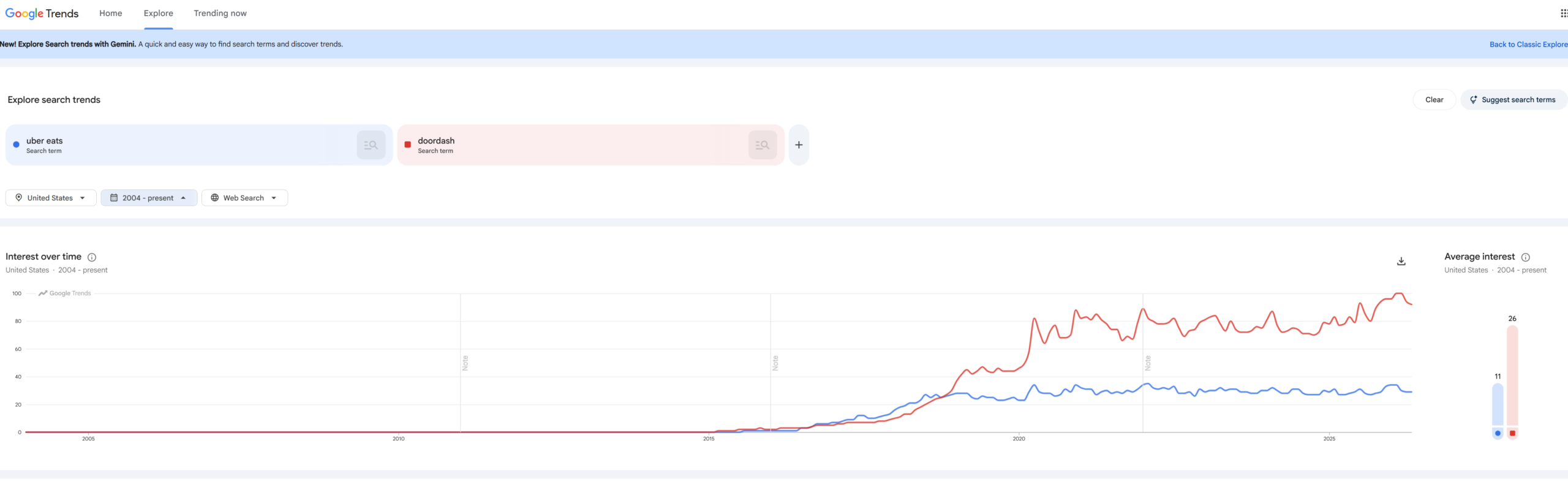
Up until mid-2018, Uber Eats and DoorDash were locked on the same growth trajectory. But as Uber focused heavily on local cost-per-acquisition (CPA) efficiency and channel-siloed incrementality, they completely pulled their foot off the gas in defensive, high-intent performance channels like paid search.

During the week of September 30 to October 6, 2018, the lines intersected. DoorDash officially crossed Uber Eats in US search interest. Immediately following that crossover, the trajectories permanently decoupled: Uber Eats completely plateaued into a flat line, while DoorDash entered an explosive, near-vertical breakout.

DoorDash didn't win because they had a prettier logo or a superior high-concept brand narrative. They won because they understood the structural mechanics of a two-sided marketplace network effect. Coupled with Uber’s efficiency vacuum, they were able to inadvertently stumble on a way to fund their way to marketshare.

1. The Paid Search Conquest Trap

When a dominant market player pulls back on defensive paid search and performance channels, high-intent consumer demand doesn't vanish from the internet. The keywords "food delivery near me" still get typed into Google millions of times a day. The only difference is that the auction traffic suddenly becomes dramatically cheaper and entirely uncontested for everyone else.
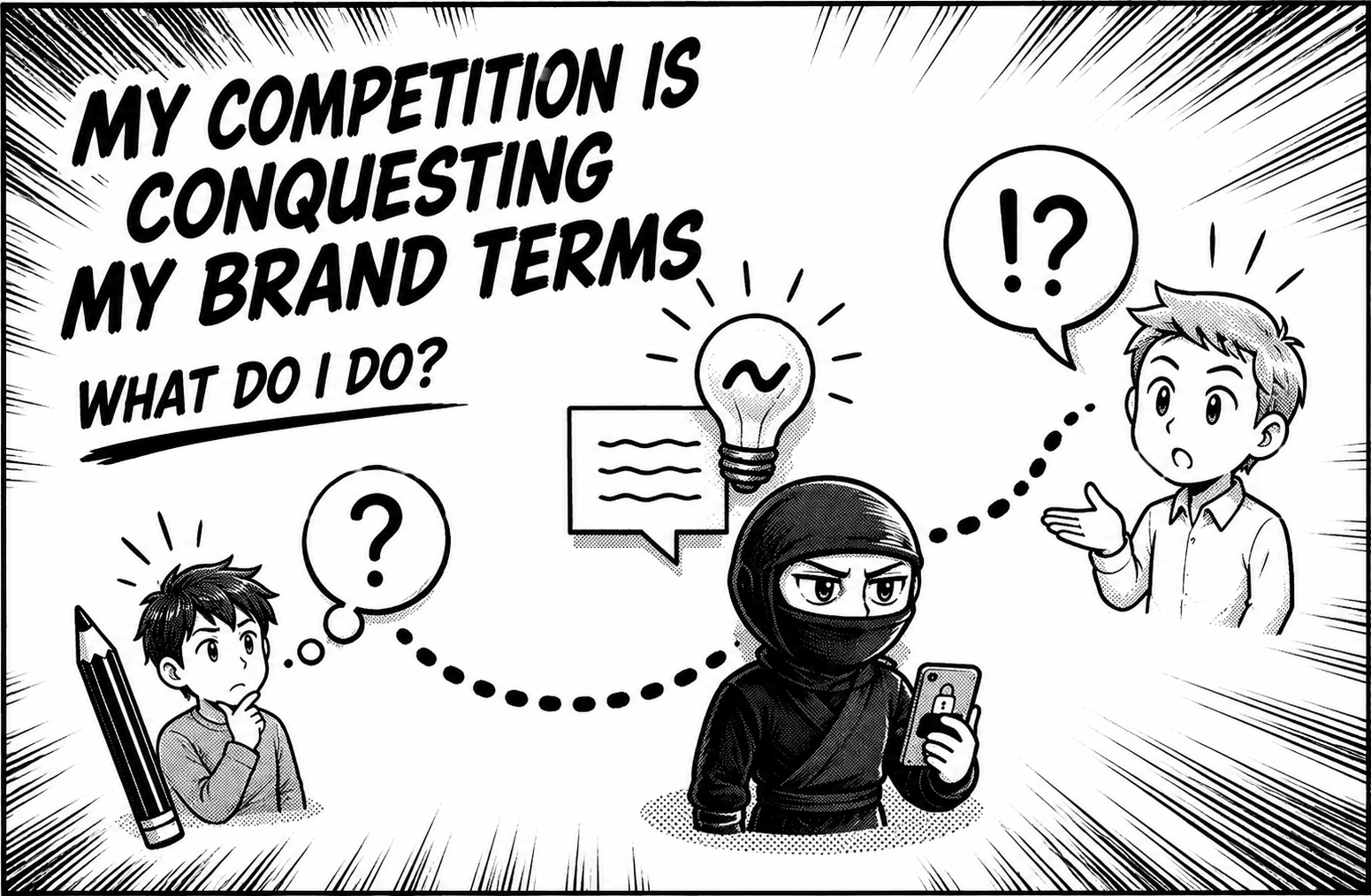
DoorDash didn't just fill that vacuum; they aggressively bankrolled it. Every high-intent customer Uber decided was "too expensive" or "non-incremental" on a spreadsheet was instantly bought up by DoorDash. Because food delivery is a high-habit, high-frequency utility, it wasn't a one-off transactional acquisition. It was a permanent deflection of customer Lifetime Value (LTV). DoorDash literally weaponized Uber's localized efficiency wins to fund its own long-term market acquisition engine.

2. The Suburban Food Desert Strategy

Uber’s data team correctly identified that major US urban centers were fully saturated for their rideshare business. They fundamentally assumed that because their brand was completely ubiquitous in tier-1 cities, urban density would automatically translate into delivery dominance.

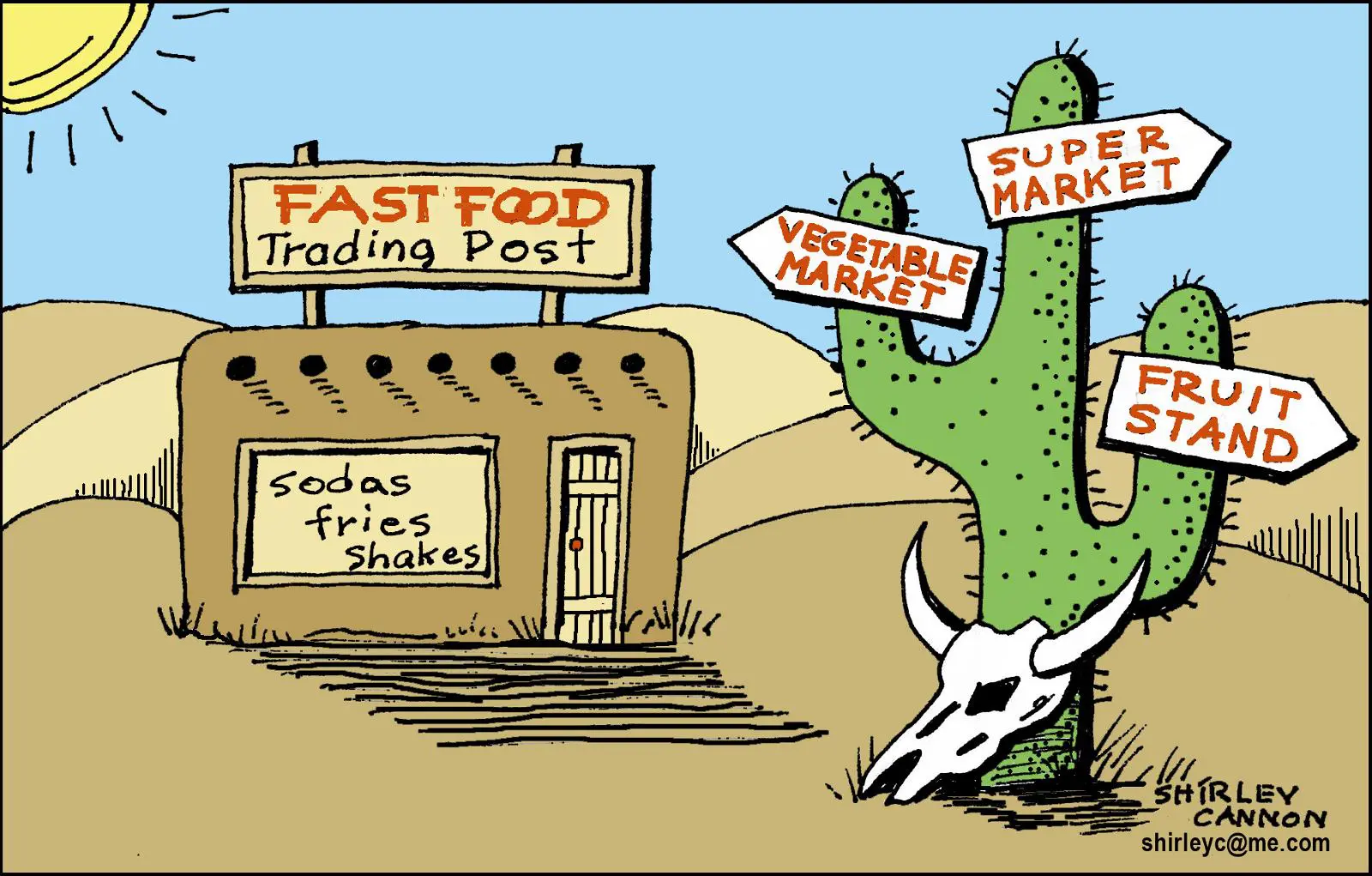
DoorDash spotted the structural blind spot to survive Uber's onslaught through intentionality. They were able to bypass the hyper-expensive, low-margin urban dogfights entirely and systematically captured suburban America.

They targeted the "suburban food deserts" geographies where families order high-ticket, multi-person meals instead of a single corporate lunch salad. By the time Uber realized that suburban regions yielded dramatically higher Average Order Values (AOV) and vastly stickier user retention profiles, DoorDash had constructed an unshakeable supply-side fortress of exclusive local restaurant partnerships and driver network density.
credit: Shirley Cannon

The Executive Lesson: Brand and Performance Are a Continuous Ecosystem

This is where the standard, exhausted debate between brand storytelling and growth marketing completely goes off the rails.

Uber viewed performance marketing through a narrow, siloed lens as an adjustable acquisition expense to be optimized for localized unit economics. In doing so, they completely missed its defensive value in protecting marketplace liquidity and network velocity. They won the localized margin fight but permanently ceded the category footprint.

DoorDash understood the reality of the sequence:

  1. Performance marketing buys the initial geographical footprint and supply density.
  2. Supply density drives the marketplace liquidity and organic utility.
  3. Marketplace liquidity finally earns the brand the right to tell a bigger, emotional story.

If your executive leadership team is currently treating performance marketing and brand equity as competing line items on a spreadsheet rather than a tightly sequenced, interdependent ecosystem, you aren't being efficient. You are simply leaving the door wide open for a challenger to take your market.

Publicis Didn’t Buy LiveRamp. It Bought Time.

I got to wade into the Publicis Groupe acquisition of LiveRamp this weekend and figured I’d share a perspective. My opinions are my own.

Everyone is asking whether this was a smart acquisition, but I think the more important question is whether it was actually necessary.

Because if you read between the lines, this is not really an advertising story. It’s an infrastructure story disguised as an M&A deal.

Publicis is continuing its transformation from a holding company into a platform business powered by agency services. Frankly, they may be the furthest along among the large holdcos in understanding where the market is heading. The traditional agency model was built around media buying leverage, creative services, procurement scale, and client relationships, but the next era looks very different.

AI is compressing execution rapidly. Creative production is accelerating, optimization is becoming automated, segmentation is becoming commoditized, and media buying itself is increasingly system-driven. As that happens, the differentiator shifts lower into the stack. Identity infrastructure, privacy-safe collaboration, closed-loop measurement, proprietary data orchestration, and AI-enabled intelligence systems are becoming the real battleground.

That’s what this deal is actually about.

On paper, the acquisition looks rational. Publicis is paying roughly $2.2B for a company approaching approximately $850MM in ARR, putting the transaction around a 2.6x revenue multiple depending on how you frame it. In an environment where scaled SaaS businesses historically traded much richer, that multiple stands out.

And the infrastructure itself is meaningful. LiveRamp connects more than 25,000 publisher domains and over 500 technology and data partners across 14 markets. Rebuilding that organically would likely take years, even for a company with Publicis’ scale and distribution.

But I think most people are still underestimating what Publicis is really buying here.

They are not simply buying identity resolution or adtech middleware. They are buying positioning for the agentic AI era.

That’s the part that clicked for me after reading deeper into the deal commentary. Publicis keeps using language around “data co-creation,” “agentic transformation,” and “smarter AI agents.” Digiday framed it even more bluntly with the statement, “Identity is the qualifier for AI.”

That’s an extremely important signal.

Because if AI agents become operational layers for marketing, commerce, servicing, and personalization, then competitive advantage no longer comes from simply having access to AI models. The models themselves will increasingly commoditize. The advantage comes from differentiated data, identity continuity, behavioral context, and the ability to safely orchestrate actions across fragmented ecosystems.

Arthur Sadoun basically said this directly when he noted, “There is no way you can win with agents if you don’t have the right and differentiated data.”

That statement tells you this acquisition is about far more than media. It’s about owning part of the infrastructure layer underneath AI-enabled business systems.

At the same time, I think there’s another uncomfortable reality embedded in this deal that deserves more discussion.

If LiveRamp was truly bulletproof as an independent company, why sell now?

That question matters because strategically valuable and independent long-term winner are not always the same thing.

The low multiple itself may actually tell the story. If the market genuinely believed LiveRamp was becoming the dominant independent operating system for the AI era, the valuation probably looks very different. Instead, LiveRamp sat in an awkward middle position for public markets. It wasn’t quite a hyperscaler, wasn’t enterprise SaaS at Salesforce scale, wasn’t a pure AI company, and wasn’t purely infrastructure either.

That ambiguity matters.

At the same time, the identity market itself may eventually become less valuable than people think. Not because identity disappears, but because the economics shift. The strongest businesses are increasingly building direct first-party ecosystems, proprietary behavioral feedback loops, AI-enabled decisioning systems, and authenticated relationships internally rather than relying on external stitching layers across the open web.

In other words, the future may require less brokering of fragmented identity and more ownership of proprietary intelligence systems.

That changes the long-term trajectory for intermediary platforms.

Which is why this acquisition feels simultaneously smart and defensive.

Smart because Publicis clearly understands infrastructure matters in the AI era. Defensive because they also understand the current stack is being rewritten in real time. And frankly, LiveRamp may have understood that too.

There’s a very plausible scenario where remaining independent became the riskier path. Competing in the next era likely requires enormous scale, distribution, enterprise relationships, AI investment, regulatory maturity, and integration depth. Publicis already has Epsilon, Sapient, Lotame, massive enterprise penetration, consulting layers, and media scale. Together, that creates a much stronger ecosystem than LiveRamp operating independently.

To be fair, Publicis probably had limited scaled alternatives available as well. They could have continued expanding Epsilon and Lotame. They could have leaned harder into hyperscaler partnerships or assembled a federated orchestration layer through smaller acquisitions and internal development. But those approaches are slower, more fragmented, and significantly riskier during a market transition that is accelerating monthly, not yearly.

This acquisition buys mature infrastructure, enterprise adoption, privacy frameworks, regulatory maturity, distribution, and perhaps most importantly, time.

That may actually be the entire story.

When incumbents sense platform risk approaching, they tend to buy certainty before the market fully reprices the threat. That’s why this deal feels simultaneously smart and anxious. Smart because infrastructure absolutely matters in the AI era, and anxious because everyone can feel the stack being rewritten in real time. 🔁

December 23, 2025

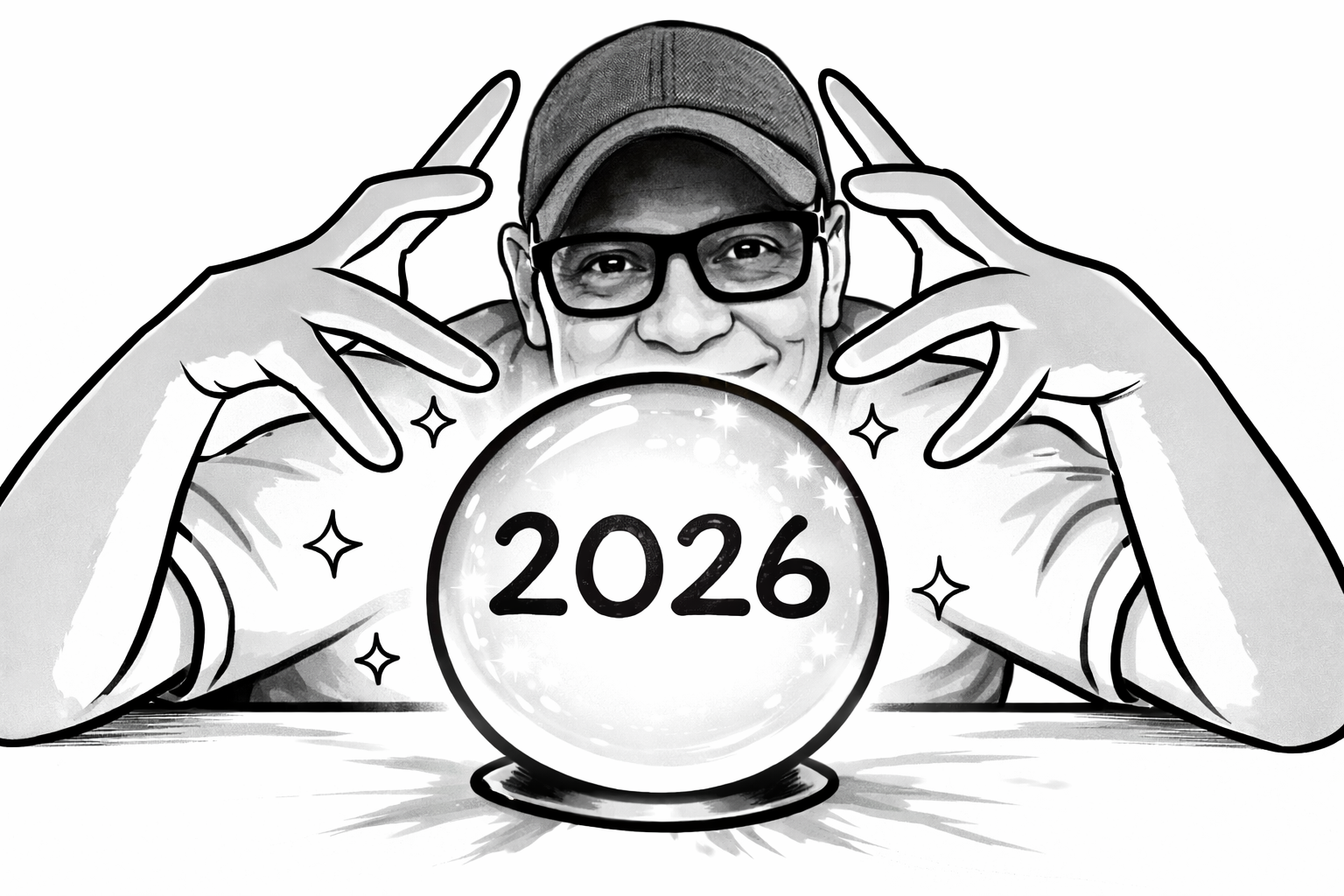
Cezanne with a crystal ball

Wow, the year is winding down, crazy! So, I’ll start with the obvious disclaimer.

I’m not Nostradamus. I’m not Mary Meeker. I don’t have a crystal ball or a 150-page trend deck.

And that’s kind of the point. The end of the year isn’t about being right. It’s about slowing down long enough to notice the patterns that already revealed themselves, then choosing what you want to carry forward with intention.

Consider this my entry into the 2026 predictions bandwagon. Not prophecy. Pattern recognition, grounded in the conversations, posts, and debates many of you engaged with me on throughout 2025.

  • First prediction: AI becomes the forcing mechanism for decision management. I’ve written repeatedly this year that AI didn’t fix growth, creative, or performance. It exposed operating debt. In posts about creative scale, agentic AI, and testing velocity, the same theme kept surfacing. Output exploded. Decisions slowed. Teams produced more answers than leaders could act on. The bottleneck wasn’t intelligence. It was decision ownership, kill criteria, and judgment. In 2026, AI won’t separate winners from losers. Decision systems will.
  • Second prediction: IRL experiences become the new brand storytelling strategy. My take on Netflix moving into physical experiences wasn’t about retail or merch. It was about lifecycle value and memory. I’ve argued all year that digital reach is commoditized and attribution undervalues emotional imprint. Netflix House isn’t a stunt. It’s infrastructure. A way to turn IP into identity and deepen attachment in a world of infinite content. In 2026, more digital-native brands will follow, not to scale faster, but to build meaning that compounds.
  • Third: Operators are the new strategists. Some of the most personal engagement I saw came from posts about teams being treated as service layers instead of strategic partners. This wasn’t venting. It was diagnosis. Strategy without operating literacy collapses under pressure. In 2026, the most credible strategists will be operators. People who’ve built systems, owned outcomes, and made tradeoffs with real consequences. Decks won’t carry weight. Scar tissue will.
  • Fourth: Durability will be the new business currency. Affiliate debates, discounting, post-purchase suppression, CAC obsession. Different posts, same conclusion. Efficient growth often destroys long-term value. I’ve been consistent in arguing that retention, contribution margin, and lifetime value matter more than short-term optics. In 2026, durability stops being a finance concern and becomes a leadership mandate. Businesses that don’t compound will quietly decay.
  • Fifth, MMM and incrementality become do-or-die for marketing. If there’s one topic we turn to relentlessly, it’s this. Attribution certainty is a myth. MMM doesn’t track everything people want it to, but it forces honesty about causation. Performance teams that can’t operate under probabilistic truth will overspend and misallocate. In 2026, incrementality won’t be a nice-to-have. It will be existential.

If you connect all of this, the takeaway isn’t about tools, tactics, or trends.

It’s about maturity. 2026 rewards leaders who can decide under uncertainty.

Who design systems before buying software.

Who protect taste while scaling output.

Who optimize for compounding value instead of quarterly applause.

And with that, the most important part of this post. Everyone needs rest.

Replenishment.

Perspective.

Focus.

So wherever you are, and whatever you celebrate, I genuinely hope you unplug, reset, and start the new year with clarity.

Have an awesome Christmas. A meaningful Hanukkah. A joyful Kwanzaa.

And here’s to a 2026 defined less by noise and more by intention.

Onward.

Read More

Solved Creative Scale Once. Agentic AI Reopened the Problem

Image created by OpenAI’s DALL·E

I remember working with a company during my Intuit days where we exponentially increased creative output. At the time, it felt genuinely cutting edge. Crowdsourcing creative had just started to take off, and for the first time we could produce volume at a speed and scale traditional agencies simply couldn’t match. The breakthrough wasn’t just volume. It was velocity. More concepts, faster iteration, broader testing. For a brief moment, growth followed. Wish we had agentic AI back then!

Then the cracks showed.

Quality drifted. Feedback loops became noisy. Decision ownership blurred. Teams argued about what should ship and why. Learnings didn’t compound. The hardest problem wasn’t generating creative. It was operating the system around it.

Fast forward to today, and AI agents can now do much of what once required entire crowds. Creative generation, variation, localization, and optimization are no longer the bottleneck. Output is effectively infinite.

Yet the core challenge hasn’t changed. In some ways, it’s worse.

This is not a creativity problem. It’s not even a decision problem. It’s a decision execution problem.

When frameworks stop running

Most organizations already “use” RAPID, RACI, or DACI. These frameworks show up in onboarding decks, planning documents, and retrospectives. Leaders can usually explain them without much effort.

But if you sit in the meetings where decisions actually get made, those frameworks rarely operate as intended. Decisions stall. Accountability blurs. The same debates resurface quarter after quarter, often with more people and less clarity.

As organizations scale, the cost of this breakdown becomes measurable. Research and real-world operating experience consistently show that decision velocity degrades rapidly as complexity increases. Decision cycle time often slows by 30–50% as companies grow. Internally, 15–25% of launches, campaigns, or initiatives end up reworked because ownership was unclear or alignment came too late. That rework shows up directly in wasted spend, delayed revenue, and exhausted teams.

RAPID, RACI, and DACI were never meant to live as slides. They were meant to run. They describe how decisions should happen, but they were never given an execution layer to ensure they actually do.

What agentic AI actually changes

Agentic AI doesn’t replace judgment. It replaces the missing execution layer these frameworks never had.

The most useful way to think about agentic AI is not as a decision-maker, but as a decision participant. An agent observes workflows, executes defined roles, escalates when rules break, and learns from outcomes. When embedded properly, it turns static decision frameworks into operating systems.

In a modern DTC or growth organization, this becomes very concrete.

An agent supports the Recommend role by assembling decision-ready briefs. It pulls from performance data, experimentation results, creative learnings, financial constraints, and operational metrics. What once took weeks of deck-building now takes hours, and tradeoffs become explicit instead of buried.

Another agent manages Input. Stakeholders still contribute, but the system normalizes feedback, highlights disagreement, and surfaces signal instead of noise. Decision-makers stop sorting raw opinions and start evaluating structured insight.

Agreement stops being invisible. Agents compare assumptions against prior decisions and known failure patterns. Misalignment surfaces early, when it’s still cheap to resolve, rather than late, when it becomes political.

Execution no longer drifts quietly. Once a decision is made, agents monitor outcomes against the original assumptions. When reality diverges from intent, the signal shows up early, not after CAC spikes or a launch misses targets.

The Decide role remains human. It has to. But AI enforces decision hygiene by documenting rationale, preventing shadow decisions, and escalating when timelines slip.

When this system is in place, something important changes. CEOs stop becoming bottlenecks. CMOs stop refereeing debates. Teams move faster with fewer reversals.

The measurable impact

The impact of operationalizing decision execution is not theoretical. Organizations that instrument decision workflows see preparation time for complex decisions drop by 40–60%. Decision cycle times compress by roughly 20–35%. Post-decision reversals decline materially because assumptions are explicit and tracked rather than implicit and forgotten.

Accountability starts to hold under scale, not because people suddenly behave better, but because systems enforce clarity.

This is where many AI initiatives go wrong. Teams jump straight to autonomy without fixing governance. They bolt AI onto broken decision rights and then act surprised when chaos accelerates.

AI does not fix broken operating models. It amplifies them.

How the best teams actually adopt this

The most effective organizations are not redesigning their entire operating model around AI. They start with a mature process that already works and instrument it.

They run RAPID, RACI, or DACI as-is. They measure baseline decision cycle time, rework rates, and outcome quality. Then they deliberately swap in agentic components one role at a time.

Recommendation synthesis comes first. Input normalization follows. Agreement risk detection comes next. Execution monitoring is layered in last.

Each change is measured, not assumed. If the process degrades, they roll it back. If it improves, they iterate. AI is treated as replaceable infrastructure, not a belief system.

This is not experimentation theater. It’s systems engineering.

The real question for DTC leaders

AI has made creative cheap. It has made output infinite. It has not made quality automatic.

The real question for CEOs and CMOs isn’t how much or how fast AI can produce creative. It’s whether the operating model can absorb that scale without breaking.

That was true in the era of crowdsourcing. It’s even more true in the era of agentic AI.

The teams that win won’t be the ones generating the most assets. They’ll be the ones whose decision systems can turn scale into learning, and learning into durable growth.


Sources & Further Reading

McKinsey & Company – How to make better decisions faster
https://www.mckinsey.com/capabilities/people-and-organizational-performance/our-insights/how-to-make-better-decisions-faster

McKinsey & Company – The case for behavioral decision-making at scale
https://www.mckinsey.com/business-functions/strategy-and-corporate-finance/our-insights/the-case-for-behavioral-decision-making-at-scale

Harvard Business Review – Why Good Leaders Make Bad Decisions
https://hbr.org/2013/02/why-good-leaders-make-bad-decisions

Harvard Business Review – A Smarter Way to Make Better Decisions
https://hbr.org/2011/11/a-smarter-way-to-make-better-decisions

Gartner – Improve Marketing Effectiveness Through Better Decision Making
https://www.gartner.com/en/marketing/insights/articles/improve-marketing-effectiveness-through-better-decision-making

Microsoft Work Trend Index – Will AI Fix Work?
https://www.microsoft.com/worklab/work-trend-index/will-ai-fix-work

OpenAI – AI and productivity research overview
https://openai.com/research

A Framework for Testing and Experimentation

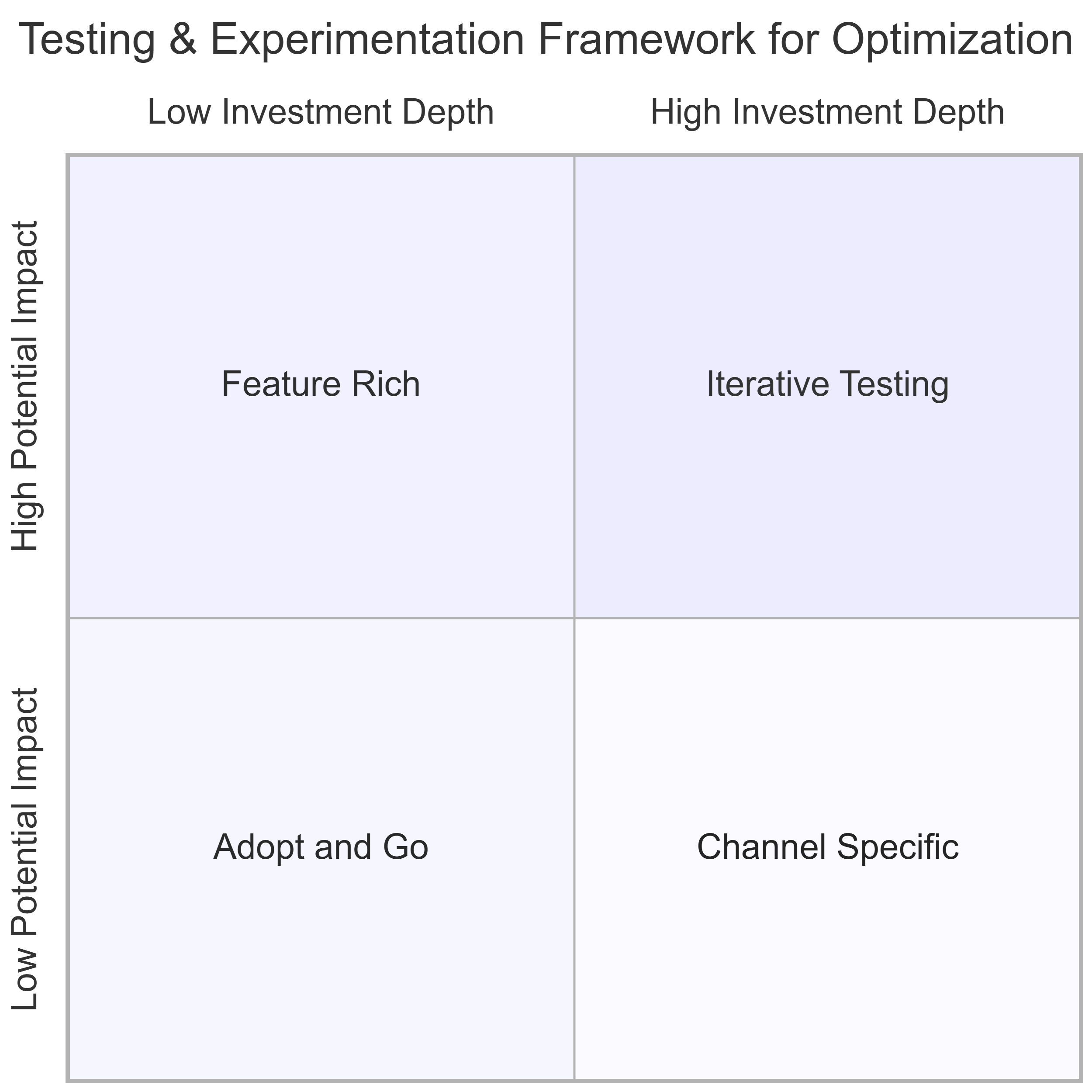
Four quadrant framework

Building Speed, Efficiency, and Confidence Without Breaking Trust

Most organizations believe they have an experimentation culture. In practice, many are still operating under rules that made sense a decade ago but quietly collapse under modern conditions.

The classic model is familiar. Run an A/B test. Wait for statistical significance. Declare a winner. Move on. That approach assumed clean user-level tracking, stable channels, and patient stakeholders. None of those assumptions reliably hold anymore. Channels fragment. Privacy constraints erode signal fidelity. Product, marketing, and data systems are tightly coupled in ways they were not before.

The result is predictable. Experimentation either slows to a crawl because no one trusts the data, or it speeds up in the wrong direction, with teams over-interpreting weak signals and shipping changes that do not reproduce. Both outcomes undermine confidence. Over time, experimentation stops being a decision engine and turns into performance theater.

The framework I’ve outlined here exists to break that cycle. It comes from building growth and experimentation capabilities inside real organizations, not idealized ones. Again and again, the issue was not ambition or tooling. It was the inability to align process, analytics, and decision-making with how experimentation actually functions inside companies.

At the core is a simple but often ignored truth: not all tests deserve the same process, the same resourcing, or the same definition of confidence. Treating them as interchangeable is one of the primary reasons experimentation programs stall.

Why legacy experimentation models fail in practice

Most experimentation failures are not caused by a lack of ideas. They are caused by habits formed in a simpler measurement era. Teams still operate under implicit assumptions about clean attribution, stable platform behavior, and linear decision-making. Worse, there is often a belief that enough calibration or methodological rigor will eventually “clean” fundamentally noisy data.

In practice, experiments are routinely compromised before they finish, often by well-intentioned behavior. Teams peek early. Metrics shift mid-test. Timelines are extended or shortened until something looks acceptable. Each action feels reasonable in isolation. Collectively, they inflate false positives and create a backlog of changes that feel successful but do not hold up over time.

Leadership notices. Not because leaders are statisticians, but because outcomes stop compounding. Trust erodes even when results appear directionally correct.

At the same time, modern data stacks introduce failure modes older playbooks never anticipated. Sample ratio mismatch, identity loss across devices, platform-side filtering, and logging gaps quietly distort outcomes. When data integrity is not treated as a prerequisite, organizations end up debating conclusions that were never reliable to begin with.

The final failure is organizational rather than technical. Teams run isolated tests without shared hypotheses, comparable metrics, or agreed confidence thresholds. Learning does not compound. Experimentation becomes a series of anecdotes instead of a system that builds institutional knowledge.

This framework addresses these failures by forcing clarity upfront. What kind of test is this? What rigor does it deserve? And how should results be interpreted before anyone sees a chart?

The part most frameworks avoid: experimentation is political

There is another reason experimentation breaks down that most frameworks avoid acknowledging. Belief inside organizations is not purely rational. It is political.

Experiments do not exist in a vacuum. They exist inside power structures, incentive systems, career risk, and narrative momentum. Data does not simply inform decisions. It is used to justify them.

This is why some experiments are allowed to “fail fast” while others are endlessly scrutinized. Results that align with existing strategy are accepted on weaker evidence. Results that challenge it face higher confidence bars, deeper analysis, and longer delays. The same organization applies different standards without ever stating them explicitly.

Ignoring this reality does not make experimentation more objective. It makes it more fragile.

The goal of a modern framework is not to eliminate politics. It is to constrain its influence by setting expectations before results exist.

The four-quadrant model for modern experimentation

The framework organizes experimentation into four quadrants based on potential impact and investment depth. The purpose is not categorization for its own sake. It is alignment. Different kinds of work require different rules of engagement.

Feature Rich experiments sit at the high-impact, high-investment end of the spectrum. These are not incremental optimizations. They are ambitious initiatives designed to change how the business works. Product experience, pricing, onboarding, messaging, and operations often move together under a single hypothesis. These experiments are meant to swing for the fences.

Because of that ambition, Feature Rich work requires coordinated investment across product, engineering, design, data, marketing, and leadership. These are strategic bets, not routine tests. They demand upfront alignment on scope, success criteria, and failure thresholds, along with explicit agreement on how long the organization is willing to learn before deciding. Their value is not just in winning, but in shaping future roadmaps and experimentation priorities.

Iterative Testing plays a different role. This quadrant exists to isolate and refine variables surfaced by Feature Rich initiatives or introduced as net-new ideas that do not require full organizational mobilization. These tests are designed to answer precise questions quickly and clearly.

Iterative Testing is intentionally lighter-weight. The goal is learning efficiency. Teams should be able to run these tests frequently, stack incremental improvements, and build confidence in causal relationships without long planning cycles or executive gating. This is where experimentation earns velocity and credibility.

Channel Specific testing is narrower by design. These experiments focus on optimizing behavior within a single environment such as paid search, social platforms, CRM, SEO, or affiliates. Their value comes from control and clarity, not breadth.

Channel tests require fewer dependencies and should move quickly. Treating them as if they deserve the same governance as major product changes creates friction without increasing insight. This is where many organizations slow themselves down unnecessarily.

Adopt and Go completes the framework. This quadrant exists to prevent wasted effort by leveraging ideas that have already worked in lookalike contexts. Another brand. Another market. Another segment. The goal is not invention, but translation.

Adopt and Go relies on staged validation rather than blind replication. Even proven ideas can fail when context shifts. The discipline is knowing when enough confidence exists to scale and when adaptation is required. Organizations that lack this muscle either over-test obvious wins or roll them out recklessly.

Deterministic and probabilistic analytics as an operating reality

A critical insight behind this framework is that analytics is not monolithic. Speed, efficiency, and confidence depend on using deterministic and probabilistic methods intentionally, not interchangeably.

Deterministic analytics relies on explicit linkage through known identifiers such as authenticated users, order IDs, or server-side event joins. It is essential for validating instrumentation, diagnosing funnel mechanics, and establishing causal relationships when identity coverage is strong. Deterministic measurement provides operational truth.

Probabilistic analytics exists because deterministic coverage is often incomplete or intentionally constrained. Privacy limits, cross-device behavior, and platform opacity make inference unavoidable at scale. Probabilistic methods estimate impact when user-level paths are fragmented.

The failure mode is arguing which method is “right” after results appear. The correct method is the one agreed upon before the test launches, based on the quadrant and the decision at hand.

Feature Rich experiments require deterministic validation of implementation and downstream behavior, but often need probabilistic or incrementality-minded approaches to assess whether observed lift is truly net new once the system adapts.

Iterative Testing should rely primarily on deterministic analytics. This quadrant exists for causal clarity. If integrity cannot be established here, the test should not ship.

Channel Specific testing often lives at the boundary. Deterministic measurement works when first-party signals are strong. When they are not, probabilistic interpretation is the reality. Confidence comes from repetition and triangulation, not a single dashboard.

Adopt and Go uses deterministic analytics to confirm correct implementation and comparable behavior, while probabilistic methods help assess whether expected performance transfers across contexts. The goal is risk reduction, not novelty detection.

Confidence, governance, and decision-making

The most important principle across all four quadrants is that confidence should scale with consequence. High-impact, high-investment decisions deserve deeper validation and slower calls. Low-impact, low-investment decisions deserve speed and autonomy.

When organizations invert this logic, experimentation becomes either painfully slow or dangerously noisy. This framework gives leaders a shared language to avoid both extremes. It does not promise certainty. It promises alignment.

The goal is not more experiments. It is better decisions made at the right speed, with confidence levels that match the stakes. That is how experimentation becomes a durable advantage rather than a recurring source of friction.

OTT Plot Twist No One Saw Coming: Consolidation at the Top, Price Drops at the Bottom

Fubo logo

Members Only Podcast

Please log in or subscribe to listen.

The streaming landscape has spent the last five years marching toward one inevitable destination, consolidation. The Netflix acquisition of Warner Bros is exactly the kind of seismic event everyone expected. The biggest platforms keep getting bigger, rights keep clustering, and consumers keep getting pushed toward fewer choices at higher prices.

But the wild card in this story is coming from a surprising player: Fubo, the scrappy, sports-centric vMVPD that just made the rarest move in modern streaming history. While the giants tighten their grip and prepare the market for price hikes, Fubo is lowering its prices.

And that tension, consolidation at the top, deflation from one of the smallest players, and consumers caught in the middle, is the real tectonic shift worth paying attention to.

Netflix + Warner Bros: The Gravity Well Gets Stronger

Every major streaming consolidation has followed a familiar pattern. Content libraries merge, duplicative orgs get cut, bundles expand, and subscription prices adjust upward under the logic of added value.

Netflix absorbing Warner Bros pulls a massive amount of premium IP into one gravitational center. On its face, this is great for libraries and long-term platform defensibility. But it also creates a structural expectation that your subscription is about to get more expensive.

Higher production costs, deeper portfolios, and increased bargaining power all point in the same direction. This move rewires the competitive field around super-aggregators. Netflix is building a position where it becomes the cable company of the next decade: must have, must carry, and priced accordingly.

In other words, consolidation is the throttle. The price is the release valve.

Fubo: The Contrarian Move in a Market Built on Increases

While Netflix shifts into empire-building mode, Fubo is sprinting in the opposite direction, slashing monthly prices by up to 14.8 percent across major plans starting January 2026 .

Let’s pause there because no one in streaming lowers prices anymore.

Platforms introduce ad tiers, charge extra for 4K, unbundle features that used to be free, or raise the base plan and call it content reinvestment. Lowering prices is almost unheard of.

But Fubo isn’t acting irrationally. It’s acting with urgency.

With NBCUniversal channels blacked out due to a dispute over carriage and bundling fees, Fubo demonstrated two things:

1. Structural pressure on content costs is breaking the vMVPD model.

Fubo accused NBCU of using legacy cable bundling tactics that force small distributors to pay for expensive channels they don’t want simply to access the channels they do need .

This is the oldest fight in pay TV history and streaming hasn’t solved it.

2. Fubo needed to do something bold to keep subscribers from fleeing.

Losing NBC, Telemundo, CNBC, Bravo, and multiple RSNs is catastrophic for a sports-driven platform. Instead of pretending nothing was wrong, they passed value back to subscribers, something consumers have been asking the industry to do for years.

And just as important, the lower price point puts pressure on NBCU during negotiations. When the smaller player undercuts the marketplace, it flips the leverage table.

The Reality Behind the Curtain: Fubo Is Fighting for Its Life

If we zoom out, this isn’t just a pricing story. It’s a survivability story.

According to investor analyses, Fubo’s revenue dropped for a second straight quarter, ARPU declined, and the company’s cash burn continues to deepen. Its long-term outlook is increasingly tied to its merger with Hulu + Live TV, where its influence could be limited inside a far larger bundle ecosystem .

This is the classic innovator’s dilemma. Fubo has built genuinely differentiated ad products, including programmatic pause ads with Magnite’s ClearLine that drive 33 percent better engagement than standard video ads, a rare bright spot for the company .

But the business model reality is unforgiving. Content costs rise. Ad ARPU falls. Competition consolidates.

Price cuts are the right move for subscribers, but they also signal that Fubo knows the next phase of the market will be shaped entirely by the giants.

The New Streaming Equation: Power Accumulates, Prices Escalate, and Outliers React

Netflix’s acquisition accelerates the inevitable. The OTT future looks a lot like the cable ecosystem we thought we were escaping.

Fewer distributors. Larger bundles. Narrower differentiation.
More negotiations happening behind closed doors.
Consumers paying for decisions made in rooms they’ll never see.

Meanwhile, Fubo is essentially running an experiment on the industry. They’re asking a provocative question.

What if the market is so price-saturated that differentiation must come through reduction instead of expansion?

This matters. It is the first meaningful price contraction from a major streaming player in years. If it works, others may follow. If it doesn’t, consolidation will accelerate even faster.

My Take

Consolidation always comes with hidden taxes. It simplifies the ecosystem while simultaneously raising the floor on what premium access costs. The Netflix and Warner Bros deal is the clearest sign yet that we’re entering the next era of streaming, one where power pools at the top and competitive pressure pushes everyone else to experiment or evaporate.

Fubo lowering prices isn’t a footnote. It’s the counter-narrative.
A real-time market correction wrapped in a defensive maneuver.
And potentially the opening for a new consumer segment that wants sports, news, and live TV without yearly inflation.

The OTT market is rebalancing.
And for the first time in a long time, the story isn’t just about how high prices can go.
It’s also about who is willing to push them back down.

Sources

Pew Research Center. Streaming usage by adults and demographic penetration.
Deloitte. Number of services per household and average monthly spend.
USA Today. Market share, cable retention and analysis of the Netflix and WBD merger.
Comments by Representative Darrell Issa regarding antitrust concerns.
Statements by Bank of America analyst Jessica Reif Ehrlich on the industry impact of Warner Bros. Discovery.

The Netflix and Warner Bros. Discovery Acquisition

netflix acquisition of warner bros

Members Only Podcast

Please log in or subscribe to listen.

A Strategic Break Point for the Future of Global Entertainment

Netflix’s $72B acquisition of Warner Bros. Discovery represents a defining pivot point in modern entertainment. What began as a simple streaming service has now become the world’s most powerful entertainment ecosystem. With this deal, Netflix unites global distribution scale with HBO’s prestige storytelling, Warner Bros.’ blockbuster film engine and Discovery’s unscripted production capacity. It signals a consolidation of power that fundamentally reshapes the competitive landscape.

This merger is not simply a business transaction. It is the moment streaming eclipsed Hollywood’s legacy hierarchies and the moment Netflix transitioned from a category leader into a full spectrum entertainment super platform. At the same time, the deal introduces complex challenges involving cultural integration, creative autonomy, antitrust pressure, data oversight and advertiser expectations.

Below is my full strategic breakdown of how the acquisition strengthens Netflix’s position, where it creates vulnerabilities and what it means for consumers, advertisers and the broader industry.

Why Netflix Moved

The streaming market has matured and fragmentation has reached its upper limit. Consumers are subscribing to multiple services and canceling frequently. Content budgets are climbing at unsustainable rates and only a handful of companies have the scale to balance global production costs with subscriber lifetime value.

Warner Bros. Discovery owns world class properties but struggled to maintain financial stability. Netflix is the only platform with the distribution, technology and operational rigor to extract the full value of those assets. The acquisition gives Netflix the depth, breadth and consistency it previously lacked and blocks competitors like Apple, Amazon and Disney from acquiring one of the few remaining premium content portfolios capable of reshaping market share.

What Netflix Gains

Netflix now controls the strongest combined content engine in the industry. HBO supplies prestige storytelling. Warner Bros. delivers blockbuster franchises and leading theatrical production. DC provides a globally recognized superhero universe. Discovery powers low cost unscripted content that fuels everyday engagement.

This broadens Netflix’s monetization strategy beyond subscriptions. The company can now fully participate in theatrical releases, consumer products, experiential programming, licensing and gaming. It can also use its personalization and recommendation technology to match audiences with content at a scale that traditional studios cannot replicate.

The Risks and Complexities

With a deal of this scale, risk is unavoidable. Cultural integration is one of the most immediate challenges. Netflix emphasizes experimentation, speed and data driven decision making. HBO and Warner Bros. rely heavily on creative relationships, legacy processes and long development cycles. The value of the acquisition depends on preserving HBO’s creative DNA while aligning workflows with Netflix’s operational systems.

There is also a high likelihood of antitrust scrutiny since the combined entity surpasses traditional competitive thresholds. Debt pressure adds another layer of complexity, and talent retention will be critical. HBO’s creative network is a key asset and any disruption to long standing relationships could weaken the portfolio that justified the acquisition in the first place.

What This Means for Advertisers

This acquisition significantly alters the future of video advertising. Netflix has already begun expanding its ad supported tier and now inherits HBO and Discovery inventory that advertisers already value for premium audiences, long watch times and content safety.

Netflix will be able to offer

  • unified cross platform measurement
  • deeper audience segmentation
  • premium contextual placements across HBO titles
  • high volume unscripted inventory from Discovery
  • global reach that rivals any broadcaster

This creates an advertising environment where Netflix becomes the most influential premium video partner in the world. Advertisers who once negotiated separately with cable networks, broadcast properties and streaming services will now be dealing with a consolidated powerhouse that controls a significant share of premium impressions.

There is also a shift in leverage. Netflix will have more control over pricing, packaging and access to high value ad inventory. Advertisers accustomed to negotiating across multiple networks may now face a more concentrated and therefore more powerful marketplace.

Data Collection, Privacy and Portfolio Controls

With the integration of HBO Max, Discovery and Warner Bros. properties, Netflix gains access to a significantly expanded data ecosystem. This includes cross genre viewing behavior, franchise engagement, unscripted consumption patterns and historical user behavior across formerly separate services.

This consolidation raises important questions about

  • how cross platform data will be unified
  • how Netflix will govern privacy controls
  • how user level viewing, discovery and search data will be merged
  • how identity resolution will evolve across devices and services
  • how data will be used to drive ad targeting and personalization

Netflix must maintain strict transparency, especially as global regulators are increasingly sensitive to data consolidation. There will be heightened scrutiny in Europe, India and emerging markets where cross service data stitching may raise compliance concerns.

The deal also gives Netflix unprecedented portfolio control. By managing theatrical releases, home entertainment windows, streaming availability and global distribution licensing under one coordinated strategy, Netflix can dictate the lifecycle of high value franchises in a way no other platform can.

This centralization may impact

  • availability of HBO and WB titles on third party services
  • the structure of syndication and licensing deals
  • how exclusivity windows are allocated
  • the timing and tiering of content releases

Netflix will now manage the strategic sequencing of some of the world’s most valuable IP. That control will influence competitors, distributors and even creative negotiations across Hollywood.

Historical Parallels

Consider Disney’s acquisition of Pixar, Marvel and Lucasfilm. Those deals concentrated creative leverage and reshaped the franchise model. Amazon’s acquisition of MGM expanded its Prime Video library. Comcast’s integration of NBCUniversal illustrated the complexities of combining legacy media with large corporate systems. Paramount and Skydance demonstrate the financial pressures many content companies face.

Netflix’s acquisition of Warner Bros. Discovery stands apart because it is proactive, not defensive. It is a move made from strength rather than necessity, executed by a company that already leads globally in engagement, technology and subscriber penetration.

What This Means for Consumers

Streaming will become more unified, more bundled and more expensive. The days of juggling multiple separate apps are ending. Consolidation will reduce choice but increase content density within fewer platforms. Consumers will likely pay more, but they will receive deeper libraries with stronger curation, recommendation and personalization.

Netflix’s platform will become the default destination for blockbuster entertainment, prestige storytelling, unscripted content, animation and global cinema. It will resemble a modernized cable bundle governed by personalized delivery rather than channel schedules.

The New Media Power Map

Netflix now controls the largest content library, the most advanced distribution system, the deepest personalization technology and the clearest path to sustainable profitability. It has effectively absorbed its strongest competitor and reshaped the rules of the streaming economy.

Unless Apple or Amazon responds with an equally significant acquisition, the streaming wars may be over. We are entering the era of the entertainment super platform, and Netflix now sits at the center of it.

Citations

Pew Research Center. Streaming usage by adults and demographic penetration.
Deloitte. Number of services per household and average monthly spend.
USA Today. Market share, cable retention and analysis of the Netflix and WBD merger.
Comments by Representative Darrell Issa regarding antitrust concerns.
Statements by Bank of America analyst Jessica Reif Ehrlich on the industry impact of Warner Bros. Discovery.

The Great Cull: Why the Omnicom-IPG Merger is a Margin Play, Not a Creative One

Omnicom Merger

In 2013, when Publicis and Omnicom first attempted their mega-merger, I sat down with AdExchanger and called it the "end of the agency era." My argument then was that these moves were "last ditch efforts" driven by exhausted R&D and a desire for financial efficiencies rather than better work.

Twelve years later, Omnicom has officially closed its $13 billion acquisition of IPG. The press release is stuffed with 2025 buzzwords, claiming the merger will "harness the significant opportunities of generative artificial intelligence" to create "sales leadership".

Don't let the tech jargon fool you. This isn't an innovation play. It is an infrastructure consolidation designed to solve a math problem, not a marketing one.

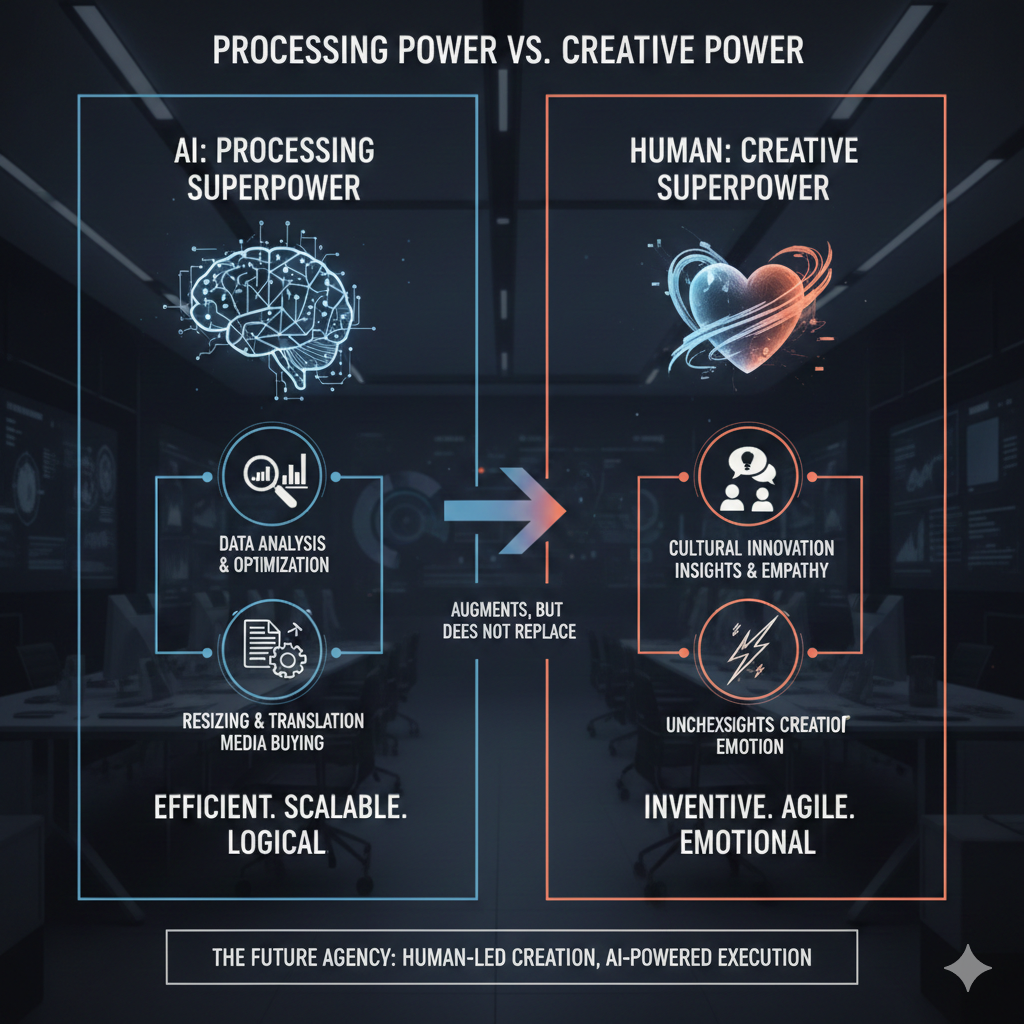
AI is a Processing Superpower, Not a Creation Superpower

The core justification for this merger is that "scale" is required to feed the AI beast. Omnicom claims the combined entity will accelerate "ideation and creation".

I disagree. We need to distinguish between processing and creation.

AI is a processing superpower. It can resize assets, translate copy, optimize media spend, and analyze patterns faster than any army of junior associates. But it does not possess the creation superpower required to move culture.

As noted in a recent discussion at ADWEEK House, modern marketing runs on "agility" and "insiders". To resonate with a niche community - whether it’s F1 fans or Android users - you need team members who "speak the language" and can sniff out inauthenticity in a second. You need the human intuition to turn a typo (like Nicki Minaj calling Shopify "Spotify") into a brand win, rather than a PR crisis.

AI can process the recap, but it cannot create the moment. By betting the farm on AI, Omnicom is doubling down on the commoditized middle - the processing layer - while the true value of an agency (creative invention) remains a uniquely human, un-scalable trait.

The Data Fallacy: Renting the Fuel

The second hole in the "AI innovation" narrative is the data itself. To train a proprietary model that offers a true competitive moat, you need proprietary data.

Publicis understood this years ago when they acquired Epsilon and Axciom, effectively buying the fuel for their engine. Omnicom and IPG, by contrast, generally do not own the underlying consumer data in the same way. They are service providers processing client data.

Without a proprietary data lake like Axciom, the "scale" Omnicom just bought is simply a larger volume of rented data. They are building a bigger refinery, but they still don't own the oil.

Culling the Herd for Margin Preservation

If the AI isn't for creative invention, and they don't own the data to build a unique brain, what is the $13 billion actually for?

It is for margin preservation.

In 2013, John Wren admitted the Publicis-Omnicom deal would create $500 million in "efficiencies". In 2025, AI is the ultimate efficiency engine. This merger isn't about empowering talent; it is about "culling the herd."

The goal is to use AI to strip out the "inefficiencies" of human capital - the mid-level managers, the media planners, the production staff. By consolidating IPG's roster into Omnicom's AI infrastructure, they can drastically reduce headcount to protect margins in an era where clients are squeezing fees.

This is the "right-sizing" I predicted in 2013, but on a technological steroid.

The Verdict

The Omnicom-IPG merger is a brilliant financial maneuver for a company realizing that its traditional service model is too expensive. By replacing human processing with AI processing, they will undoubtedly save money.

But let’s not call it the future of marketing. The brands winning today are moving away from "long-tail campaigns" toward a "shipping mentality" driven by culture-obsessed humans.

Omnicom has built a massive machine to process the past efficiently. But they are no closer to creating the future.

Meta’s Instagram Reels Skippable Ads: The Quiet Revolution

Meta Insta Reels skippable ads

Members Only Podcast

Please log in or subscribe to listen.

In October 2025, Adweek confirmed Meta began testing Instagram Reels skippable ads, mirroring YouTube’s in-stream ad format. Users can now skip ads after a few seconds and jump back to their video feed.

At first glance, it might look like a simple UX experiment. But beneath it lies a major shift in how attention, intent, and creative performance could be measured across social platforms.

The Test and Its Context

According to Adweek reporter Trishla Ostwal, Meta is running a limited test to understand whether this format helps users discover businesses more effectively.
Unlike YouTube, Meta is not sharing revenue with creators during the pilot phase.

The timing is deliberate.
Gartner’s 2025 CMO Spend Survey shows marketers allocating 30.6% of total budgets to paid media, a 10% year-over-year increase. Social channels are now the second-largest digital spend category. And among them, Instagram has a higher purchase intent than both Facebook and YouTube.

For Meta, the equation is simple: if users tolerate skippable ads without hurting engagement, Reels could become a more efficient revenue engine.

(Source: Adweek, “Meta Is Testing Skippable Ads on Instagram Reels, Borrowing From YouTube’s Playbook,” Oct 17, 2025)

Why It Matters

Skippable ads change the game for both performance marketers and creative teams.

Historically, non-skippable ads were priced at a premium because they guaranteed full viewership. But forced attention rarely equals real engagement. Skippable formats, on the other hand, turn the moment of attention into a user decision and a behavioral signal that can separate curiosity from disinterest.

When someone doesn’t skip, that’s intent data.
When they do, it’s still valuable just different. It tells the algorithm what not to show, and it tells you which creative failed to earn a second chance.

What Growth Marketers Should Do Now

1. Treat skips as data, not failure

Every skip is a signal. Over time, Meta’s delivery models will likely use skip behavior to refine audience targeting. Track skip rates, watch-through rates, and conversions together to uncover patterns that explain quality, not just reach.

2. Redesign creative for “voluntary attention”

The first five seconds of a Reels ad now matter more than ever. Borrow the YouTube hook architecture: open with story, motion, or emotion versus a logo. Reward attention early, and you’ll earn more of it later.

3. Build sequential storytelling

Skippable formats open the door for creative sequencing:

  • Those who skip can be retargeted with shorter, sharper hooks.
  • Those who watch can be served longer or higher-intent creative, like testimonials or offers.

It’s a subtle shift from one-shot persuasion to multi-step storytelling.

4. Expect pricing and auction evolution

Meta could eventually roll out cost-per-view (CPV) or hybrid pricing models. Prepare by modeling CPV vs CPM efficiency and by aligning ROI measurement around view-through conversions.

What to Watch For

AreaShift or RiskWhy It Matters
Measurement NoiseSkip data may complicate attribution and inflate signal-to-noise ratio.Algorithms will need time to interpret skips as quality indicators rather than negatives.
Creative StrategyMay usher in a new short-form storytelling discipline.Teams will need to master earned attention rather than relying on forced impressions.
Auction DynamicsCPMs could temporarily rise as the system learns.Early adopters should isolate budgets to prevent blended CPM distortion.
Attribution ClarityView-based engagement may dilute click-based signals.Marketers must redefine how success is measured beyond CTR.
Creator EcosystemNo revenue share yet for creators.This could limit long-term adoption unless Meta adjusts monetization models.

Staying Ahead of Platform Changes

The speed at which ad platforms evolve means marketers can’t wait for quarterly updates. Teams should build a lightweight “Ad Product Watchlist” to stay current.

Here’s a simple playbook:

  • AI Alerts: Use Feedly, Perplexity, or Google Alerts for “Meta test,” “Reels ad format,” and “auction update.”
  • Weekly Syncs: Align creative and media teams to share what’s changing and test hypotheses early.
  • Rapid Test Protocol: Treat every new ad format like a product feature — run 14-day experiments, report learnings, and scale what works.
  • Partner Engagement: Encourage Meta Partner Managers to include you in closed betas. Early learnings compound over time.

The Takeaway

Skippable Reels ads are not just a UX tweak they’re Meta’s signal that attention is moving from captive to voluntary.

The best growth marketers will recognize this for what it is:
A chance to design for curiosity, not captivity.
To read attention like a behavioral dataset, not a vanity metric.
And to build creative that doesn’t demand attention but earns it.

Are marketing funnels becoming obsolete?

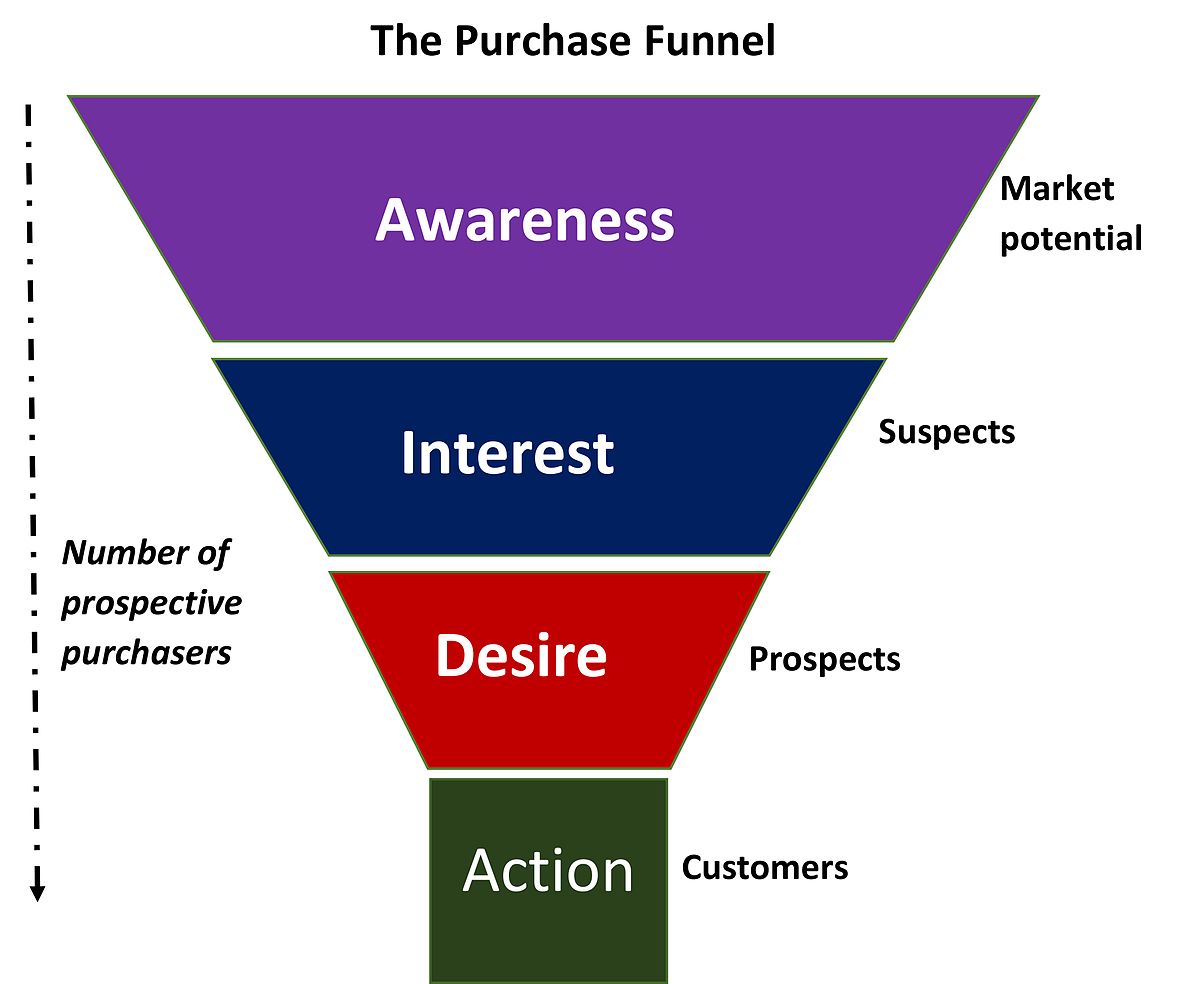
For years, we've built growth strategies around the classic funnel: Awareness → Interest → Desire → Action. Track drop-offs, eliminate friction, optimize conversion rates. Simple, measurable, effective.

But as AI anticipates user intent and one-click checkouts compress entire purchase journeys, I'm questioning whether the next generation of marketers will even think in funnels.

Here's what's shifting my perspective:

When Duolingo added streak freezes and achievement badges, their retention actually improved despite adding "friction" to the experience. Users who worked through these extra steps showed 40% higher long-term engagement than those who breezed through a streamlined onboarding.

This aligns with what Rory Sutherland argues in Alchemy: humans aren't rational calculators. We value what we work for. A quiz that helps users discover their "marketing personality type" might slow conversion, but it can dramatically increase commitment to your product.

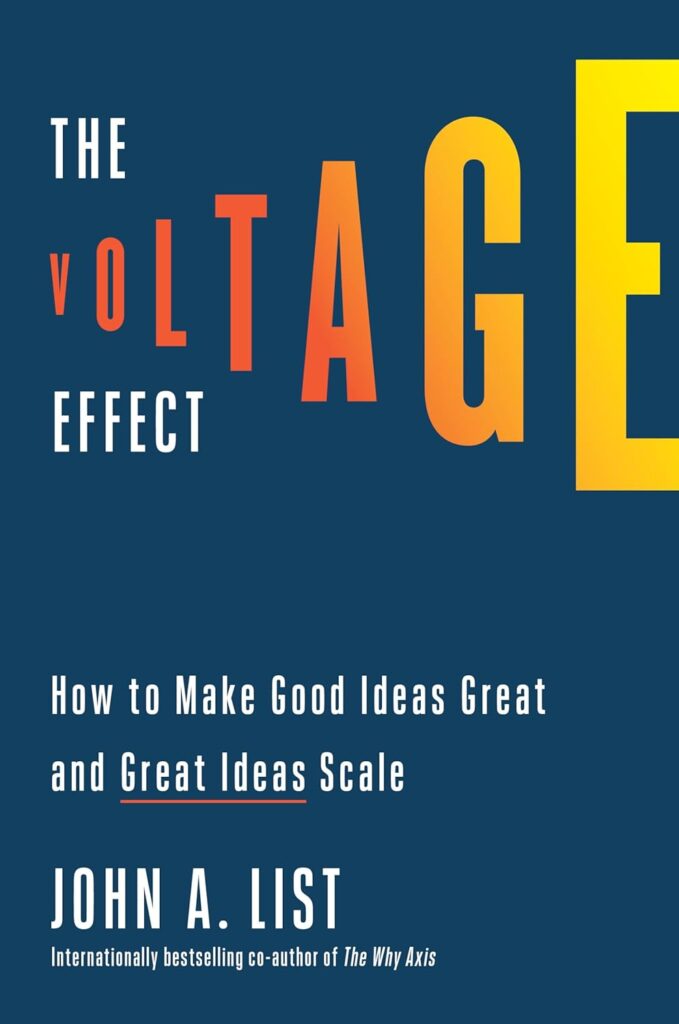
Similarly, John List's research in The Voltage Effect shows that what works in small tests doesn't always scale. Removing a single form field might boost conversions 15% in your pilot, but when rolled out broadly, it could attract lower-intent users who churn faster, ultimately hurting lifetime value.

The real insight? Friction isn't the enemy irrelevant friction is.

The companies winning today aren't just optimizing for conversion rates. They're optimizing for the right conversions. They understand that a 5% drop in top-of-funnel conversion might be worth it if it leads to 25% higher retention and customer satisfaction.

So funnels aren't dead they're evolving.

Instead of pushing everyone through the same pipe, we're learning to design intelligent friction that filters for intent while removing barriers that genuinely don't serve the customer experience.

The question isn't whether to use funnels, but how to balance friction and flow to attract customers who will actually succeed with your product.

What's your experience? Have you found cases where adding steps improved your long-term metrics?

#GrowthMarketing #CustomerExperience #ConversionOptimization #BehavioralScience

Welcome Back

Close Window

Sign Out?

Are you sure you want to log out?