Category: Digital Transformation

Reflections on a 30-Year Journey: Growth, Sacrifices, and the Power of Resilience

Looking back on my 30-year career, I’m filled with gratitude for the experiences that have shaped me—not just as a professional, but as a person. It’s been a journey defined by bold risks, incredible highs, and moments of deep personal reflection. From being part of the launch of Amazon and Priceline to refining growth strategies for global brands, I’ve lived through the evolution of marketing, pivoted across industries, and learned invaluable lessons along the way.

The Early Years: Chasing Success and Scaling Big Ideas

My career began with an incredible opportunity at Connors Communications, during a time when the internet was in its infancy and e-commerce was a bold experiment. We weren’t just marketing products; we were reshaping the way consumers interacted with the world. Launching Amazon, Priceline, and Vonage wasn’t just exhilarating—it was a masterclass in innovation and execution. I thrived in ambiguity, learned to trust my instincts, and became comfortable riding the wave of rapid change.

After Connors, I wanted to test whether these tactics could scale within more established industries. At Zeta, I took that challenge head-on, working with tech giants like ADP, Sybase, and Intuit, as well as pharmaceutical leaders such as Allergan and Novartis. These roles were a turning point. They taught me to balance agility with structure, and to refine my strategies with a full-stack view that encompassed everything from acquisition to retention. Scaling growth in these environments required a deeper understanding of data, customer journeys, and cross-functional collaboration. It was here that I built the foundations of a more sophisticated, end-to-end growth strategy.

These experiences were invaluable. They instilled in me a respect for the nuances of scaling businesses across vastly different sectors and solidified my belief that great marketing is both art and science.

Scaling Mountains and Learning Limits

Following Zeta, I transitioned to leadership roles at Vertrue, Experian, and Intuit, where I continued to scale growth engines and develop comprehensive marketing capabilities. The stakes were higher, and the expectations even greater. These were formative years where I learned to lead large teams, manage complex operations, and drive results in high-pressure environments.

But during this time, I often put my career above everything else—including my family. I chased success with relentless ambition, convinced that personal sacrifices were necessary to achieve professional excellence. It wasn’t until later that I began to question the cost of that mindset.

The Wake-Up Call: Ana’s Story

Everything changed with the birth of my daughter, Ana. She was a miracle, filling our lives with unimaginable joy. But at just three months old, she faced her first of two open-heart surgeries. Watching her endure such immense challenges at such a young age was the most humbling experience of my life. It brought everything into focus.

Suddenly, the late nights, the big wins, and the career milestones all felt secondary. Ana’s strength and resilience taught me the true meaning of courage and reminded me of what really matters. Her journey reshaped my priorities, forcing me to reevaluate my work-life balance and how I defined success.

Working Hard, But Smarter

Today, I’m more intentional about how I work. I still bring the same drive and passion to my role at CookUnity, where we’re reshaping the food subscription industry. But now, I work smarter—with a keen eye on what truly matters. I prioritize impact over busyness, ensuring that my efforts contribute to meaningful growth without compromising the time I spend with my family.

Ana’s journey taught me that presence is everything. I’m committed to being there for her as she continues to thrive, but my focus doesn’t stop there. I’ve also reconnected with my parents, cousins, and extended family, recognizing how important those relationships are. Whether it’s a family gathering, a quick check-in, or simply showing up when it matters most, I’ve learned that nurturing these bonds is just as crucial as achieving professional success.

A New Chapter: Purpose-Driven Growth

With this renewed perspective, I’ve embraced purpose-driven growth. Transitioning to startups like Molekule and now CookUnity, I’ve had the chance to apply the lessons of my earlier career while fostering a deeper sense of purpose. At Molekule, I built growth capabilities from the ground up, positioning the brand as a leader in air purification. At CookUnity, I’m leading efforts to redefine the food subscription industry through a chef-driven marketplace. Here, I’ve been able to combine data-driven strategies with creative storytelling to drive meaningful growth.

Lessons from 30 Years

If I could talk to my younger self, I’d tell him to pause and appreciate the journey more. To celebrate the wins, but also to recognize the sacrifices and prioritize what truly matters. I’ve learned that success isn’t just about career milestones—it’s about balancing ambition with humanity and finding resilience in life’s challenges.

Ana’s story is my anchor, reminding me every day why I work so hard. This journey has been extraordinary, filled with growth, learning, and purpose. And through it all, I’ve discovered that the most important success is one that honors both your professional goals and the people you hold dear.

Blockchain is changing the field not the just game

Blockchain will deliver digitization to our lifestyle for greater prosperity and health

The investments in Blockchain across the way we live, learn and work is still in its infancy. We know technology in general is in a free fall and transformation stage with the likes of 5G, machine-to-machine communications, and distributed systems. With Blockchain, we have the potential to bring a new era of “individualism without alienism.” And so Blockchain is already on a journey with crypto-currencies, considered the early adopters, taking off permeating into our day-to-day as it begins to shape the perceptions and possibilities of what’s to come. It’s raising important social questions and is already reshaping the way we all think about the current monetary infrastructure. It’s too late for Blockchain to disappear that much everyone agrees on. So, what’s next?

Well, it won’t be long before we are introduced to new Blockchain products which depart from the ledgers, currencies and processes driving a financial system. No, it won’t be focused on the series of connected services that is borne out of a network effect of cryptocurrencies but new applications that will improve our health, help us gain knowledge and provide greater control, distribution and fluidity of of our day-to-day tasks.

Dynamic and Extensible Electronic Health Records

Healthcare, imagine a decentralized but coordinated set of global data not silo’d and walled off. Our specific electronic health records are silo’d and static, imagine that data now with a decentralized governance where no one organization owns the data and there’s no clearing house for that information thus acceleration data sharing and personalization at scale.

Napster times a thousand! – Imogen Heap

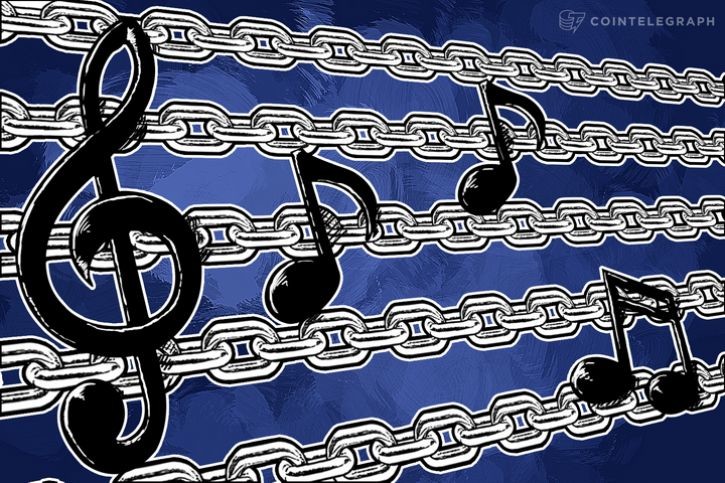
Musical artists could push the boundaries of creativity and expand the headroom of their production. Blockchain could allow artists to truly cut out the middleman and at the same time expand their production headroom while also increasing the derivative body of works because of the decentralize governance it would bring. Furthermore, from a headroom expansion perspective imagine each track, i.e. drums, keyboards, a sample able to be tweaked, morph and distributed across the fanbase bringing the artist and fans in direct collaboration. It’s requests and personalization at an enormous scale!

Education in True Real-Time with Test and Learn

In the realm of Education, we know Institutions around the world are cooperating on a multitude of challenges. One major challenge is to introduce, assess, and share learnings across the ecosystem which generally takes years to do. Imagine a new system that allows not just a small group of Universities to be able to introduce these new learning but collaborate and expand on the learnings at hyper-local levels without major structural changes and maintaining the integrity of the core idea.

This is but the "tip of the iceberg" as to how blockchain could change our lives. The possibilities are endless coupled with artificial intelligence, machine learning, IoT (internet of things) and the convergence of biology and technology!

Amazon buys Whole Foods, boy times, they are a changing…the courtship of digital is ending

Why would Amazon buy Whole Foods? Ironically, the answer is in the name, Amazon. The amazon jungle is the life blood of the western hemisphere providing the ecosystem and environment to nourish over a billion in population and drives civilizations largest economies. According to Wikipedia, the Amazon represents over half of the planet's remaining rain-forests, and comprises the largest and most bio-diverse tract of tropical rain-forest in the world, with an estimated 390 billion individual trees divided into 16,000 species.
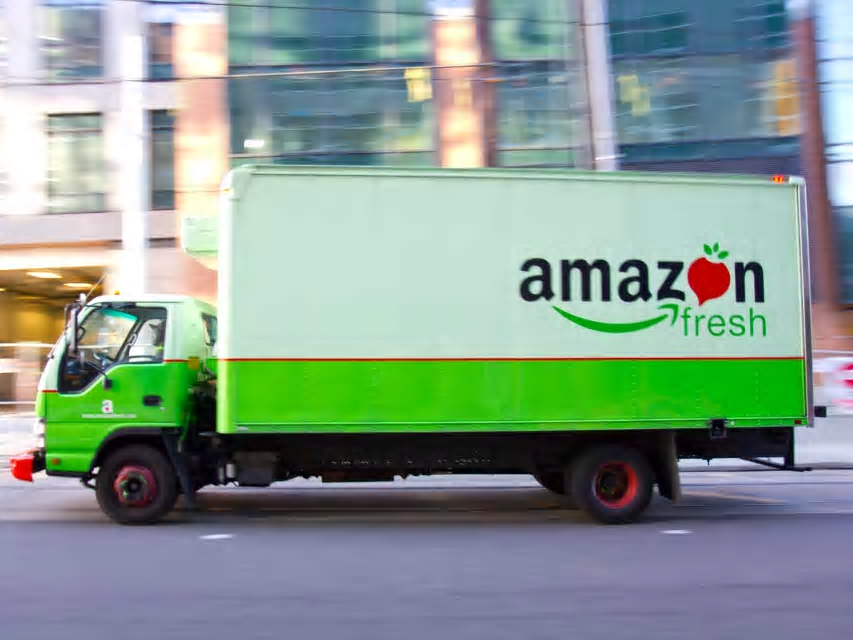
Furthermore, having worked with Amazon when they first launched, Jeff Bezos’ goal seemed to be to want to bring everything a consumer could possibly want instantaneously to any part of the globe. So, it’s not a surprise to me that Whole Foods would be part of the consideration having integrated Zappos, Audible, etc. What I like about this is that Amazon; versus Walmart or any other big etailer/retailer has an opportunity to revamp the village economy that’s been largely decimated and ignored by the chain retailers such as the Walmart’s and Kmart’s of the previous generation. What I mean is that, there will be shift to employee first and long-term strategy versus a shareholder driven short term view of profit and loss. This will help employees gain purchase power and drive the economies in their communities. What’s the state of retail and is there any benefit for brick and mortar shopping? Look, I don’t think we should see the world from a “zero-sum” game perspective. I’m not a retail expert but as a consumer myself, introspectively, I have seen a big shift in my own buying behavior. Looking back, I never thought I’d stop going to the produce markets to use Fresh Direct or Google Express, as an example. We also must be mindful that many of us consumers are in various transition stages. This means that there’s a role for physical spaces, the answer lies in defining your ideal customer, understanding how he/she’s purchase behavior is changing and what your business can do about. How Amazon integrates Whole Foods will shed more light into the convergence of digital and physical in real terms. When buying preference shifts more towards medium B versus medium A, and medium A has been the driving method for businesses to entice a transaction how should a business respond? The answer to this question is simple but the path to getting there in an organization seems to be well beyond a company’s reach. Assuming medium B is online shopping and medium A is physical retail purchasing then logic would dictate that organizations would build the necessary pathway from divesting from brick and mortar to mix shift to supporting online shopping. Yet we look across the spectrum of retail and while this isn’t new news, i.e. music stores closing due to the CD to mp3 shift or mom and pop shops disappearing due to large retail shops are just a few of the shifts that are similar in nature but every time we see a pivot in consumer behavior our career business professionals and leaders seem to miss the boat or wait too long until it’s too late. Businesses should have a strategy to address the changes in the marketplace and these changes are clear and present when you listen to consumers. This idea isn’t new, there are many businesses who have carefully followed the needs of their customers, they have succeeded, Intel or BestBuy come to mind. While others simply ignored the signs, or didn’t see the writing on the wall and are no longer around or solvent, Kodak or Kmart, etc. What's interesting is that, as a percentage of revenue, according to TheMotleyFool, Amazon spends more on advertising then Walmart, The Home Depot, Best Buy, Kroger, and Target combined. Do they know something we don't know? Or do they understand that part of doing business and competing requires investing into driving sales? And that this investment brings critical data and learnings that will help the business calibrate and course correct? A form of research and development in the digital era.
So how can a large retailer turn the tide through digital transformation? That’s a loaded question, and it’s important to note that it’s not about digital or physical, really. And you've people say, it's not a sprint its marathon, I say it's a triathlon but your organization has to be sure of what it is it needs to accomplish and be laser focused on accomplishing it. Most businesses are fully on the transformation journey, the problem lies in whether it’s the right one for them.  To understand that, it’s important to understand the organization’s wherewithal and capability from the vantage point of research, data, technology, legal, processes and talent. The underlying question will be whether you have the right mindset from the leadership and from the brick and mortar staff to facilitate any future change. If it's not a holistic approach then you're just slapping "lipstick on pig" and the underlying issues will engulf your business and you will cease to exist. With regards to research, this is a crucial first step and most businesses sit on a treasure trove of information. Ultimately it will rely upon a business’ core customers, asking the right questions and knowing who they are. Why are they your customers, what are there likes and dislikes, and what drives them to consider alternative products. I think the consumer packaged goods (CPG) industry does a phenomenal job at understanding a dimension of this but what I see a lot is research fails to address the consumer journey pieces of the qualitative puzzle. Data is another challenge for large companies, are you collecting the right data with regards to your business, end-to-end, who’s data should you use or trust, do you have a single source of truth and how is the data helping you make the right decisions or not? The research outputs should be able to allow for a gap analysis of your datasets, financial, product, marketing, sales and otherwise. The most puzzling of blockers I’ve encountered is, technology both IT and engineering. Yes, not surprising, it took a decade for organizations to realize that a Chief Marketing Officer (CMO) was investing more in technology than a Chief Technology Officer (CTO). On top of that, you have the pressure of advertising technology and how to tie all these platforms together. Each department, sales, finance, product, marketing and IT all look at their technology investments differently yet operationally and from a cost perspective it doesn’t make sense to do so. So, you have varying levels of maturity when it comes to technology deployment and the appetite for the business side to partner with technology departments from the get go to help bridge and solve problems together. Unfortunately, this is further led by strong Chief Executive Officer and other c-level opinions hence introducing barriers to a timely and frictionless solution. We’ve been here before, the question of whether legal is there to prevent or to protect. Many organizations are starting to look at this from both angles. Prevention is the equivalent of austerity, err on the side of caution. This mindset of course makes sense for certain business as usual situations. But what if you’re trying to address a new problem in the marketplace, a shift in consumer expectations or a new competitor entrant that’s pushing the envelope and their velocity of growth is staggeringly faster than yours? This is where I feel your legal counsel needs to be a critical partner in understanding the business requirements versus simply addressing the legalities of a decision. Furthermore, the legal team must be agile in its response to the needs of the business and market. How this is done is partnership and collaboration of course. Processes are absolutely the linchpin to all we’ve discussed so far. To put it simply, across the organization if making a decision is a three to six-month endeavor then leadership must look at how to accelerate the process, where are the gaps, what are the key blockers and how do we move more faster. I’m shocked that many organizations are still in a waterfall mindset, very linear in their thinking and sequential. Or there are pockets of lean startup but then other departments are operating in a different way. A process change should be defined and harmonized with inputs and alignment across all cross-functional departments. This will help large businesses move and shift to market and consumer demands more efficiently.
Finally, talent, the single most important opportunity for an organization to mine. Talent development should be seen through seeding, cultivating and building the acumen, both internal and external, required to solve the challenges the business faces. Whether it's digital, internet of things, or whatever new shift your business sees in the horizon. This is whether your technology department needs calibrate and train to understand marketing, advertising and other key aspects of your business supply chain. Do you have the right mechanisms, culture and leadership to enable curiosity and avoid complacency? I’m always afraid of becoming obsolete as a professional, shouldn’t a business’ staff and agencies feel the same way? If not what can the leadership do and provide to drive that mindset and talent transformation? Is Amazon looking at Whole Foods as a way to build and bring in new thinking and talent that is supporting a greater vision? Businessses shouldn't purchase using a one dimensional strategy, all angles, especially the impact to employees and talent are an important facet of the acquisition considertation.

Era of mobile transformation

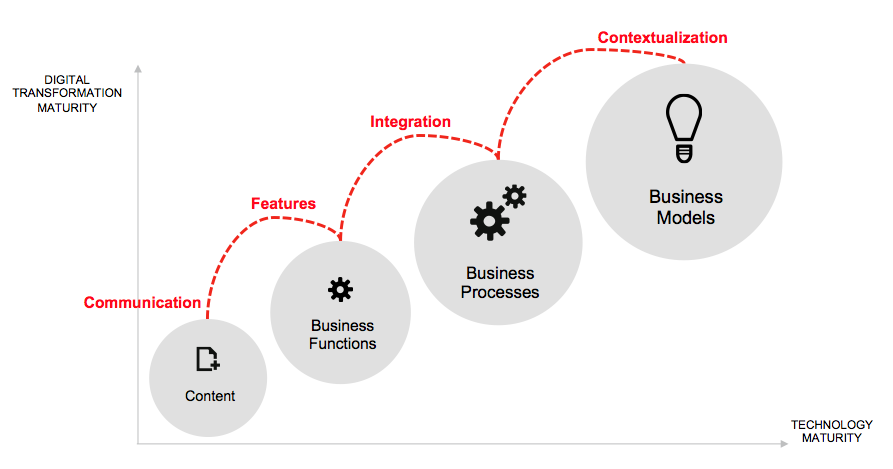
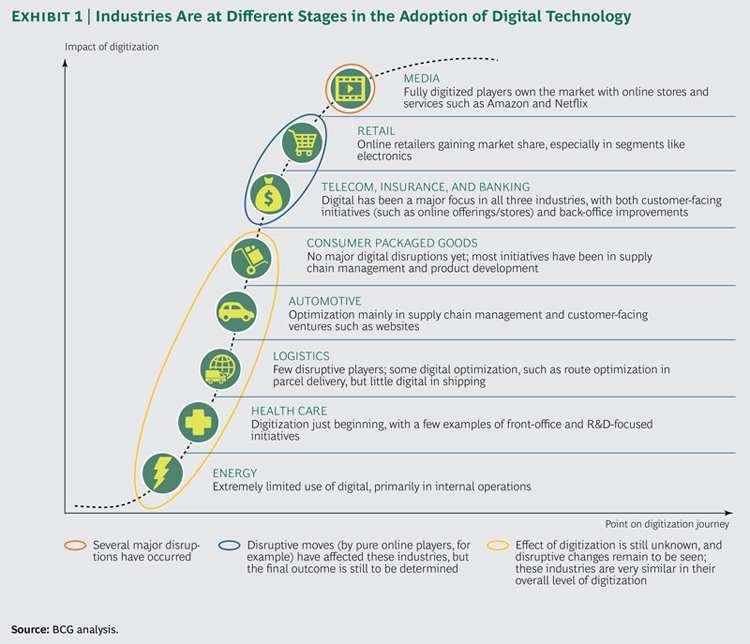
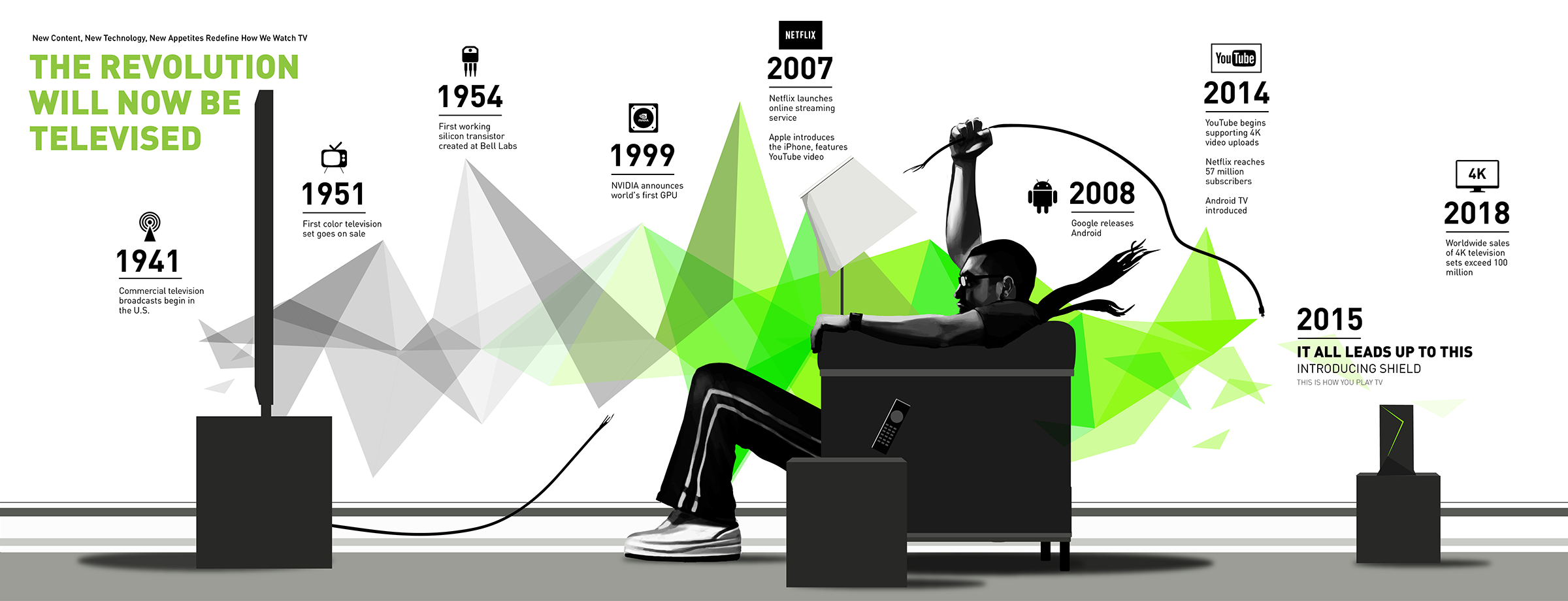
It's been a long while since my last post, and a lot has changed in digital hasn't it? Digital is here to stay, so much so, I've identified three particular areas where this is true, 1) the meaning of digital transformation has changed 2) new paradigms have emerged and 3) what was new before is now business as usual. 1) Meaning of digital transformation has changed - what it means to become a digitally driven enterprise has changed in the last year and a half. Lets face it, being a digital forward organization used to mean, shift more marketing/communications budgets/approaches towards digital and/or digitize what is "offline" to digital and/or pressure from wall street to take advantage of digital to shift to a new business model. Digital Transformation The illustration above probably encapsulates the maturity level and business aspects of the digital transformation to which we applied solutions. We've all been there, either leading and/or supporting, yet it's always catching up or missing a crucial lane here or there which presents a tremendous amount of waste and frustration. We now know that there will always be challenges along the way yet even that mindset has to change. The interpretations presented by Mckinsey, BCG and other consulting shops will have us believe that solving the business problem will enable the change. How-Jump-Start-Digital-Transformation-ex1_large_tcm80-194312 However, in order for large businesses to accelerate digital acumen isn't to ignore the business problem, existing non-digital assets and infrastructure that's driven businesses to growth today but rather understand how to shift to consumer first, tackle the customer pain points and then calibrate the strategy, operations and processes accordingly in a smart, continuous and agile way. 2) New digital paradigms have emerged - Cloud based products, the IoT (Internet of Things) is taking full shape in our lifetime, someone you know has a smart home or a series of connected devices, a hive of communications and a virtual mobile living room. 28infographic-latest Companies are struggling to keep up with the changing landscape and this transformation is happening at various layers, both consumers and employees are looking for products and workplaces that are not tethered. It's inconceivable that before 2012 Snapchat didn't exist or that Netflix would be in the movie business or Alibaba would produce Star Trek Beyond! These forward thinking companies are following the consumer, understanding the behavior and solving for there needs. Snapchat an ardent consumer experience focused company is now growing at a velocity that even Facebook couldn't keep up with. 3) What was new is now business as usual - there isn't a digital revolution, it has come and we are past the digital chasm. More prominently, mobile is the new revolution, it's consuming all that is digital and bringing it to the physical. Smartphones are how we consume, read content, view movies, communicate, work and even pay each other. Mobile Transformers Mobile has been a catalyst to changing consumer behavior, for example we went from active participants, to being witnesses and to now merely sharing experiences to families, colleagues, friends, etc. It's not just changing the consumer mindset but small businesses as well. As an example, small businesses receive from direct feedback from consumers, even collecting payments directly. In essence, they are disintermediating the VISAs and MasterCard. How do businesses tackle this new behavior? What's more, is that it was inconceivable three years ago that Verizon would by AOL, the mere fact that Verizon a telecommunications company would be in the business of culture and advertising. What's changed? Consumer behaviors have given mobile companies a huge leg up and of course the ability to naturally apply continuous learning. I hope that as professionals we're all challenging the notion of business first and thinking about consumer first to understand the natural desire for consumers to be mobile and combing the worlds of digital and physical together.

Agile principles in digital marketing and acquisition

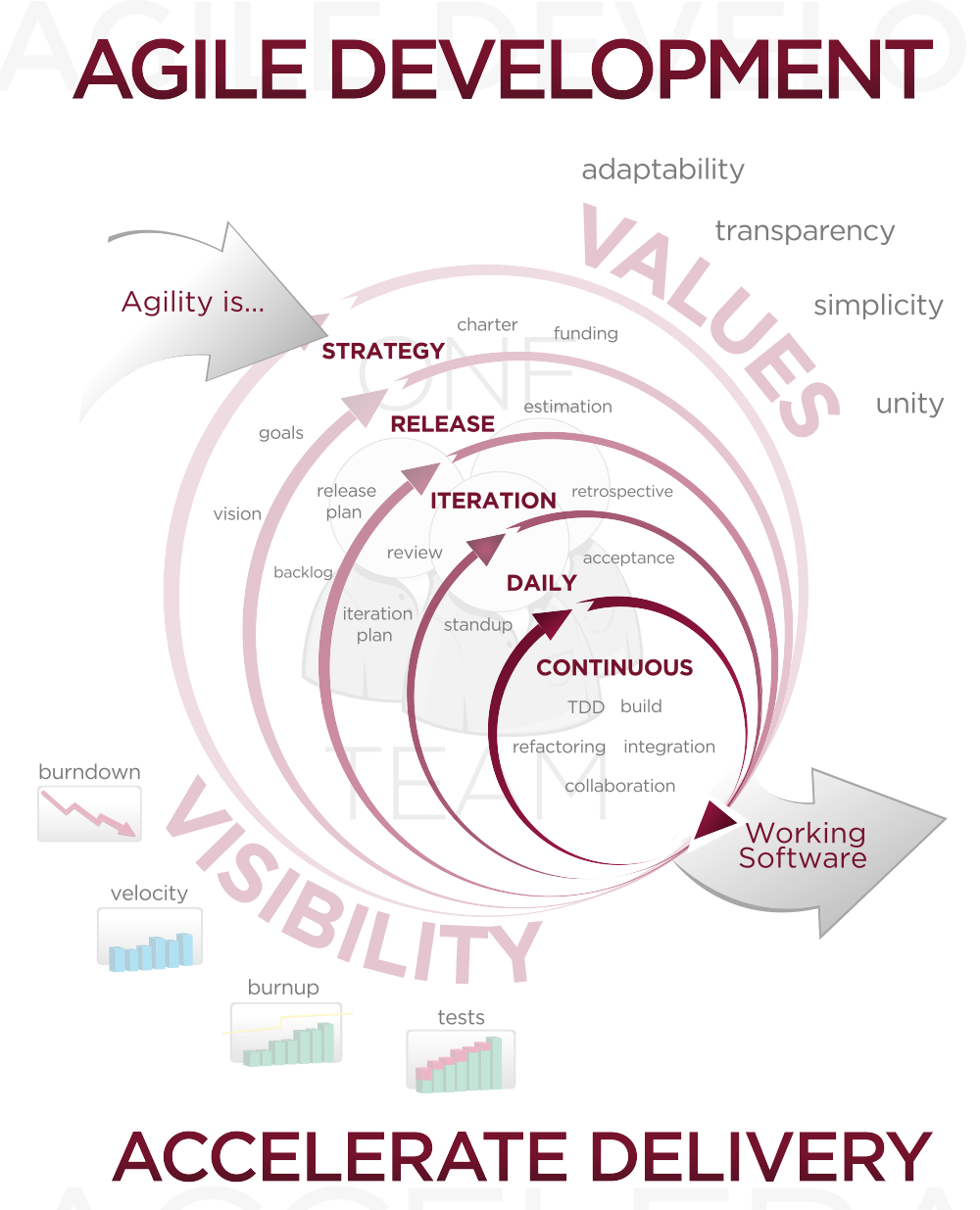
Agile Software Development methodologyIn the past decade or two, I've had the opportunity to truly explore and learn more about the "supply chain" of digital marketing through the lens of an agency and from the view of an in-house digital marketing executive. I've also had the opportunity to work within the top most important verticals such as Financial Services, Travel & Hospitality and Retail and learn about the opportunities and challenges each have faced to deliver high-fidelity digital strategy to drive business growth. What I've learned is that in every experience I couldn't help seeing a tale of two cities, on one hand organizations stumbling into adopting agile software development methodologies while on the other hand, marketing organizations working to adopt waterfall methods. Ironically, real-time digital marketing is the very essence of what agile is all about, how else could you possibly deliver on its promise, operationally and to scale up? We just don't think to apply the very ingredients that have made agile a success in software and product development the past decade to marketing and in particular to digital transformation. That got me to thinking, why not share my view and craft principles that have helped me and cross-functional teams where ever I've been to balance and deliver the productivity, quality and delivery of great service, particularly, if you think about service as a software. The leap then to applying great software development principles is easier to digest. Would love your comments or thoughts and of course before I do that, I thought it'd be good for me to copy/paste Wikipedia's description of Agile Development: "Agile software development is a group of software development methods based on iterative and incremental development, where requirements and solutions evolve through collaboration between self-organizing, cross-functional teams. It promotes adaptive planning, evolutionary development and delivery, a time-boxed iterative approach, and encourages rapid and flexible response to change. It is a conceptual framework that promotes foreseen interactions throughout the development cycle. The Agile Manifesto[1] introduced the term in 2001." Source: Wikipedia A few prerequisites to align on within your organization: a) Clearly define who your customers are. Invariably they will be the consumers of the work your team delivers b) Establish what your service, product and deliverable (example deliverable could be a report) are meant to provide c) Facilitate feedback and change Principles for Digital Marketing In An Agile World
  1. Our highest priority is to satisfy the customer through rapid and continuous delivery of valuable services and deliverables
  2. Welcome changing requirements, even late in development. Agile processes harness change for the customer's competitive advantage.
  3. Deliver high quality working services and deliverable frequently, from a couple of weeks to a couple of months, with a preference to the shorter timescale and rhythm.
  4. Business people, technology, analyst and developers must work together daily throughout a project.
  5. Build projects around motivated team members. Provide them the environment and support they need, and trust them to get the work done.
  6. Make face-to-face conversations mandatory as its the most efficient and effective method of conveying information to and within a team.
  7. Functional services and regular deliverable is the primary measure of progress.
  8. Agile processes promote sustainable development. The sponsors, developers, and users should be able to maintain a constant pace indefinitely.
  9. Continuous attention to technical excellence and good design enhances agility.
  10. Simplicity--the art of maximizing the amount of work not done--is essential.
  11. The best architectures, requirements, and designs emerge from self-organizing teams.
  12. At regular intervals, the team should reflect on how to become more effective, then tune and adjust its process and behavior accordingly.
  13. Communicate what's work and what has not including how the team will adjust it's process and behavior
Update June 23, 2013: CMO.com published an interesting piece a couple of months after my post, unrelated of course, that I thought I'd share. The gist is similar, however, it's primarily agile in marketing versus Agile In Action: How Four Brands Are Using Agile Marketing