Tag: Facebook

Meta’s Instagram Reels Skippable Ads: The Quiet Revolution

Meta Insta Reels skippable ads

In October 2025, Adweek confirmed Meta began testing Instagram Reels skippable ads, mirroring YouTube’s in-stream ad format. Users can now skip ads after a few seconds and jump back to their video feed.

At first glance, it might look like a simple UX experiment. But beneath it lies a major shift in how attention, intent, and creative performance could be measured across social platforms.

The Test and Its Context

According to Adweek reporter Trishla Ostwal, Meta is running a limited test to understand whether this format helps users discover businesses more effectively.
Unlike YouTube, Meta is not sharing revenue with creators during the pilot phase.

The timing is deliberate.
Gartner’s 2025 CMO Spend Survey shows marketers allocating 30.6% of total budgets to paid media, a 10% year-over-year increase. Social channels are now the second-largest digital spend category. And among them, Instagram has a higher purchase intent than both Facebook and YouTube.

For Meta, the equation is simple: if users tolerate skippable ads without hurting engagement, Reels could become a more efficient revenue engine.

(Source: Adweek, “Meta Is Testing Skippable Ads on Instagram Reels, Borrowing From YouTube’s Playbook,” Oct 17, 2025)

Why It Matters

Skippable ads change the game for both performance marketers and creative teams.

Historically, non-skippable ads were priced at a premium because they guaranteed full viewership. But forced attention rarely equals real engagement. Skippable formats, on the other hand, turn the moment of attention into a user decision and a behavioral signal that can separate curiosity from disinterest.

When someone doesn’t skip, that’s intent data.
When they do, it’s still valuable just different. It tells the algorithm what not to show, and it tells you which creative failed to earn a second chance.

What Growth Marketers Should Do Now

1. Treat skips as data, not failure

Every skip is a signal. Over time, Meta’s delivery models will likely use skip behavior to refine audience targeting. Track skip rates, watch-through rates, and conversions together to uncover patterns that explain quality, not just reach.

2. Redesign creative for “voluntary attention”

The first five seconds of a Reels ad now matter more than ever. Borrow the YouTube hook architecture: open with story, motion, or emotion versus a logo. Reward attention early, and you’ll earn more of it later.

3. Build sequential storytelling

Skippable formats open the door for creative sequencing:

  • Those who skip can be retargeted with shorter, sharper hooks.
  • Those who watch can be served longer or higher-intent creative, like testimonials or offers.

It’s a subtle shift from one-shot persuasion to multi-step storytelling.

4. Expect pricing and auction evolution

Meta could eventually roll out cost-per-view (CPV) or hybrid pricing models. Prepare by modeling CPV vs CPM efficiency and by aligning ROI measurement around view-through conversions.

What to Watch For

AreaShift or RiskWhy It Matters
Measurement NoiseSkip data may complicate attribution and inflate signal-to-noise ratio.Algorithms will need time to interpret skips as quality indicators rather than negatives.
Creative StrategyMay usher in a new short-form storytelling discipline.Teams will need to master earned attention rather than relying on forced impressions.
Auction DynamicsCPMs could temporarily rise as the system learns.Early adopters should isolate budgets to prevent blended CPM distortion.
Attribution ClarityView-based engagement may dilute click-based signals.Marketers must redefine how success is measured beyond CTR.
Creator EcosystemNo revenue share yet for creators.This could limit long-term adoption unless Meta adjusts monetization models.

Staying Ahead of Platform Changes

The speed at which ad platforms evolve means marketers can’t wait for quarterly updates. Teams should build a lightweight “Ad Product Watchlist” to stay current.

Here’s a simple playbook:

  • AI Alerts: Use Feedly, Perplexity, or Google Alerts for “Meta test,” “Reels ad format,” and “auction update.”
  • Weekly Syncs: Align creative and media teams to share what’s changing and test hypotheses early.
  • Rapid Test Protocol: Treat every new ad format like a product feature — run 14-day experiments, report learnings, and scale what works.
  • Partner Engagement: Encourage Meta Partner Managers to include you in closed betas. Early learnings compound over time.

The Takeaway

Skippable Reels ads are not just a UX tweak they’re Meta’s signal that attention is moving from captive to voluntary.

The best growth marketers will recognize this for what it is:
A chance to design for curiosity, not captivity.
To read attention like a behavioral dataset, not a vanity metric.
And to build creative that doesn’t demand attention but earns it.
Facebook and Cambridge Analytica concerns that may impact social and digital marketing

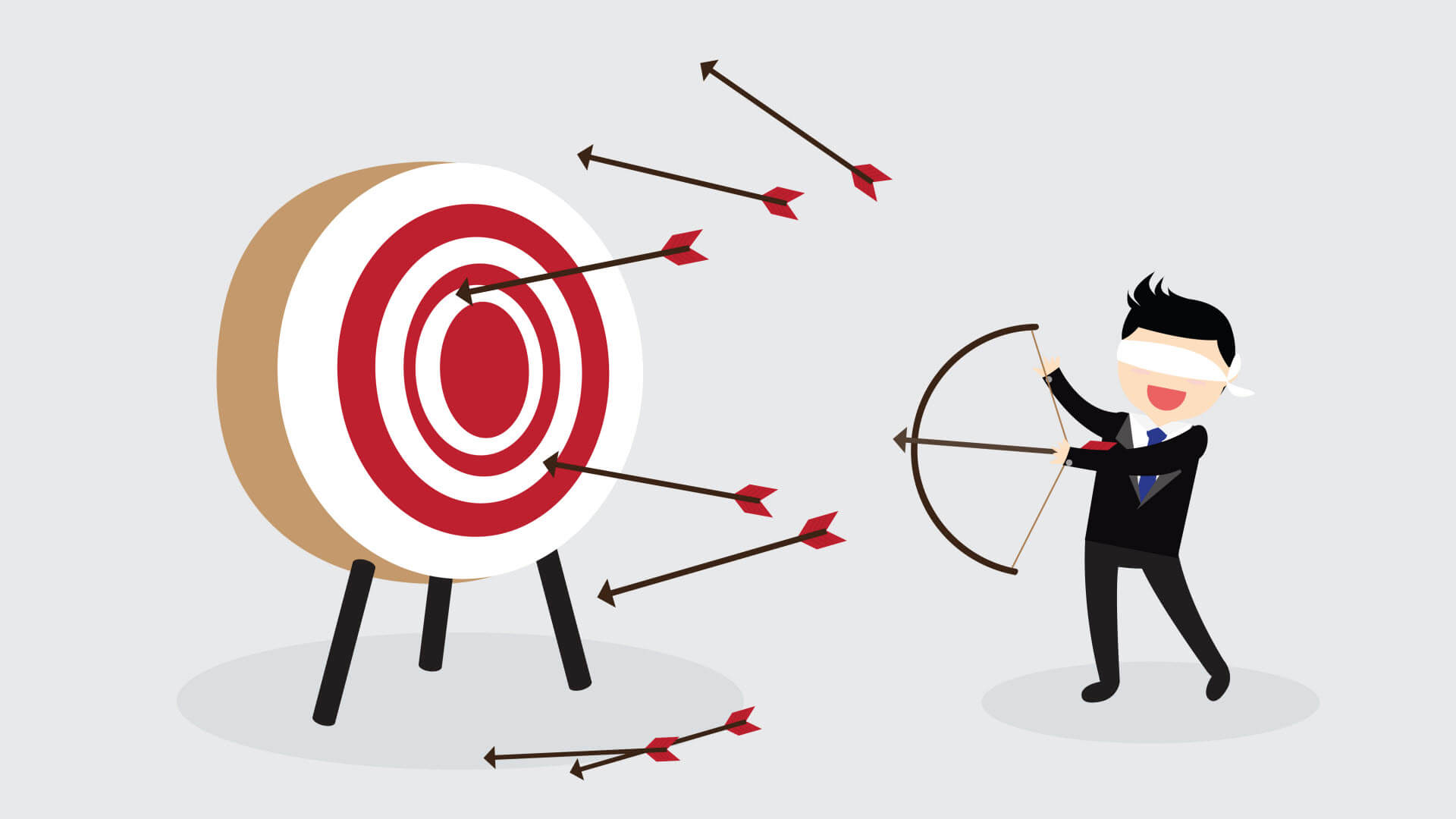
Sorry about the ominous title but there is a concern around what’s happening in the digital world specifically relating to social media. Furthermore, it’s getting more attention due to the “Trump Bump” and it’s not good, it isn’t just about stocks, and has expanded into just about anything related to Trump as well as some recent news has a lot of people now talking about Facebook. If you're like me, own Facebook stock, recently saw $60 billion get wiped off the books and tech stocks getting hammered then it's important to understand what is going on. Here’s my super simplified FAQ which will source and cover as much of the media as well as bringing in my experience to help you understand just what’s going on. Please pardon the grammar and typos! Who is Cambridge Analytica? Founded in 2013, Cambridge Analytica (CA) is a privately held data research and marketing company that was created as a commercial solution with the goal of supporting US politics. It’s partly owned by the Robert Mercer family who also happens to be a backer of Breitbart.com and Trump. Cambridge Analytica was involved in over 50 US political races since 2014 and have primarily to my knowledge supported hyper-conservative candidates. How did Facebook and Cambridge Analytica start working together? The gist of the Cambridge Analytica relationship began with Ted Cruz in 2015 where he utilized its services during the 2015 Republican primaries and of course lost to Trump. Ted Cruz was supported by Robert Mercer during that time and having a large stake in Cambridge Analytica it shouldn’t be a surprise that Trump’s campaign team, after Cruz’s loss was backed by Mercer. Went with Cambridge Analytica. From there, not surprisingly, Steve Bannon who according to Christopher Wylie, the firm's director of research, wanted “weapons for a culture war” that Facebook would be platform from which the culture influence could begin. So, Steve Bannon, Jared Kushner and Giles Parscale, Trump’s Director of Digital, went to Facebook and partnered with them to create a digital command and control data operation with Facebook’s organic and advertising products at its fingertips. Why was Facebook working with Cambridge Analytica? This part is unclear as of yet but of course the idea of supporting a major candidate, the potential commercial arrangement and the learning certainly would be a fantastic incentive for any large-scale platform. Where did they get the personally identifiable information? First, information about us can be attained across all of the breadcrumbs we leave as we “surf the web” hop between mobile and desktop in fragmented ways – this is nothing new and we marketers know this. Facebook is such an environment where you conceivably are able to track all of the web 1.0 information but add the interests, behavioral, psychographic and social graphs you essentially have a fantastic opportunity to personalize the information to trigger an action or transaction. Typically the personalization is grounded by an advertiser’s 1st party data, such as a first name, last name, email address, phone number, or in some cases a social security number, which Facebook actually collects. They then allow based on their terms of service to match this 1st party data to the Facebook community and create lookalikes or custom audiences that can then be marketed to. The lookalike modeling is standard fare digital marketing on Facebook because it doesn't have the same accuracy of custom audiences and hence it is a bit like targeting a dartboard blindfolded.Digital marketing blindfolded Any smart advertiser knows that simply targeting using Facebook's audiences to create lookalike models isn't as effective, takes a long time to analyze and is extremely costly. In Cambridge Analytica's case, they have admited they used 1st party data and a Facebook executive even claimed they used custom audiences. That's all well and good, however, there is a serious question around how they procured their database of “first party data” without the knowledge of consumers. There is also a big question surrounding how they could have extracted that information from Facebook and stored them in a database without the knowledge of Facebook. This is a highly dangerous situation, whether you are in the US, CA or the EU. Both Facebook and Cambridge Analytica may be in legal jeopardy depending on how the database information was harvested. Based on media reports, Dr. Aleksander Kogan and his GSR (Global Science Research), paid people using Amazon's Mechanical Turk to do a "personality assessment" on Facebook. The code used in the “personality assessment” app on Facebook exposed information of approximately 270,000 people their personal information and that of their entire social graph. GSR then created a database out of that information and shared it with Cambridge Analytica. Cambridge Analytica was then able to expand this to approximately 50 million US Facebook users. Dr. Aleksander Kogan has insisted that he had very clear terms of service that allowed him to legally get personally identifiable information from Facebook users. The issue here as we know, as marketers, that even large-scale advertisers spending billions of dollars a year are not able to extract information from Facebook it’s only a push and match. Was Facebook aware of the harvesting of personal information? The answer as of March 20th according to an ex-Facebook insider, reported by the Guardian, data harvesting by 3rd parties was rampant, but executives pretended it didn’t happen. unclear but as advertisers we need to be diligent about how we collect and track information. We should be interested in Facebook’s actions and whether we are satisfied that it resolves the many concerns advertisers and their customers would have. Imagine if your competitor created a simple assessment app, targeted a range of people and were able to ascertain your customer set and conquest them privately? If there is a platform hole technologically or Terms of Service (ToS) related, then it needs to be opened further or closed. It cannot be for selective entities. How will this impact digital marketing and social media? Specifically, Facebook has seen a ~$60B drop in their books because of a decline in their share value. We’re also seeing discussions in scaling back advertising spend while this current issue blows over. While I haven’t surveyed many consumers, we do know that, unrelated to this, many celebrities such as Jim Carey have begun to shutdown Facebook. This could create an inflationary effect on the cost of advertising across Facebook’s ecosystem, something we won’t know for a few weeks. We do know that the agency and DSP worlds have been inundated with transparency, data privacy and fraud issues which many have addressed. However, there is no doubt that many brands will question every decusion related to the usage of Facebook. As a result, I believe this will have a chilling effect on our industry unless Facebook and potentially a third party investigative body gets to the bottom of this. Our industry leaders Internet American Association of National Advertisers (ANA), Adverting Bureau (IAB), International Advertising Association (IAA) should take a proactive step in working together. What steps are being taking to address this from an agency and brand standpoint? At this stage, Facebook has suspended Cambridge Analytica’s accounts, the British government has procured a warrant to seize any available data, software and hardware to assess further damage as well as forensically investigate the situation. In the US, the Massachusetts Attorney General has opened an investigation into Cambridge Analytica. Our Federal Trade Commission is also investigating whether violated any previous privacy orders using Facebook. Yet, we have not heard from Mark Zuckerberg nor Sheryl Sandberg on this matter. We have also not heard from other platforms such as Twitter, Google and Snapchat. The good news is that many of the advertising associations are in the process of providing “rules of engagement” regarding Facebook and a universal checklist essentially a simplified version of the GDPR process which will alleviate any delays into impact to brands and their customers as well the agencies supporting them. The issue of course is limited to the procurement, handling and usage of customer data. The story is unfolding and there are many things not known but such is our business! If anyone has any questions or would like to add any corrections to this piece feel free to let me know. Sources:
  • The Guardian https://www.theguardian.com/news/2018/mar/17/data-war-whistleblower-christopher-wylie-faceook-nix-bannon-trump
  • Digital Guardian: https://digitalguardian.com/blog/what-gdpr-general-data-protection-regulation-understanding-and-complying-gdpr-data-protection
  • The Guardian: https://www.theguardian.com/news/2018/mar/20/facebook-data-cambridge-analytica-sandy-parakilas?CMP=Share_AndroidApp_Tweet
  • The New York Times: https://www.nytimes.com/2018/03/19/technology/facebook-cambridge-analytica-explained.html
  • Wired: https://www.wired.com/story/the-noisy-fallacies-of-psychographic-targeting/
  • Facebook ad policy: https://business.facebook.com/policies/ads
  • Money Watch: https://www.cbsnews.com/live-news/facebook-under-fire-the-latest-on-cambridge-analytica-scandal-live-updates/